Table of Contents
The random orbital sander has long been the unsung hero of the workshop—a tool that can make or break a finish with subtle differences in vibration, power delivery, and dust control. But 2026 marks a watershed moment. The convergence of brushless motor maturity, artificial intelligence, and battery chemistry breakthroughs has transformed this humble sander from a simple spinning pad into a precision instrument that adapts to your technique, predicts maintenance needs, and communicates with your entire dust collection ecosystem. Whether you’re a professional furniture maker chasing that glass-like finish or a weekend warrior restoring a vintage trailer, understanding these revolutionary changes isn’t just helpful—it’s essential for staying competitive and protecting your health.
What makes this year different isn’t incremental improvement; it’s a fundamental reimagining of what a sander can be. We’re witnessing the mainstream adoption of technologies that seemed like science fiction just three years ago: sanders that map wood grain density in real-time, batteries that charge in minutes rather than hours, and vibration dampening systems that make full-day sanding sessions feel like an hour of work. This guide cuts through the marketing hype to examine the engineering breakthroughs that actually matter, helping you navigate the new landscape with the confidence of a seasoned pro.
Top 10 Brushless Random Orbital Sanders
Detailed Product Reviews
1. DEWALT 20V MAX Orbital Sander, Tool Only (DCW210B)

Overview: The DEWALT 20V MAX Orbital Sander brings cordless freedom to professional sanding applications. This tool-only unit features a brushless motor delivering 8,000-12,000 OPM with variable-speed control. Its low-profile design enhances precision by bringing you closer to the work surface, while the replaceable 8-hole hook-and-loop pad ensures quick paper changes.
What Makes It Stand Out: The standout feature is true cordless mobility within DEWALT’s robust 20V MAX ecosystem. The dust-sealed switch significantly extends tool life by preventing dust ingestion—a common failure point in sanders. Combined with the brushless motor’s efficiency, this tool is built for durability in demanding environments.
Value for Money: At the tool-only price point, it’s an exceptional value for existing DEWALT battery owners. However, newcomers must invest in batteries and a charger, potentially adding $100+ to the cost. Compared to premium corded models, it’s competitively priced for professionals who need unrestricted movement.
Strengths and Weaknesses: Strengths include superior portability, excellent build quality, effective dust collection, and the trusted DEWALT warranty network. The variable speed control handles various materials well. Weaknesses include limited runtime per battery, the additional cost for batteries, and only a 5-inch pad when 6-inch models are becoming standard.
Bottom Line: A top-tier choice for professionals and serious DIYers already invested in DEWALT’s 20V platform. The cordless convenience transforms workflow efficiency. If you’re starting fresh, consider the total system cost, but for existing users, this sander delivers exceptional performance and durability.
2. VEVOR Random Orbital Sander 6-Inch, 350W Brushless Orbital Sander, 10,000 PRM 6 Variable Speed Electric Palm Sander with 10PCS Sandpapers, Dust Connector & Hose for Woodworking Detailing Sanding

Overview: The VEVOR 6-inch Random Orbital Sander packs impressive features into an affordable package. Its 350W brushless motor delivers up to 10,000 RPM with six variable speeds ranging from 4,000-10,000 RPM. The 5mm orbit diameter ensures smooth, professional finishes across various materials.
What Makes It Stand Out: The “instant stop” safety function immediately halts rotation when the handle is released, providing crucial protection. The comprehensive kit includes 10 sandpapers (80-320 grit), a dust connector, and vacuum hose—everything needed to start sanding immediately. The six-speed precision control offers more granularity than many competitors.
Value for Money: This sander delivers exceptional value for DIYers and hobbyists. The inclusion of multiple accessories, brushless motor technology, and advanced safety features at a budget-friendly price point is remarkable. It competes with sanders costing twice as much.
Strengths and Weaknesses: Pros include the instant stop safety feature, six-speed control, included accessories, ergonomic symmetrical design, and effective dust collection setup. The brushless motor ensures quiet operation and longevity. Cons include VEVOR’s less established brand reputation compared to industry giants, potentially affecting long-term reliability and warranty support.
Bottom Line: An outstanding choice for budget-conscious woodworkers and DIY enthusiasts who refuse to compromise on features. The safety innovations and comprehensive accessory package make it ideal for beginners and intermediate users. While professionals might prefer premium brands for daily heavy use, this sander punches well above its weight class.
3. Autolock Electric Random Orbital Sander, 350W Brushless Motor with 5 & 6 Inch Pads, 10000RPM Palm Sander for Woodworking, Sanding and Polishing (1pcs)

Overview: The Autolock sander distinguishes itself with unmatched versatility, featuring interchangeable 5-inch and 6-inch pads. Powered by a 350W brushless motor reaching 10,000 RPM, it handles everything from fine finishing to aggressive material removal. The professional 5.0mm eccentric design minimizes swirl marks.
What Makes It Stand Out: The extensive accessory kit is unparalleled: 30 sanding papers, 9.8-foot cable, vacuum hose, universal connector, and both pad sizes. The thermal diffusion crust prevents overheating during extended sessions, while the built-in vacuum port with external pipeline ensures superior dust extraction. This all-in-one approach eliminates additional purchases.
Value for Money: For users wanting maximum versatility without buying multiple tools, this represents excellent value. The dual-pad capability essentially provides two sanders in one. The comprehensive accessory package saves $50-100 in additional purchases, making it very cost-effective for serious DIYers.
Strengths and Weaknesses: Strengths include dual pad sizes, exceptional accessory bundle, effective thermal management, and robust dust collection. The 6-speed control adapts to any task. Weaknesses include Autolock’s limited brand recognition and potentially less robust build quality than professional-grade tools. The many accessories might overwhelm casual users.
Bottom Line: Perfect for serious hobbyists and professionals needing flexibility. The dual-pad system and complete kit make it a one-stop solution for diverse sanding tasks. While brand reputation lags behind industry leaders, the feature set and accessories make it a compelling value proposition for those prioritizing versatility over name recognition.
4. MAXXT Electric 5mm Random Orbital Sander, Brushless 350W 3A Palm Sander, Multi-function Variable Speed Electric Corded Orbital Sanders Machine with 6Inch Sanding Pad, 10 Sanding Paper for Woodworking

Overview: The MAXXT 6-inch orbital sander combines innovative control features with professional performance. Its 350W EC brushless motor delivers consistent power while minimizing vibration. The unique two-mode speed control offers both a throttle lever for maximum speed adjustment and six fixed RPM levels for precise, repeatable results.
What Makes It Stand Out: The electronic braking system provides near-instant pad stopping—a critical safety feature rarely found in this price range. The symmetrical ergonomic design accommodates both left and right-handed users comfortably, while the extended body allows optional two-handed operation for enhanced control and reduced fatigue.
Value for Money: Positioned in the mid-range segment, this sander offers premium features typically found in higher-priced models. The combination of instant braking, dual-mode speed control, and ergonomic excellence provides strong value for discerning woodworkers. The included 1-year warranty adds purchase confidence.
Strengths and Weaknesses: Pros include innovative speed control modes, excellent safety braking, low vibration design, comfortable ergonomics, and reliable dust collection. The EC brushless motor ensures durability. Cons include only a 6-inch pad included (no 5-inch option), just 10 sanding papers, and limited brand history compared to established manufacturers.
Bottom Line: An excellent choice for woodworkers prioritizing control and safety. The dual-mode speed system allows both freehand adjustment and precise repeatable settings. The instant braking provides peace of mind. While accessory count is modest, the advanced features make it ideal for intermediate to advanced users who value precision over bundled extras.
5. MAXXT Electric 5mm Random Orbital Sander, Palm Sander with Brushless Motor, 5&6Inch Sanding Pads, Central Vacuum, Sanders for Woodworking, Primary Wood and Panel Processing

Overview: This MAXXT variant enhances the already impressive feature set by adding interchangeable 5-inch and 6-inch backing pads. Retaining the 350W EC brushless motor, dual-mode speed control, and instant braking system, it offers maximum versatility for various sanding applications.
What Makes It Stand Out: The dual-pad system provides exceptional flexibility—use the 5-inch pad for tight spaces and detailed work, then switch to the 6-inch pad for large surface efficiency. Combined with the central vacuum system and the same advanced safety braking and ergonomic design as its sibling, this model adapts to virtually any sanding scenario.
Value for Money: The addition of a second pad size adds approximately $15-20 in value compared to purchasing separately. For users needing both sizes, this represents better value than the single-pad version. The comprehensive feature set remains competitively priced against premium single-pad sanders.
Strengths and Weaknesses: Strengths include dual pad versatility, excellent dust collection, advanced safety features, innovative speed control, and comfortable ergonomics. The EC brushless motor provides stable, low-vibration performance. Weaknesses include slightly higher price than the single-pad version, and the same limited brand recognition. Some users may never utilize both pad sizes.
Bottom Line: Ideal for professionals and serious enthusiasts who regularly switch between detailed and large-area sanding. The dual-pad capability eliminates the need for two separate tools, saving both money and storage space. If you’ll use both sizes, this is the better MAXXT choice. For those committed to one size, the single-pad version suffices.
6. Autolock Electric Random Orbital Sander, 350W Brushless Motor with 5 & 6 Inch Pads, 10000RPM Palm Sander for Woodworking, Sanding and Polishing (1pcs)

Overview: The Autolock Electric Random Orbital Sander delivers professional-grade performance in a versatile corded package. Featuring a robust 350W brushless motor capable of 10,000 RPM, this tool tackles everything from woodworking to automotive polishing with both 5-inch and 6-inch pad compatibility.
What Makes It Stand Out: This sander’s dual-pad system sets it apart, allowing users to switch between precision work and larger surface coverage without buying separate tools. The 5.0mm eccentric orbit provides aggressive material removal while minimizing swirl marks. Its industrial-grade dust collection system, compatible with shop vacuums, and enlarged heat dissipation ports enable extended operation without overheating.
Value for Money: Priced competitively for a brushless model, the Autolock includes both pad sizes, a 9.8-foot cable, vacuum hose, universal connector, and 12 sanding sheets. This eliminates immediate additional purchases, offering better value than buying a bare tool plus accessories separately. Brushless motors typically last twice as long as brushed alternatives, justifying the investment.
Strengths and Weaknesses: Strengths include versatile dual-pad design, powerful brushless motor, excellent dust collection, and comprehensive accessory kit. The long power cord enhances mobility. Weaknesses: being corded limits workspace flexibility compared to cordless options, and the single-unit listing means you can’t buy multiple units at a discount. The 10,000 RPM max is slightly lower than some competitors.
Bottom Line: Ideal for serious DIYers and professionals seeking versatility without the battery ecosystem commitment. The Autolock delivers consistent power for demanding tasks where corded reliability trumps cordless convenience.
7. 5’’ Brushless Cordless Random Orbital Sander Compatible with DeWalt 20V MAX Battery (TOOL ONLY), 12,000OPM Palm Sander, Dust Bag, Lightweight, 10 Sandpapers, 6 Variable Speeds for Wood, Metal & DIY

Overview: This Mellif sander leverages the DeWalt 20V MAX ecosystem, offering cordless convenience without redundant batteries. The tool-only configuration provides professional-grade brushless power for users already invested in DeWalt’s platform, delivering 7,000-12,000 OPM across six variable speeds.
What Makes It Stand Out: Ecosystem compatibility is the headline feature—no new batteries or chargers needed. The intelligent power management system automatically shuts off at 14.4V to prevent battery damage, extending both battery and motor life. At just 5" with a 1.1" orbit diameter, it excels at swirl-free fine finishing while remaining lightweight and maneuverable.
Value for Money: As a tool-only purchase, it offers significant savings for DeWalt owners compared to buying a complete kit or DeWalt-branded equivalent. The included dust bag and 10 sandpapers add immediate value. However, non-DeWalt users must factor in battery and charger costs, potentially negating savings.
Strengths and Weaknesses: Strengths include cordless freedom, smart battery protection, lightweight design, and seamless DeWalt compatibility. The advanced dust collection with easy-to-remove bag keeps workspaces clean. Weaknesses: limited to 5" pads, no battery included, and the Mellif brand lacks DeWalt’s established service network. The dust bag is less effective than vacuum connection.
Bottom Line: Perfect for DeWalt loyalists seeking a secondary sander or those wanting cordless mobility without starting a new battery platform. Not recommended for users without existing DeWalt investments.
8. MAXXT Electric 5mm Random Orbital Sander, Palm Sander with Brushless Motor, 5&6Inch Sanding Pads, Central Vacuum, Sanders for Woodworking, Primary Wood and Panel Processing(Orange)
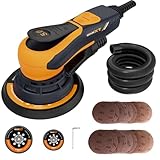
Overview: The MAXXT Electric Orbital Sander combines advanced ergonomics with professional performance in a corded design. Its EC brushless motor powers both 5-inch and 6-inch pads with a 5mm oscillation, making it suitable for diverse woodworking applications from panel processing to fine furniture work.
What Makes It Stand Out: Innovative dual-mode speed control offers unprecedented precision—a throttle lever for maximum speed adjustment and rpm+/- buttons for six fixed speeds. The symmetrical, ambidextrous design supports one or two-handed operation, while electronic braking stops the pad almost instantly for safety. Central vacuum integration ensures superior dust management.
Value for Money: This sander punches above its weight class with premium features typically found in higher-priced European models. Including dual pads and advanced controls at a mid-range price point represents excellent value. The EC motor’s longevity and reduced vibration translate to lower long-term ownership costs.
Strengths and Weaknesses: Strengths include ergonomic ambidextrous design, dual speed control modes, electronic braking safety, dual pad versatility, and excellent dust collection. The EC motor runs cooler with less vibration fatigue. Weaknesses: corded design restricts mobility, orange color may not appeal to all users, and brand recognition lags behind industry giants. No sandpaper included is a notable omission.
Bottom Line: A top choice for professionals prioritizing comfort, control, and safety. The MAXXT excels in extended use scenarios where ergonomic design and precise speed management outweigh cordless convenience.
9. 5-Inch Random Orbital Sander, Cordless Sanding Machine Compatible with Dewalt 20V Battery(NO Battery), Brushless Electric Sander with Dust Collector, 6 Variable Speed for Woodworking, Furniture
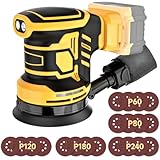
Overview: This cordless sander pushes performance boundaries for DeWalt 20V MAX users, reaching an impressive 13,500 RPM. Designed for furniture and woodworking, it offers six variable speeds from 7,000 RPM, making it versatile enough for both aggressive material removal and delicate finishing work.
What Makes It Stand Out: The 13,500 RPM maximum speed leads its class, enabling faster project completion. Eight intake ports create exceptional dust collection efficiency, funneling debris into the detachable bag. Thermal and overload protection safeguard the brushless motor, while the generous 20-sheet sandpaper bundle (P60-P240) covers all grit needs out of the box.
Value for Money: As a tool-only option, it’s priced aggressively for DeWalt-compatible users. The extensive sandpaper assortment adds $15-20 value. For those requiring batteries, total cost rises significantly. Compared to premium brands, it offers 90% of performance at 60% of the price, making it a smart budget-conscious choice.
Strengths and Weaknesses: Strengths include class-leading speed, superior dust collection, comprehensive sandpaper inclusion, and robust safety features. Cordless freedom enhances maneuverability on large furniture pieces. Weaknesses: 5-inch pad limits coverage area, no battery included, and maximum speed may be overkill for novices. Build quality feels less substantial than premium brands.
Bottom Line: Best suited for experienced woodworkers with DeWalt batteries who value speed and efficiency. The high RPM capability makes it ideal for production environments where time is money.
10. MAXXT Electric 2.5mm Random Orbital Sander Brushless 350W 3A Multi-function Variable Speed Electric Corded Orbital Sanders Machine with 10 Sanding Paper for Woodworking (R7303-2.5mmOrbit)

Overview: The MAXXT R7303 specializes in fine-detail finishing with its compact 2.5mm orbit, making it ideal for final passes on woodworking projects. The 350W brushless EC motor delivers consistent power through six variable speeds, while the corded design ensures uninterrupted operation for precision tasks.
What Makes It Stand Out: The 2.5mm orbit diameter is specifically engineered for swirl-free, ultra-smooth finishes on furniture and cabinetry. It shares MAXXT’s innovative dual-mode speed control—throttle lever for ramping and rpm+/- for fixed settings—allowing micro-adjustments critical for fine work. Electronic braking and the symmetrical two-hand grip design enhance safety and control.
Value for Money: This specialized tool is priced accessibly for hobbyists and professionals needing a dedicated finish sander. While less versatile than 5mm models for material removal, it eliminates the need to compromise on final finish quality. The included 10 sandpapers and 1-year warranty provide peace of mind and immediate usability.
Strengths and Weaknesses: Strengths include specialized 2.5mm orbit for superior finishes, advanced speed controls, ergonomic ambidextrous design, electronic braking, and warranty coverage. The EC motor runs smoothly with minimal vibration. Weaknesses: not suitable for heavy stock removal, corded design limits mobility, and the niche orbit size requires owning a second sander for rough work. No vacuum port mentioned.
Bottom Line: An excellent secondary sander for craftsmen obsessed with perfect finishes. Purchase this for final sanding stages, but pair with a more aggressive model for complete project versatility.
The Brushless Revolution: Why 2026 Changes Everything
Understanding the Core Technology Shift
Brushless motors aren’t new, but the 2026 implementation represents a quantum leap in sophistication. Early brushless sanders simply replaced brushed motors with sensorless BLDC designs, offering modest efficiency gains. Today’s fourth-generation brushless systems integrate hall-effect sensors, thermal management chips, and predictive algorithms that optimize torque delivery 1,000 times per second. This isn’t just about longer runtime—it’s about maintaining consistent orbit speed under load, eliminating the bog-down that plagued even premium brushed models when attacking dense maple or epoxy-filled grain.
The real game-changer lies in field-oriented control (FOC) algorithms that treat the motor not as an on/off device, but as a continuously variable power delivery system. When your pad encounters a tough spot of end grain, the controller anticipates the resistance spike and preemptively increases torque before speed drops. This results in scratch patterns so consistent that many professional finishers are skipping grits in their progression, saving hours on large projects.
From Brushed to Brushless: A Paradigm Change
The transition we’re seeing in 2026 goes beyond the motor itself. Manufacturers have redesigned every supporting component—gearboxes, bearings, and even the cooling fans—to work as an integrated system rather than a collection of parts. The elimination of brush dust alone extends bearing life by 40%, but the real benefit is the motor’s ability to operate at lower temperatures. Cooler running means tighter tolerances, which translates to less wobble in the orbit and finer finishes straight off the tool.
For the buyer, this paradigm shift means rethinking your entire evaluation criteria. RPM ratings have become nearly meaningless because intelligent speed control maintains optimal cutting velocity regardless of load. Instead, focus on torque curves and thermal performance specs—numbers that manufacturers are finally publishing thanks to new industry standards.
Smart Integration: The Connected Sander Era
AI-Powered Material Detection Systems
The most revolutionary feature appearing across premium 2026 models is integrated material sensing. Using a combination of acoustic analysis and motor load monitoring, these sanders can distinguish between soft pine, hard oak, MDF, and even detect when you’ve hit a pocket of glue or filler. Within the first three seconds of contact, the onboard microprocessor adjusts orbit speed, applied pressure recommendations, and dust extraction flow to match the material.
This technology eliminates the guesswork that leads to swirl marks and burn-through. For automotive technicians, it means automatically switching modes when transitioning from body filler to clear coat. For woodworkers, it prevents the heartbreak of sanding through a veneer before you realize the glue line was softer than the substrate. The system learns your common materials and builds a personal database, getting smarter with every project.
IoT Connectivity and Workshop Integration
Gone are the days of sanders as isolated tools. 2026’s revolutionary models feature low-power Bluetooth mesh networking that syncs with your dust collector, air filtration system, and even your shop lights. When you pick up the sander, the dust collector ramps to the optimal CFM for your current grit and material, while overhead lighting brightens to eliminate shadowing on the work surface.
This integration extends to maintenance tracking. The sander monitors bearing vibration signatures, brush wear (in hybrid models), and filter clogging, sending alerts to your phone before failures occur. For professional shops, fleet management software tracks runtime across multiple sanders, optimizing service schedules and reducing costly downtime. The data also helps identify which operators might benefit from technique training based on abnormal vibration patterns or excessive pressure application.
App-Based Customization and Control
While some purists scoffed at smartphone integration for power tools, the 2026 app ecosystem has matured into something genuinely useful. Beyond basic speed adjustment, these apps now offer orbital pattern customization—allowing you to fine-tune the relationship between rotation and orbit diameter for specific finishes. Working on a live-edge slab with bark inclusions? Create a custom profile that reduces aggression near edges while maintaining stock removal on flat sections.
The apps also serve as digital finish diaries, automatically logging your grit progression, pressure applied, and time spent on each section. For restoration professionals documenting their process, this creates an invaluable chain of custody. For learners, the app provides real-time haptic feedback through the tool’s handle, vibrating gently when you’re applying too much pressure or moving too quickly.
Battery Technology: Powering Through the Day
Next-Generation Battery Chemistry
2026’s brushless sanders are powered by batteries that would have seemed impossible recently. Silicon-graphene composite anodes have increased energy density by 35% while reducing weight, but the real revolution is in power delivery. These batteries can discharge at 15C rates without voltage sag, meaning your sander maintains full power until the last 5% of charge—a stark contrast to the gradual fade of older lithium-ion packs.
For the professional, this translates to consistent scratch patterns across an entire charge cycle. No more re-sanding sections because the tool slowed down imperceptibly as the battery drained. The new chemistry also excels in cold weather, maintaining 90% capacity at 30°F, making them viable for mobile contractors and outdoor restoration work year-round.
Adaptive Power Management Systems
Intelligent battery management in 2026 goes far beyond simple fuel gauges. Each battery pack contains a dedicated microcontroller that communicates with the tool’s motor controller, creating a closed-loop system that optimizes performance based on remaining capacity, temperature, and user settings. When you select “finish sanding” mode, the system prioritizes smooth operation and extends runtime by 25%. In “stock removal” mode, it allows brief current spikes that would trip protection circuits in older tools, dramatically improving material removal rates.
These systems also implement predictive thermal management, pre-cooling the battery during periods of low use by running the tool’s fan at low speed. This prevents the mid-afternoon performance dip that occurs when batteries heat up during continuous use. For shops running multiple shifts, fast-charging capabilities mean a 15-minute break can replenish 80% of a depleted pack—faster than you can grab lunch and review your next project.
Wireless Charging and Hot-Swap Innovation
The most revolutionary battery advancement in 2026 is the mainstream adoption of resonant wireless charging. Simply placing your sander on a charging mat between uses tops off the battery, eliminating the psychological barrier of “should I swap now or push through?” This trickle-charging approach means most professionals start each task with a near-full battery.
Hot-swap systems have also evolved. The battery no longer powers the tool directly; instead, it charges an internal supercapacitor bank that provides 30 seconds of full-power runtime. This allows battery changes without any interruption—no rebooting, no recalibrating, just seamless productivity. For production environments where every second counts, this feature alone justifies upgrading from 2025 models.
Ergonomic Breakthroughs: Reducing Operator Fatigue
Biometric-Driven Design Philosophy
2026’s revolutionary sanders are designed around human factors data collected from thousands of professional users. Manufacturers used motion capture and EMG sensors to identify exactly where fatigue sets in during eight-hour sanding sessions. The result is a new generation of tools with asymmetrical handles that match natural grip patterns and variable-density overmolding that provides firm support where you need it and cushioning where you don’t.
The most innovative designs feature adjustable weight distribution systems. A small internal counterweight slides fore and aft based on your grip position, keeping the tool perfectly balanced whether you’re sanding a horizontal tabletop or a vertical cabinet side. Some models even incorporate passive wrist stabilization using gyroscopic principles, reducing the muscular effort required to maintain control by an estimated 30%.
Advanced Vibration Dampening Materials
Vibration exposure remains the sander’s biggest health hazard, but 2026 brings materials science solutions that dramatically reduce risk. Aerogel-composite handles isolate vibration frequencies above 50Hz—the range most damaging to nerves and blood vessels—while allowing lower-frequency feedback that helps you sense pad engagement. This selective dampening preserves feel while protecting your hands.
Internal countervibration systems have also matured. Instead of simple weighted balancers, these use active mass dampers that adjust in real-time to counteract vibration at its source. The result is tools that achieve HAVS (Hand-Arm Vibration Syndrome) risk ratings below the 2.5 m/s² action level, even during aggressive sanding. For professionals who sand daily, this isn’t a comfort feature—it’s career preservation.
Weight Distribution and Balance Engineering
The obsession with lightweight tools has given way to a more sophisticated understanding of perceived weight versus actual weight. A well-balanced 4-pound sander feels lighter and causes less fatigue than a poorly balanced 3-pound model. Revolutionary 2026 designs achieve perfect balance through multi-density chassis materials and strategic component placement.
Some premium models feature dynamic balance adjustment. As you change grip or orientation, small internal weights shift automatically to maintain neutral balance. This is particularly valuable when working on complex three-dimensional pieces where you’re constantly changing attack angles. The technology originated in high-end camera gimbals but has been miniaturized to fit within a sander’s housing, representing a true cross-industry innovation.
Dust Collection: The Clean Air Revolution
Multi-Stage Filtration Systems
Dust collection in 2026 has evolved from a nuisance-reduction feature to a health-critical system. The best brushless random orbital sanders now incorporate three-stage filtration that captures particles down to 0.3 microns with 99.9% efficiency—exceeding HEPA standards. The first stage uses cyclonic separation to remove coarse debris, the second employs pleated nano-fiber filters for fine dust, and the third utilizes electrostatic precipitation to trap the ultrafine particles that penetrate deepest into lungs.
What makes these systems revolutionary is their self-monitoring capability. Pressure sensors across each stage track filter loading in real-time, adjusting suction power to maintain consistent CFM at the pad. When the final stage approaches capacity, the tool automatically reduces aggression to prevent dust escape, simultaneously alerting you that service is needed. This closed-loop approach ensures you’re never unknowingly breathing hazardous dust.
Self-Cleaning Mechanisms
Filter clogging has long been the Achilles’ heel of sander dust collection. 2026’s revolutionary models solve this with integrated pulse-jet cleaning systems that fire micro-bursts of compressed air backward through the filter every few minutes of operation. This dislodges surface-loading particles before they become embedded, maintaining near-new airflow throughout the workday.
For woodworkers generating massive amounts of fine dust, some systems add ultrasonic agitation that shakes loose particles at frequencies that break static cling without damaging filter media. The result is filters that last 10x longer and maintain consistent suction from first use to final replacement. The cleaning cycles are so brief and quiet that most users never notice them happening—just consistently clean air and surfaces.
Cyclonic Separation Technology
The integration of true cyclonic separation in compact sander vacuums represents a major engineering feat. By spinning dust-laden air at over 15,000 RPM in a vortex chamber, these systems remove 95% of debris before it ever reaches the filter. This not only extends filter life but also maintains suction power as the collection bin fills—traditional systems lose 30-40% of their CFM when the bin is half full.
Advanced models feature variable vortex geometry that adjusts based on dust type and volume. When sanding MDF that generates clouds of fine particles, the vortex tightens for maximum separation efficiency. On coarse material removal, it opens up to prevent clogging from large chips. This adaptability makes one system effective across all sanding tasks, eliminating the need for separate extractors for different materials.
Precision Control: Speed, Pressure, and Pattern
Adaptive Speed Modulation
Fixed-speed sanders are officially obsolete. 2026’s revolutionary brushless models feature speed controllers that respond to dozens of input variables: material density, grit size, pad pressure, ambient humidity, and even the age of your abrasive. The system maintains optimal cutting speed by adjusting motor RPM up to 50 times per second, ensuring you’re always in the sweet spot for maximum efficiency without creating pigtails or burn marks.
The technology uses acoustic emission monitoring—essentially listening to the sound of sanding—to detect when the abrasive is cutting efficiently versus just generating heat. When the signature indicates glazing or clogging, the system briefly pulses to higher RPM to clear the grit, then returns to optimal cutting speed. This autonomous optimization means even novices achieve professional results, while experts can push boundaries safely.
Intelligent Pressure Feedback
Excessive pressure remains the most common cause of premature abrasive failure and poor finishes. Revolutionary 2026 sanders incorporate capacitive pressure sensors in the pad assembly that measure downward force with ±50 gram accuracy. When you exceed the optimal pressure for your current settings, the handle provides haptic feedback—subtle vibration patterns that train your muscle memory without interrupting workflow.
Advanced models take this further with visual feedback projected onto the work surface. A micro-laser array creates a color-coded aura around the pad: green for perfect pressure, yellow for slightly heavy, red for excessive force that risks damage. This augmented reality approach is particularly valuable when training apprentices or when you’re fatigued and prone to leaning on the tool. The data also logs to your app, creating a pressure map of your technique that identifies areas for improvement.
Optimized Orbit Patterns for 2026
The relationship between rotation and orbit diameter—called the throw ratio—has been refined through computational fluid dynamics and millions of hours of field data. 2026’s best sanders offer variable throw ratios that automatically adjust based on task. For leveling, a 3/16” orbit with aggressive rotation clears material quickly. For finish passes, the tool shifts to a 3/32” orbit with slower rotation, creating a tighter scratch pattern that buffs out easier.
Some revolutionary models even incorporate non-circular orbits. By moving the pad in a Reuleaux triangle or elliptical path, these sanders eliminate the inherent “sweet spot” problem of traditional random orbitals, where the center area cuts less aggressively. This uniform cut pattern means fewer passes and more consistent results across the entire pad surface, reducing overall sanding time by 15-20% on large panels.
Pad Technology: The Unsung Hero
Quick-Change Systems Evolved
Hook-and-loop has finally been dethroned. While still common on entry-level models, revolutionary 2026 sanders feature magnetic attachment systems with mechanical locking. Rare-earth magnets provide instant alignment and hold, while a quarter-turn cam lock prevents accidental release during aggressive sanding. The system maintains perfect pad balance because there’s no hook-and-loop thickness variation, and abrasive changes take literally two seconds.
For production environments, some manufacturers offer auto-feed systems that index through a roll of abrasive, automatically advancing to fresh grit when sensors detect wear. This eliminates the downtime of manual changes entirely, making it feasible to use fresh paper for every piece in a high-end furniture shop where consistency is paramount.
Material-Specific Pad Formulations
The pad itself has become a sophisticated component rather than an afterthought. 2026’s revolutionary designs use multi-density foam formulations with different hardness zones. The outer ring is firmer for aggressive material removal, while the center is softer to prevent dish-out on uneven surfaces. For veneer work, there are pads with micro-perforations that increase vacuum hold-down, preventing delicate surfaces from lifting or tearing.
Thermal management has also become critical. New pads incorporate phase-change materials that absorb heat during heavy sanding and release it slowly during breaks, keeping the work surface cooler and preventing resinous woods from gumming up the abrasive. Some premium pads even have embedded thermocouples that feed temperature data to the sander’s control system, triggering automatic cool-down cycles before damage occurs.
Thermal Management in Backing Pads
Heat buildup kills abrasives and damages workpieces. Revolutionary 2026 pads feature active cooling channels that connect to the dust extraction port, pulling cooling air across the pad surface even when dust collection is minimal. This airflow reduces pad temperature by up to 25°F during aggressive sanding, dramatically extending abrasive life and preventing heat-induced discoloration on sensitive woods like cherry or maple.
For metal and composite work where static electricity is problematic, conductive silicone pads dissipate static buildup through the dust collection hose, eliminating the shock hazard and preventing dust from clinging to the work surface. This is particularly valuable in aerospace and marine applications where static can damage sensitive components or create explosion risks.
Safety Innovations: Protecting the Craftsman
Kickback Detection and Prevention
Random orbital sanders have always been relatively safe compared to other power tools, but 2026 models add sophisticated inertial sensors that detect the sudden deceleration indicative of pad grab or catch. Within 5 milliseconds of detecting a kickback event, the electronic brake engages while simultaneously reducing motor torque, preventing the tool from jerking out of your hands or damaging the workpiece.
For vertical surface sanding where drops are a concern, some models include gyroscopic drop detection that automatically shuts down the motor if the tool falls more than six inches. This prevents the horror scenario of a spinning sander hitting the floor and launching across the shop, potentially causing injury or damaging other equipment.
Overload Protection Circuits
Traditional thermal overload protection was crude—wait for the tool to get hot, then shut it down. 2026’s brushless systems use predictive thermal modeling that tracks current draw, ambient temperature, and historical usage patterns to anticipate overheating before it happens. When the model predicts thermal overload in the next two minutes, it gently reduces power output, maintaining productivity while protecting the motor.
More importantly, these systems protect the battery. High discharge rates can permanently damage lithium cells, but intelligent controllers now throttle performance based on battery temperature and state of health. This means a five-year-old battery won’t be pushed to the same limits as a fresh pack, extending its usable lifespan and preventing dangerous thermal runaway events.
Dust Ignition Prevention Systems
For those working with explosive dusts—aluminum, magnesium, or certain fine organic powders—2026 brings certified intrinsically safe sanders. These models eliminate all possible ignition sources: the motor is fully encapsulated, switches are sealed reed relays, and even static discharge is grounded through multiple redundant paths. The dust collection system maintains positive pressure to prevent dust ingress into the motor housing.
While niche, this technology demonstrates how far manufacturers have gone in considering every hazard. Even standard models now include spark-suppression circuits on the motor controller and flame-retardant plastic formulations that won’t sustain combustion if a bearing fails and creates metal-on-metal contact.
Performance Metrics: Beyond the Spec Sheet
Real-World Runtime vs. Advertised
Manufacturers have historically quoted runtime based on ideal conditions: low speed, light pressure, perfect ambient temperature. 2026’s reputable brands are moving toward a standardized “professional duty cycle” rating that simulates real work: 50% aggressive material removal, 30% intermediate sanding, 20% fine finishing, with pressure variations and temperature cycling. This gives you a far more accurate expectation of all-day performance.
When evaluating tools, look for runtime ratings that specify the battery capacity used (amp-hours at a standard discharge rate) and the exact duty cycle tested. A sander that runs 45 minutes on a 5Ah battery under realistic conditions is more valuable than one advertised at 90 minutes under lab conditions. Also consider “effective runtime”—the percentage of time the tool operates at full performance versus thermally throttled operation.
Vibration Standards and Certifications
The ISO 5349 standard for vibration measurement has been updated for 2026 to include multi-axis testing and duty-cycle weighting. Revolutionary sanders now publish “vibration dose” ratings that accumulate exposure over time, helping you comply with workplace safety regulations. Tools achieving A(8) ratings below 2.0 m/s² allow unlimited daily use under most occupational health guidelines.
Look for models with independent certification from organizations like HAVTEC or the European Agency for Safety and Health at Work. These third-party validations test production units, not just prototypes, ensuring the tool you buy matches the specifications. Some manufacturers even include built-in vibration dosimeters that track your daily exposure and alert you when it’s time to switch tasks or take a break.
Decibel Levels and Hearing Safety
Noise-induced hearing loss is cumulative and permanent, yet sanders have traditionally been loud enough to require hearing protection. Revolutionary 2026 designs use acoustic engineering to reduce noise at the source: optimized fan blade designs that minimize turbulence, acoustic dampening in the housing, and slower motor speeds made possible by higher torque. Premium models achieve sound power levels below 75 dB(A), making them safe for limited use without hearing protection under OSHA guidelines.
The key metric is sound power level (LwA) rather than sound pressure level (LpA) measured at the ear. Sound power is independent of measurement distance and gives a true indication of the tool’s acoustic output. When comparing models, a 3 dB reduction represents halving the acoustic energy—significant progress that protects your hearing during decades of work.
Industry-Specific Applications
Automotive Refinishing Requirements
Body shops demand sanders that excel at feather-edging, produce perfectly flat surfaces, and operate continuously in harsh environments. Revolutionary 2026 automotive sanders feature sealed bearings rated for ISO 5 cleanroom standards, preventing paint contamination from lubricant outgassing. Their dust collection systems integrate directly with downdraft tables, maintaining negative pressure to prevent overspray contamination.
Speed control is critical—clear coats require ultra-consistent 3,000-4,000 RPM operation without the speed fluctuations that cause pigtails. Look for models with “clear coat mode” that locks speed within ±2% and provides visual confirmation of constant RPM. For plastic bumper repair, some sanders include “flexible substrate” settings that reduce orbit throw to prevent substrate distortion while maintaining cutting efficiency.
Fine Woodworking Demands
Furniture makers and luthiers need surgical precision and the ability to work for hours on intricate pieces. Revolutionary sanders for this market prioritize ultra-low vibration, exceptional balance, and dust collection that prevents fine dust from settling into open grain. Pad diameters have standardized at 5” and 6” with ultra-low profile designs that let you see the work surface clearly.
For instrument makers, some models offer “zero-vibration” modes that sacrifice a bit of material removal speed for near-perfect smoothness. These sanders can run for 20 minutes on a piece of spruce without creating any sympathetic resonance that might stress the wood. The apps for these tools include wood species databases with pre-configured settings for everything from balsa to lignum vitae.
Marine and Composite Work
Sanding fiberglass, carbon fiber, and epoxy requires aggressive material removal without delamination or fiber pull-out. Revolutionary marine sanders feature aggressive 3/8” orbits and high-torque motors, but with sophisticated load sensing that prevents digging into the substrate. Their dust collection is engineered to handle the long, clogging fibers of fiberglass mat, with wide-diameter hoses and cutters that chop fibers before they reach the filter.
For epoxy work, temperature monitoring is crucial—overheating softens the resin and smears it rather than sanding it. These sanders include infrared temperature sensors that monitor the work surface in real-time, automatically backing off when temperatures approach the resin’s softening point. The pads are non-marring and conductive to dissipate static, preventing dust attraction to the tacky surface.
Total Cost of Ownership Analysis
Initial Investment vs. Long-Term Value
A revolutionary 2026 brushless sander might cost 2-3x more than a brushed model from 2024, but the total cost of ownership tells a different story. Factor in abrasive savings from intelligent speed control (30-40% longer life), reduced healthcare costs from lower vibration exposure, and elimination of downtime from thermal shutdowns, and the premium tool often pays for itself within 6-12 months of professional use.
Consider also the resale value. Tools with smart features and connectivity retain 60-70% of their value after two years, while basic models drop to 30-40%. The ability to transfer digital service records to a new owner adds significant value in the professional used tool market. When calculating ROI, include the cost of batteries—unified battery platforms across multiple tools reduce your per-tool investment and simplify inventory management.
Warranty and Service Network Considerations
Revolutionary technology requires revolutionary support. Leading manufacturers now offer 5-year warranties on brushless motors and 3 years on electronics, reflecting confidence in the reliability of solid-state systems. Crucially, these warranties cover dust-related failures—a common exclusion in older contracts that essentially nullified coverage for sanders.
Evaluate the manufacturer’s service network before buying. Tools with modular designs allow field replacement of wear components like bearings and switches without specialized tools. Some brands offer loaner programs that ship a replacement tool overnight while yours is in for service, eliminating downtime. For remote users, consider manufacturers that provide detailed service manuals and sell parts directly—nothing is more frustrating than a $400 tool rendered useless by a $5 proprietary part that’s backordered for months.
Resale Value in the Professional Market
The professional tool market has embraced connected tools, and resale values reflect this. A 2026 smart sander with documented service history, firmware updates, and low vibration hours commands premium prices on the used market. The ability to reset the tool to factory defaults and transfer the digital service record to a new owner provides transparency that benefits both parties.
Tools from manufacturers with active firmware update programs actually appreciate in value as new features are added via software. A sander that launched in early 2026 with basic AI features might gain advanced pattern recognition or new material profiles by late 2026, effectively becoming a better tool without physical modification. This software-enhanced longevity is unprecedented in power tools and represents a fundamental shift in how we should evaluate purchase decisions.
Environmental and Sustainability Factors
Carbon-Neutral Manufacturing
Progressive manufacturers are achieving carbon neutrality for their sander production through renewable energy, material recycling, and carbon offset programs. Look for third-party certifications like Climate Neutral or PAS 2060. These companies often use recycled aluminum for housings and bioplastics derived from plant waste for non-structural components, reducing the tool’s cradle-to-grave carbon footprint by up to 60%.
The repairability of these tools also factors into environmental impact. Modular designs with standard fasteners and publicly available service manuals mean tools stay in service for 10+ years rather than being discarded when a single component fails. Some manufacturers have implemented take-back programs that refurbish old tools for resale in developing markets, creating a circular economy that benefits everyone.
Recyclable Component Design
Revolutionary 2026 sanders are designed for disassembly at end-of-life. Snap-fit connections replace adhesives, and components are labeled with material codes for easy sorting. Circuit boards use lead-free solder and are designed to be removed intact for precious metal recovery. Even the magnets in brushless motors are reclaimed using automated processes that demagnetize and extract rare earth elements for reuse.
Battery recycling has become standardized, with manufacturers required to fund collection and processing programs. The new silicon-graphene chemistry is actually easier to recycle than older cobalt-heavy formulations, recovering over 95% of materials for use in new batteries. When purchasing, check if the manufacturer participates in industry recycling initiatives—this is becoming a legal requirement in the EU and is expected in North America by 2027.
Energy Efficiency Standards
The 2026 Energy Independent Contractor (EIC) standard rates sanders based on material removed per watt-hour of electricity consumed. Premium models achieve ratings of 4.5+ grams per Wh, while older brushed models struggle to reach 2.0. This efficiency translates directly to lower operating costs and reduced generator load for mobile contractors.
Smart chargers also contribute to efficiency. They communicate with the grid to charge during off-peak hours when renewable energy is abundant, and can even feed power back from the battery to smooth grid demand spikes. While this vehicle-to-grid concept is nascent, it represents the future of workshop energy management, turning your tool batteries into a distributed energy resource.
Making Your Decision: A Buyer’s Framework
Assessing Your Workshop Needs
Before investing in a revolutionary 2026 sander, audit your current workflow. How many hours per week do you actually sand? What materials dominate your projects? Do you work on-site or in a dedicated shop? A hobbyist building two projects monthly doesn’t need AI material detection, while a professional cabinet shop will see immediate ROI from features that reduce rework and extend abrasive life.
Consider your existing ecosystem. If you’re already invested in a battery platform, the cost of switching includes new batteries and chargers. However, if your current platform lacks the power delivery needed for advanced features, the upgrade might be justified. Calculate the total cost: tool + batteries + charger + dust extraction upgrades + app subscriptions (if any). A $300 tool that needs $400 in supporting infrastructure is really a $700 investment.
Feature Prioritization Matrix
Create a weighted scoring system based on your priorities. Rate importance (1-10) for: finish quality, speed, ergonomics, dust collection, connectivity, battery life, durability, and cost. Then score each model you’re considering on these factors. This objective approach prevents you from overvaluing flashy features you’ll never use while undervaluing fundamentals like vibration control that affect your health daily.
For most professionals, the top three priorities should be: vibration levels (health), dust collection (health and finish quality), and consistent power delivery (efficiency). AI features are valuable but secondary to these fundamentals. For hobbyists, ergonomics and ease of use often trump ultimate performance. Be honest about your needs—buying more tool than necessary is as wasteful as buying too little.
Test Before You Buy: What to Look For
Despite all specifications, nothing replaces hands-on testing. When possible, demo a sander on a project similar to your typical work. Pay attention to vibration transmission through your hands after 10 minutes of use—subtle buzziness that seems minor initially can become painful after an hour. Check dust collection efficiency by sanding a dark wood and inspecting the surrounding area for fine dust that escaped.
Test the app connectivity and user interface. Is it intuitive? Does it add value or just complexity? Try the quick-change pad system under realistic conditions—cold hands, awkward angles. Evaluate the balance by sanding a vertical surface; a tool that feels perfect flat may become unwieldy when held overhead. Finally, check serviceability: can you access the bearings and brushes (if any) with standard tools? The best tool is one you can keep running for a decade.
Frequently Asked Questions
What makes a brushless random orbital sander “revolutionary” in 2026 versus just “good”?
The revolution lies in intelligence and integration. A good sander has a reliable brushless motor and decent dust collection. A revolutionary 2026 model features AI that adapts to your material, connectivity that orchestrates your entire dust collection system, and predictive maintenance that prevents failures before they occur. It’s the difference between a tool that simply spins and one that collaborates with you to achieve better results while protecting your health.
How much should I expect to invest in a truly revolutionary brushless sander setup?
Expect to spend $400-$600 for the sander itself, plus $200-$400 for batteries and charger if you’re not already on that platform. Professional-grade dust extraction adds another $300-$800 depending on whether you need HEPA filtration and auto-start capabilities. While the initial investment is significant, most professionals see payback within a year through reduced abrasive costs, fewer health issues, and increased productivity.
Do I really need AI and app connectivity for woodworking?
It depends on your work volume and precision requirements. Hobbyists can achieve excellent results with traditional techniques, but AI features significantly reduce the learning curve and prevent costly mistakes on expensive wood. For professionals, material detection and pressure feedback directly impact profitability by reducing rework and abrasive waste. The connectivity becomes invaluable for fleet management and maintaining service records across multiple tools.
Will my old batteries work with new 2026 brushless sanders?
Generally, no. The advanced power management and communication protocols of 2026’s brushless systems require batteries with integrated microcontrollers and higher discharge rates. While some manufacturers maintain physical compatibility, older batteries can’t deliver the current needed for features like adaptive torque control, resulting in performance that’s worse than a brushed tool. Consider it an opportunity to upgrade to the new silicon-graphene chemistry that transforms runtime and power delivery.
How do I evaluate vibration claims when manufacturers use different standards?
Look for ISO 5349 certification with the 2026 updates that include multi-axis measurement and duty-cycle weighting. Reputable manufacturers publish vibration spectra showing frequency distribution, not just overall magnitude. Pay attention to the A(8) daily exposure value—tools rated below 2.5 m/s² allow unlimited use under most regulations. Independent testing from organizations like HAVTEC provides the most reliable comparisons.
Are the dust collection improvements in 2026 models really that much better?
Yes, dramatically. Three-stage filtration with cyclonic separation captures 99.9% of particles down to 0.3 microns, compared to 85-90% for older systems. Self-cleaning mechanisms maintain consistent suction throughout the day, while integrated temperature and humidity sensors prevent filter clogging. The difference is visible—minimal dust on surfaces and dramatically cleaner air quality readings in real-world shop environments.
What maintenance do these advanced sanders require?
Paradoxically, less than older models. Brushless motors eliminate brush replacement, and sealed bearings are pre-greased for life. The main maintenance involves cleaning dust from sensors, occasional filter replacement, and firmware updates. The tools monitor bearing health via vibration analysis and alert you when service is needed. Most wear components are modular and user-replaceable without special tools, reducing service costs and downtime.
Can the smart features be disabled if I prefer manual control?
Absolutely. All revolutionary 2026 sanders allow you to operate in “dumb mode” with fixed speed and no connectivity. However, most users find that leaving material detection and pressure feedback active while disabling app notifications provides the best experience. The AI enhances your skills without taking over, and you can always override its recommendations. Think of it as power steering—you can still drive manually, but why would you?
How do these sanders perform with aftermarket pads and abrasives?
Compatibility varies by manufacturer. Premium models automatically detect pad changes via NFC tags and adjust settings accordingly. Using non-OEM pads may disable some smart features but won’t damage the tool. For best results, stick with manufacturer-recommended pads that have the correct balance, hole pattern, and stiffness. The price premium is offset by better performance and longer abrasive life from optimized interaction.
What’s the expected lifespan of a revolutionary 2026 sander with heavy professional use?
With proper maintenance, 10+ years is realistic. Brushless motors have minimal wear components, and modular electronics can be replaced individually rather than scrapping the entire tool. Manufacturers are designing for a second life, with refurbishment programs that replace worn parts and update firmware for resale. The limiting factor may be battery platform obsolescence, but industry standardization efforts aim to ensure 10-year compatibility for professional platforms.
See Also
- 10 Brushless Random Orbital Sanders with Longest Battery Life in 2026
- 10 Brushless Random Orbital Sanders for Extended Workshop Sessions in 2026
- 10 Brushless Random Orbital Sanders for Longer Runtime on Job Sites in 2026
- 10 Brushless Random Orbital Sanders That Eliminate Swirl Marks on Hardwood in 2026
- 10 Brushless Random Orbital Sanders Every Pro Woodworker Needs in 2026