Table of Contents
If you’ve ever watched a router chew through hardwood, you’ve seen the blizzard of fine particles that explodes into the air. That isn’t just sawdust—it’s a microscopic cocktail of wood fibers, chemical binders, and potentially toxic finishes that can infiltrate deep into your lungs. For professional woodworkers and serious DIYers tackling dust-heavy router jobs in 2026, a basic respirator simply doesn’t cut it anymore. The evolving understanding of respiratory hazards, combined with stricter workplace regulations and breakthrough filtration technology, means your lung protection needs to function as a complete system.
The core respirator unit is just the beginning. The right accessories transform generic PPE into a personalized, high-performance breathing apparatus that you’ll actually want to wear for hours. We’re talking about upgrades that eliminate fogging, improve communication, extend filter life, and provide real-time data about the air you’re breathing. This guide breaks down the essential components that separate a bare-minimum setup from a professional-grade respiratory protection system engineered specifically for the intense particle generation of modern routing operations.
Top 10 Respirator Accessory
Detailed Product Reviews
1. Kingdder 30 Pcs Half & Full Face Respirator Mask Replacement Parts Compatible with 6000 Series Inhalation Valve 6893, Port Gasket 6895 & Valve 6889

Overview: The Kingdder 30-piece replacement kit provides a comprehensive solution for maintaining 6000 series half and full face respirators. This bulk package includes ten each of inhalation port gaskets (6895), inhalation valves (6893), and valve replacements (6889), offering everything needed for multiple maintenance cycles across several masks.
What Makes It Stand Out: This kit’s standout feature is its sheer comprehensiveness—30 components covering all critical wear points. The silicone construction ensures durability while maintaining flexibility for a proper seal. The inclusion of all three component types eliminates the need to source parts separately, saving significant time and effort for safety managers and frequent users who manage multiple respirators.
Value for Money: At this quantity, the per-piece cost drops substantially compared to OEM replacements. For industrial settings or professionals using respirators daily, this bulk approach can reduce maintenance costs by 40-60% annually. Rather than replacing entire masks when valves degrade, users can refresh components quarterly, maximizing their original equipment investment while maintaining safety compliance.
Strengths and Weaknesses: Strengths include exceptional quantity value, high-grade silicone material, and perfect compatibility with 6000 series masks. The precision fit design minimizes leakage risks. Weaknesses involve potential over-purchase for occasional users, and the need to verify specific 6000 series model compatibility. Storage requirements for unused parts may also be a consideration for small workshops.
Bottom Line: Ideal for construction crews, manufacturing facilities, or dedicated DIYers, this kit delivers professional-grade maintenance capacity at a fraction of OEM costs. For high-frequency respirator users, it’s an indispensable inventory item that ensures both safety compliance and operational continuity.
2. Kingdder 18 Pcs Half and Full Face Respirator Mask Replacement Parts Compatible with 6000 Series Inhalation Port Gasket 6895 and Inhalation Valve 6893 and Valve Replacement 6889, Each 6 Pcs

Overview: Kingdder’s 18-piece kit offers a scaled-down yet complete maintenance solution for 6000 series respirators. With six each of port gaskets (6895), inhalation valves (6893), and valve replacements (6889), this package balances affordability with adequate supply for moderate usage scenarios, making it practical for smaller operations.
What Makes It Stand Out: This kit hits the sweet spot between bulk options and minimal sets. It provides the same silicone quality and precise fit as its larger counterpart but in quantities more manageable for small businesses or serious hobbyists. The streamlined package reduces upfront investment while still delivering multiple replacement cycles for one or two respirators without unnecessary surplus.
Value for Money: While the per-unit cost is slightly higher than the 30-piece bundle, it remains significantly more economical than purchasing individual OEM components. For users replacing parts every 3-4 months, this kit provides approximately a year’s supply, offering 30-50% savings over piecemeal buying. It eliminates waste for those not managing large equipment inventories.
Strengths and Weaknesses: Strengths include right-sized quantities, identical material quality to larger kits, and straightforward installation. The comprehensive component set ensures complete refreshes. Weaknesses mirror the 30-piece version—compatibility must be confirmed, and the price per piece is marginally higher. It may still be excessive for truly occasional users who need only annual replacements.
Bottom Line: Perfect for independent contractors, small workshop owners, or homeowners undertaking periodic renovation projects. This kit provides professional-grade components without the overcommitment of bulk purchasing, making it the most practical choice for moderate respirator maintenance needs where quality and value must balance.
3. Angksorm 6000 Series Full and Half Face Respirators Parts - 4pcs Inhalation Port Gasket 6895 and 4pcs Inhalation Valve 6893

Overview: The Angksorm replacement set delivers a minimalist approach to respirator maintenance, providing four inhalation port gaskets (6895) and four inhalation valves (6893) for 6000 series masks. This eight-piece kit focuses on the most frequently replaced components for light-duty users maintaining a single respirator unit.
What Makes It Stand Out: Angksorm emphasizes OEM specifications and 100% silicone construction, targeting users who prioritize exact-fit quality over quantity. The streamlined offering eliminates complexity—users receive only the two most critical wear items, reducing confusion about which components need periodic replacement. This focused approach appeals to those wanting premium materials without surplus inventory.
Value for Money: With fewer pieces, the upfront cost is lower, making it accessible for budget-conscious buyers. However, the per-piece price runs higher than bulk alternatives. For users replacing parts annually or biannually, this kit provides 1-2 years of coverage, offering adequate value without excess. It represents a smart choice for those wanting OEM-quality maintenance without committing to larger quantities they’ll never use.
Strengths and Weaknesses: Strengths include certified OEM dimensions, premium silicone durability, and no-nonsense packaging. The quality matches major brands without inflated pricing. Weaknesses are the limited quantity and absence of 6889 valve replacements, requiring separate purchase for complete overhauls. The small count makes it unsuitable for multi-mask operations or heavy industrial use where frequent changes are necessary.
Bottom Line: An excellent entry-level maintenance kit for homeowners, occasional painters, or DIY enthusiasts. While not comprehensive enough for professionals managing multiple units, it delivers OEM-quality components for single-respirator upkeep, making it a cost-effective choice for infrequent but critical replacement needs where simplicity matters most.
4. Respirator Accessories - fit test solution
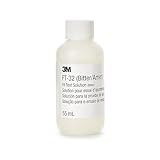
Overview: The 3M FT-32 Bitter Fit Test Solution is a specialized safety compliance tool designed to verify respirator seal integrity. This OSHA-standardized solution comes in a compact bottle for qualitative fit testing, ensuring masks provide adequate protection against airborne contaminants in workplace environments.
What Makes It Stand Out: As an official 3M product meeting OSHA standards, this solution provides regulatory certainty that generic alternatives cannot match. The bitter formulation delivers an unmistakable taste when leakage occurs, eliminating ambiguous test results. This clear pass/fail indicator is critical for workplace safety documentation and liability protection, making it the industry standard.
Value for Money: While seemingly expensive for a small bottle, each unit conducts dozens of fit tests, making the per-test cost minimal. For employers, this investment pales compared to potential OSHA fines or health claims from inadequate protection. The solution’s reliability prevents costly retesting and ensures compliance during inspections. It’s an essential operational expense, not a discretionary purchase.
Strengths and Weaknesses: Strengths include 3M brand reliability, OSHA compliance, clear test results, and long shelf life. The bitter taste is universally detectable even in minute quantities. Weaknesses involve single-application scope—it’s useless for actual respirator maintenance or cleaning. The small size risks running out unexpectedly without backup inventory. Some users find the taste overly potent during accidental exposure.
Bottom Line: Mandatory for any organization requiring documented respirator fit testing. Whether for industrial hygiene programs or construction site safety, this solution provides legally defensible compliance. Individual users serious about protection verification will also appreciate its reliability. Don’t compromise with unverified alternatives when safety certification is required.
5. ANDELI Powered Air Purifying Respirator Accessory Replaceable filter

Overview: This ANDELI replacement filter serves as a critical component for the AKJJOHXJAIR1-1USFBA Powered Air Purifying Respirator system. Designed specifically for this PAPR unit, the filter maintains the system’s powered air filtration capabilities, protecting users in hazardous environments where standard respirators prove insufficient.
What Makes It Stand Out: The filter’s proprietary design ensures seamless integration with the ANDELI PAPR, preserving the unit’s certified protection levels. Unlike generic alternatives that might compromise airflow or filtration efficiency, this OEM accessory maintains the system’s balanced pressure and battery life. The engineered media captures particulates while allowing optimal motor performance, which is crucial for powered systems.
Value for Money: As a necessary consumable, its value derives from protecting your substantial PAPR investment. Using non-certified filters risks voiding warranties and reducing system effectiveness. While priced at a premium compared to standard respirator filters, the cost per use remains low when considering the PAPR’s enhanced protection and comfort. Regular replacement prevents costly motor strain from clogged filters.
Strengths and Weaknesses: Strengths include perfect compatibility, maintained system performance, and reliable filtration. The OEM guarantee ensures safety ratings remain valid. Weaknesses are the extremely limited compatibility—useless for any other brand or model. Availability may be restricted, and the price reflects OEM exclusivity. Users must track replacement schedules carefully to avoid unexpected downtime.
Bottom Line: Essential for any AKJJOHXJAIR1-1USFBA PAPR owner. There’s no substitute for OEM filters in maintaining system integrity and safety certifications. Budget for regular replacements and stock spares to avoid operational downtime. For this specific PAPR, acceptance of proprietary consumables is unavoidable but necessary for optimal performance.
6. Kingdder 60 Pcs Half and Full Face Respirator Mask Replacement Parts Compatible with 6000 Series Inhalation Port Gasket 6895 and Inhalation Valve 6893 and Valve Replacement 6889, Each 20 Pcs

Overview: This comprehensive maintenance kit from Kingdder provides 60 replacement components for 6000 series respirators, including inhalation port gaskets, valves, and valve replacements. Designed for both half and full-face models, the package extends equipment lifespan through proactive maintenance rather than complete replacement.
What Makes It Stand Out: The kit’s completeness sets it apart—offering 20 pieces each of three critical components ensures you’re prepared for multiple maintenance cycles. Silicone construction delivers superior durability compared to standard rubber alternatives, resisting degradation from chemicals and environmental exposure. The precision-engineered design guarantees a secure fit that minimizes air leakage, crucial for maintaining safety ratings.
Value for Money: At bulk quantities, this kit represents significant savings versus purchasing individual OEM parts or replacing entire respirators. For professionals requiring regular maintenance, the per-unit cost drops substantially. The silicone material’s longevity further amplifies value, reducing replacement frequency compared to cheaper alternatives.
Strengths and Weaknesses: Strengths include comprehensive coverage of wear-prone components, premium silicone durability, and perfect compatibility with 6000 series units. The straightforward installation requires no specialized tools. However, the kit focuses solely on inhalation components—exhalation valves aren’t included. Compatibility is limited to 6000 series models, and the packaging lacks organization for part identification.
Bottom Line: This Kingdder kit is an essential investment for regular respirator users prioritizing safety and cost-efficiency. While not universal, its quality materials and comprehensive approach make it invaluable for 6000 series owners seeking reliable maintenance solutions.
7. Tellegloww 2 Pcs Replacement Parts Lens Compatible with 6000 Series Full Face Respirator and 20 Pcs Peel off Lens Cover Compatible with 6000, 6700, 6800, 6900 Series Full Face Cover, Tool Parts
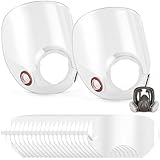
Overview: Tellegloww addresses a critical pain point for full-face respirator users with this lens replacement and protection bundle. The package includes two PC replacement lenses plus 20 peel-off protective covers, targeting professionals in painting, welding, and sanding applications where lens damage is frequent.
What Makes It Stand Out: The combination of replacement lenses and disposable covers creates a dual-layer protection strategy. The PC lenses feature high-impact resistance and anti-fog properties, while the peel-off covers with tear-tab design enable quick field changes without removing the respirator. The curved surface design ensures seamless integration with multiple 6000-series variants.
Value for Money: For technicians working in high-splatter environments, this kit pays for itself by preventing single-use respirator disposal. The 20-pack of covers extends operational time between lens changes, while the two backup lenses provide insurance against catastrophic damage. Compared to OEM lens replacements, this offers competitive pricing with added protective covers.
Strengths and Weaknesses: Strengths include excellent optical clarity, broad compatibility across 6000-6900 series, and the innovative peel-off cover system that maintains visibility in messy conditions. Installation is tool-free and intuitive. Weaknesses include limited lens quantity for heavy-duty operations, no storage case for spare covers, and the covers may not adhere perfectly in extreme temperatures.
Bottom Line: This Tellegloww bundle is a smart purchase for professionals seeking to maximize respirator longevity in abrasive or coating-intensive environments. The protective cover system alone justifies the investment, making it a practical accessory for maintaining clear vision and safety compliance.
8. 3M P100/OV Odor/Particulate Multi-Purpose Reusable Respirator 65021, Medium Size, NIOSH-APPROVED Organic Vapor Cartridge & P100 Rated Filters, Flexible, Thermoplastic Faceseal For Comfort (65021H1-DC)

Overview: The 3M 65021 represents professional-grade respiratory protection in a reusable package. This medium-sized half-face respirator combines NIOSH-approved P100 particulate filtration with organic vapor cartridge capability, making it suitable for diverse industrial applications from painting to chemical handling.
What Makes It Stand Out: Dual-certified protection is the headline feature—99.97% filtration efficiency for both solid/liquid aerosols and specific organic vapors. The oil-resistant P-series rating extends usability in lubricant-rich environments. 3M’s thermoplastic faceseal technology delivers exceptional comfort during extended wear, while adjustable head straps ensure personalized fit stability.
Value for Money: As a premium 3M product, the initial investment exceeds budget alternatives, but the reusable design and replaceable cartridge system deliver long-term economy. The versatile P100/OV configuration eliminates need for multiple specialized masks. For professionals requiring certified protection, the NIOSH approval justifies every penny versus uncertified competitors.
Strengths and Weaknesses: Strengths include industry-leading filtration certification, lightweight construction reducing neck fatigue, and flexible faceseal adapting to facial contours. The cartridge system allows quick filter changes. Weaknesses include medium-size limitation—users outside average facial dimensions may experience fit issues. Cartridge replacement costs accumulate, and the thermoplastic seal requires careful cleaning to maintain pliability.
Bottom Line: For serious DIYers and professionals prioritizing certified protection, the 3M 65021 is unmatched. Its dual filtration capability and proven comfort make it worth the premium, provided you fit the medium size profile and commit to proper maintenance schedules.
9. Maasechs 4 Pcs Respirator Storage Bag with Zipper 15.35" x 16" Reusable Gas Mask Bag Large 10 Mil Thick Clear for Welding Mask

Overview: Maasechs delivers a practical storage solution with this four-pack of heavy-duty PVC respirator bags. Measuring 15.35 by 16 inches, these transparent carriers accommodate most half and full-face respirators, protecting them from dust, moisture, and physical damage between uses.
What Makes It Stand Out: The 10-mil (0.25mm) PVC thickness provides robust protection without rigidity, striking an ideal balance between durability and flexibility. The engineered zipper head resists separation—a common failure point in storage bags. Clear construction enables instant respirator identification, while printed storage instructions promote proper maintenance protocols.
Value for Money: Four bags for the price of one hard case represents excellent value for multi-respirator households or job sites. The reusable design and tear-resistant material ensure years of service. For professionals requiring separate clean/dirty storage, the multi-pack configuration is particularly economical.
Strengths and Weaknesses: Strengths include generous sizing fitting even full-face units, heavy-duty zipper reliability, and transparent design speeding equipment retrieval. The PVC material wipes clean easily and resists chemical degradation. Weaknesses include zipper closure being slower than drawstring alternatives, lack of ventilation holes for drying, and the 10-mil thickness may still puncture under sharp impacts. No shoulder strap limits portability.
Bottom Line: These Maasechs bags offer reliable, cost-effective protection for respirator storage. While not a substitute for rigid cases in harsh transport conditions, they excel at workshop and jobsite organization. The four-pack quantity makes them ideal for systematic storage programs.
10. Respirator Mask Drawstring Bag High-Density Waterproof Material Respirator Storage Bag,1 Pack
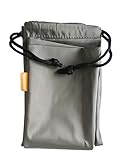
Overview: This minimalist storage bag provides basic protection for respirator masks in a compact, lightweight package. Constructed from high-density waterproof material, the 12 by 13.4-inch pouch serves as a convenient carrying solution for workers transporting equipment between locations.
What Makes It Stand Out: Simplicity defines this product—the drawstring closure enables one-handed operation and quick access, unlike zipper alternatives. The waterproof fabric construction offers superior moisture protection compared to mesh or thin plastic options. Its compact size specifically targets half-face respirators, reducing bulk in tool bags and backpacks.
Value for Money: As a single-pack budget option, this bag delivers essential protection at minimal cost. For occasional users or as a backup carrier, the price point is attractive. However, frequent users may find better value in multi-pack alternatives. The waterproofing feature alone justifies the modest investment versus unprotected transport.
Strengths and Weaknesses: Strengths include lightweight portability, effective water resistance, and lens-scratch prevention. The drawstring design allows fast opening/closing and accommodates various respirator sizes within its dimensions. Weaknesses include single-unit packaging limiting value, lack of transparency requiring labeling, and minimal impact protection. The thin material may wear at stress points over time, and absence of ventilation promotes moisture retention if stored wet.
Bottom Line: This drawstring bag serves as a functional, no-frills solution for basic respirator protection. Ideal for mobile workers needing splash protection and scratch prevention, though it shouldn’t replace proper drying and storage protocols. Consider it a cost-effective accessory rather than a primary storage system.
1. Premium HEPA Filter Cartridges
Understanding Filter Classifications for Router Dust
Router operations generate particles as small as 0.3 microns, particularly when working with MDF, particle board, or engineered lumber containing formaldehyde-based resins. Standard P100 filters capture 99.97% of these particles, but 2026-grade HEPA cartridges now integrate multi-stage filtration with activated carbon layers that also tackle volatile organic compounds (VOCs) released when routing coated or pressure-treated materials.
Key Performance Indicators to Evaluate
Look for filters with a minimum efficiency reporting value (MERV) rating of 17+ and those tested against both oil-based and non-oil-based particulates. The breathing resistance rating—measured in millibars—directly impacts comfort during extended use. Premium cartridges maintain low resistance even when loaded with dust, preventing the fatigue that causes workers to loosen straps or remove masks prematurely.
Compatibility and Housing Design Considerations
Thread patterns vary between manufacturers, and 2026 has seen a shift toward bayonet-style connections with locking indicators that prevent cross-threading. Check your respirator’s model number against the filter’s compatibility list, paying special attention to whether the housing includes pre-filter attachment points or requires adapter rings.
2. Pre-Filters and Spark Guards
Extending Primary Filter Lifespan
Pre-filters act as sacrificial barriers that capture larger wood chips and debris before they reach your expensive HEPA cartridge. In router applications where material is ejected at high velocity, a quality pre-filter can extend main filter life by 300-400%. These mesh or foam layers trap the visible particles while allowing airflow to remain unrestricted.
Material Selection for High-Velocity Debris
Standard foam pre-filters tear easily when struck by router shrapnel. Instead, opt for spark-guard rated materials—originally designed for welding applications—that feature interwoven metal fibers or reinforced polymer matrices. These withstand direct impacts from ejected workpieces and prevent the micro-tears that compromise filtration integrity.
Maintenance and Replacement Schedules
Inspect pre-filters after every routing session. Unlike primary filters that clog gradually, pre-filters fail catastrophically when punctured. Establish a visual inspection protocol looking for thinning spots or embedded debris. Most professionals replace them weekly during heavy use, though 2026’s color-changing saturation indicators have made replacement timing more scientific than guesswork.
3. Comfort-Focused Face Seal Systems
Silicone vs. Thermoplastic Elastomer Seals
The face seal determines both protection level and wearability. Silicone seals offer superior chemical resistance and maintain flexibility in cold shop environments, but premium thermoplastic elastomers (TPE) now provide comparable performance with 40% less weight. For router work where you’re constantly checking workpieces, a seal that rebounds quickly after being temporarily displaced is crucial.
Facial Hair and Fit Factor Realities
No seal works properly with facial hair, but 2026’s hybrid designs incorporate micro-channel structures that accommodate light stubble better than traditional flat gaskets. If you can’t shave daily, look for seals with multiple contact zones that create redundant barriers. These designs achieve fit factors of 50+ even with 24-hour beard growth, though clean-shaven remains the gold standard.
Sweat Management and Skin Health
Routing is hot work. Advanced seals now integrate antimicrobial silver ions and moisture-wicking channels that direct perspiration away from the seal interface. This prevents the skin maceration and acne mechanica that plague woodworkers. Some systems even offer interchangeable seal sets for different seasons—thicker for winter, breathable mesh-backed for summer.
4. Advanced Harness and Suspension Systems
Weight Distribution Engineering
A loaded respirator with PAPR unit can exceed 2.5 pounds. Modern harnesses use three-point or even five-point suspension systems that distribute this load across your skull’s natural pressure planes, not just your neck muscles. Look for designs where the weight sits on the occipital bone rather than pulling forward on your cervical spine.
Quick-Release Mechanisms
Traditional buckles require two hands and several seconds to remove—dangerous if you’re having a medical issue or need to quickly clear debris from your face. 2026’s magnetic quick-release systems detach with a single pull but maintain 50+ pounds of tensile strength during normal use. Ensure the mechanism is recessed to prevent accidental activation when leaning against machinery.
Adjustability for Prescription Eyewear and Headwear
If you wear safety glasses or prescription frames, your harness must accommodate temple pieces without breaking the seal. Premium systems feature split-strap designs that route above and below earpieces, while others include integrated spectacle kits that mount inside the facepiece. For those who wear beanies or hard hats, look for harnesses with hard hat integration clips that maintain respirator position when adding or removing headwear.
5. Voice Projection and Communication Diaphragms
Acoustic Diaphragm Technology
Router noise often exceeds 95 dB, making communication nearly impossible. Voice projection diaphragms—ultra-thin membranes that vibrate with your speech—can increase vocal clarity by 15-20 dB without compromising filtration. The latest 2026 models use dual-membrane designs that separate low and high frequencies, making your voice more intelligible over background noise.
Electronic Amplification Options
For team environments, consider diaphragms with integrated microphones that connect to shop intercom systems. These passive systems require no batteries and use piezoelectric elements powered by your voice’s mechanical energy. When evaluating these, check the signal-to-noise ratio specification—anything above 25 dB provides clear transmission in active shops.
Installation and Seal Integrity
Adding a diaphragm creates a potential leak path. Quality kits include compression gaskets and torque specs for installation. Test the assembly with a negative-pressure fit test after installation. The diaphragm should sit flush with no gaps, and the membrane should flex freely without creasing.
6. Anti-Fog and Vision Enhancement Solutions
Permanent Anti-Fog Lens Coatings
The temperature differential between your exhaled breath and cold shop air creates relentless fogging. While spray-on treatments last hours, factory-applied hydrophilic coatings chemically bond to polycarbonate lenses and remain effective for 12-18 months. These coatings work by spreading moisture into an invisible film rather than droplets.
Exhalation Valve Redirectors
Fogging often originates from exhalation valves positioned too close to your eyewear. Redirector kits reposition the valve downward and away from your line of sight. Look for models with adjustable angles—every face is different, and a fixed 45-degree angle might direct air straight onto your glasses while a 60-degree angle clears them entirely.
Prescription Insert Compatibility
If you require corrective lenses, avoid wearing contacts under a respirator—the reduced blink rate causes dryness. Instead, invest in a prescription insert system that mounts inside the facepiece. 2026’s modular designs allow opticians to install your exact prescription into carrier frames that click securely into the respirator, positioned at the optimal 12-14mm eye relief distance.
7. Powered Air-Purifying Respirator (PAPR) Upgrades
Battery Life and Power Management
Modern PAPR units for woodworking now run 10-12 hours on a single charge, but not all batteries are equal. Lithium iron phosphate (LiFePO4) batteries offer triple the charge cycles of standard lithium-ion and won’t combust if punctured by a flying workpiece. Look for units with swappable batteries and LED indicators showing remaining runtime in 15-minute increments, not vague color codes.
Flow Rate Optimization for Router Applications
Router work generates concentrated dust plumes that require higher airflow than general woodworking. Minimum flow rates of 6 CFM (cubic feet per minute) are essential, but variable-speed models that boost to 8-10 CFM when sensors detect increased particle density provide adaptive protection. The blower should be belt-mounted or back-mounted to avoid interfering with router operation.
Noise Levels and Vibration Dampening
Early PAPRs sounded like hair dryers, making them unsuitable for router work where hearing protection is already needed. Current brushless motors operate below 55 dB, and vibration isolation mounts prevent the buzz from traveling through your skull. Test units in person if possible—the best designs position the blower behind your head, using your body as a natural sound barrier.
8. Decontamination and Hygiene Accessories
pH-Neutral Cleaning Solutions
Wood dust becomes acidic when mixed with sweat, degrading silicone seals over time. Harsh alcohol cleaners accelerate this process. Use pH-neutral, quaternary ammonium-based cleaning solutions specifically formulated for respirator components. These break down organic matter without attacking polymer bonds or leaving residue that could cause skin irritation.
Ultraviolet-C Storage Cases
Moisture trapped in respirators breeds bacteria and mold between uses. UV-C storage cases provide 10-minute sanitization cycles that eliminate 99.9% of pathogens without chemicals. The best designs include forced-air drying fans and ozone generators that neutralize odors. For 2026, look for cases with dosimeter chips that confirm the UV bulbs are delivering effective germicidal doses—bulbs degrade over time.
Hygiene Kits for Multi-User Environments
In shared workshops, individualized hygiene is critical. Assign each user their own seal set, harness, and exhalation valves, storing them in color-coded pouches. This approach costs 60% less than dedicated respirators per person while preventing cross-contamination. The kits should include skin-safe sanitizing wipes and individual filter storage bags to prevent accidental mixing of partially-used cartridges.
9. Environmental Monitoring Devices
Clip-On Particle Counters
Real-time data changes behavior. Clip-on particle counters the size of a USB drive now monitor your breathing zone continuously, alerting when concentrations exceed NIOSH recommended exposure limits (RELs). For router work, set alerts for 1 mg/m³ of respirable dust—the point where even P100 filters begin loading rapidly. The data logs help identify which operations generate the most dust, informing process improvements.
Humidity and Temperature Sensors
Filter performance degrades in high humidity. Integrated sensors that display relative humidity and temperature inside your facepiece help you recognize when condensation is compromising the filter media. This is particularly critical when routing in unconditioned spaces or during seasonal transitions. Some advanced systems automatically adjust PAPR flow rates based on these readings.
Data Logging for Compliance
OSHA’s 2026 silica enforcement includes documentation requirements. Monitors with 30-day rolling storage and Bluetooth export capabilities create audit trails showing exposure levels throughout work shifts. When selecting these devices, verify they measure in the 0.3-10 micron range specifically, as this captures respirable dust most relevant to router operations.
10. Smart Technology Integration Kits
Bluetooth Connectivity and Mobile Apps
Smart respirators connect to shop-wide air quality management systems, alerting supervisors when filters need replacement or fit is compromised. The accompanying apps track filter life based on actual usage data rather than calendar time, potentially saving hundreds in premature replacements. Ensure the Bluetooth module is intrinsically rated—router sparks in dusty environments create rare but real ignition risks.
NFC Tagging for Maintenance Tracking
Near-field communication tags embedded in filter housings store installation dates, usage hours, and exposure levels. Scanning with a smartphone automatically updates maintenance logs and orders replacements when thresholds are reached. This eliminates the guesswork of “how long have I used this filter?” and prevents the dangerous practice of using filters beyond their safe service life.
Firmware Updates and Future-Proofing
Your respirator shouldn’t become obsolete. Kits with user-updatable firmware ensure compatibility with emerging standards and improved algorithms for battery management or flow control. Check the manufacturer’s update history—companies that regularly release improvements are investing in long-term user safety rather than planned obsolescence.
Understanding Router Dust Hazards in 2026
The Evolution of Engineered Wood Products
Modern sheet goods contain nanoparticle binders and flame retardants that weren’t present in traditional lumber. Routing these materials aerosolizes particles smaller than 1 micron that penetrate deep into alveoli. Recent toxicology research shows these particles carry adsorbed chemicals directly into lung tissue, making filtration efficiency more critical than ever.
Silica Contamination in Wood Dust
Even “pure” wood dust often contains silica from sanded finishes or mineral contamination from kiln drying. OSHA’s updated silica standard now applies to many woodworking operations, requiring respiratory protection at concentrations above 50 µg/m³. This regulatory shift means your respirator system must be rated for silica exposure, not just nuisance dust.
Cumulative Exposure Calculations
Intermittent router use doesn’t mean low exposure. Fifteen minutes of heavy routing can generate peak concentrations of 50 mg/m³—100 times the recommended limit. Modern exposure science uses time-weighted averages that account for these spikes, meaning inadequate protection during short bursts can still exceed daily permissible exposure limits.
Regulatory Compliance and Standards
NIOSH Approval Updates for 2026
NIOSH has revised its approval protocols to include real-world loading tests with actual wood dust rather than standardized test aerosols. Filters certified under the new TC-84A standards demonstrate performance under the specific challenges of woodworking, including humidity cycling and oil mist exposure from tool lubricants.
OSHA’s Enhanced Documentation Rules
New regulations require employers to document not just respirator issuance, but actual usage data. This includes fit test results, filter change logs, and exposure monitoring records. Accessories that generate electronic records streamline compliance and demonstrate due diligence during inspections.
International Standard Harmonization
With global supply chains, many woodworkers source equipment internationally. 2026 marks increased harmonization between NIOSH, European EN standards, and China’s GB standards. Understanding these equivalencies helps when purchasing accessories from international suppliers, though NIOSH-approved components remain the legal requirement for US commercial shops.
Cost-Benefit Analysis of Accessory Investment
Calculating Filter Life Extension
A $15 pre-filter that extends a $40 HEPA cartridge’s life from one month to four months pays for itself in the first replacement cycle. Factor in the labor cost of fit testing new cartridges, and the ROI becomes even more compelling. Most professional shops see 300-400% returns on strategic accessory investments within the first year.
Productivity Gains from Comfort
Discomfort causes frequent mask removal, which studies show reduces actual protection time by 40%. A $50 comfort upgrade that keeps the respirator on for full shifts can prevent a single silica-related health claim that would cost tens of thousands in workers’ compensation. The math is stark: comfort isn’t a luxury, it’s a financial imperative.
Insurance and Liability Considerations
Carriers increasingly offer premium discounts for shops implementing documented respiratory protection programs with smart monitoring. The accessory cost is often offset by 10-15% reductions in general liability premiums. Check with your insurer—some maintain approved equipment lists that qualify for immediate discounts.
Frequently Asked Questions
1. How often should I replace filters when using a router daily? For daily professional use, replace pre-filters weekly and primary HEPA cartridges monthly, regardless of appearance. Router dust loads filters faster than visible clogging suggests. Smart monitors that track pressure drop provide the most accurate replacement timing, typically indicating change at 50% flow reduction.
2. Can I use the same respirator for routing and finishing with solvents? Only if you use combination filters rated for both particulates and organic vapors. However, the activated carbon in vapor cartridges saturates quickly when exposed to solvent fumes, requiring replacement after 40 hours of cumulative exposure. Keep separate filter sets for routing and finishing to avoid premature wear.
3. What’s the best way to prevent my glasses from fogging under a respirator? Use a combination approach: a respirator with a downward-angled exhalation valve, factory-coated anti-fog lenses, and a proper fit that prevents breath leakage. Prescription inserts positioned at correct eye relief work better than wearing glasses under the facepiece.
4. Are PAPR systems worth the investment for hobbyist woodworkers? For occasional use, a well-fitted half-face respirator with quality accessories suffices. Invest in PAPR if you route more than 10 hours weekly, have respiratory sensitivities, or work with particularly toxic materials like phenolic plywood. The comfort improvement alone often justifies the cost for serious enthusiasts.
5. How do I know if my respirator fits properly for router work? Perform a negative-pressure fit test before each use: cover the filters and inhale gently. The facepiece should collapse slightly and remain so for 10 seconds without air leaks. For router work specifically, repeat this test while moving your head in routing motions—looking down at the workpiece often reveals fit issues standard tests miss.
6. What’s the difference between N95 and P100 filters for router dust? N95 filters capture 95% of particles but aren’t oil-resistant and often lack the structural rigidity for high-dust environments. P100 filters capture 99.97% of particles, resist oil degradation, and maintain integrity under heavy loading. For router work, P100 is the minimum acceptable protection.
7. Can I wash and reuse pre-filters? Never wash pre-filters designed for dry particulate capture—water collapses the fiber structure and creates gaps. Some metal mesh spark guards can be brushed clean, but foam and fabric pre-filters are disposable. Attempting to extend their life compromises your entire protection system.
8. How should I store my respirator between routing sessions? Use a UV-C sanitizing case or a sealed container with desiccant packs. Never leave it in a dusty shop environment where filters continue loading even when not in use. Store with straps extended to prevent elastic memory loss, and keep it away from direct sunlight that degrades silicone components.
9. Do I need separate respirator accessories for handheld vs. table routing? Table routing generally produces more concentrated dust plumes requiring higher airflow, making PAPR more valuable. Handheld routing involves more movement, prioritizing lightweight harnesses and secure fit. The same base respirator works for both, but optimize accessories for your primary application.
10. What new respirator technologies should I watch for in late 2026? Emerging technologies include graphene-enhanced filters with lower breathing resistance, biometric sensors that monitor blood oxygen levels through the facepiece, and AI-powered fit testers that use ultrasonic waves to detect micro-leaks. While promising, wait for NIOSH approval before adopting cutting-edge unproven systems.
See Also
- 10 Must-Have Disposable Dust Masks for Community Workshop Classes in 2026
- 10 Must-Have Disposable Dust Masks for Weekend Woodworkers in 2026
- 10 Must-Have Dust Mask Filters for MDF Dust Under $20 in 2026
- Top 10 Best P100 Respirator Masks for Fine Wood Dust in 2026
- We Tested 50 Respirator Cartridges—Here Are the 10 Best for MDF Dust 2026