Table of Contents
Choosing the right table saw for your workshop isn’t just about power or price—it’s about aligning the tool’s capabilities with your specific woodworking goals. Whether you’re building fine furniture, cranking out cabinetry, or tackling weekend DIY projects, the table saw remains the backbone of any serious workshop. In 2026, advancements in motor efficiency, safety systems, and digital integration are reshaping what we expect from these essential machines. With new features like wireless connectivity, adaptive braking, and AI-assisted alignment becoming increasingly common, selecting the ideal model demands more than just a cursory glance at horsepower and blade size.
Navigating the crowded marketplace of table saws can feel overwhelming. Budget models promise portability and affordability, while premium cabinet saws boast industrial-grade performance. But the best choice isn’t always the most expensive or feature-laden—it’s the one that seamlessly fits your workspace, workflow, and skill level. This comprehensive guide will walk you through the critical factors, emerging technologies, and often-overlooked considerations that should shape your decision. By the end, you’ll be equipped to choose a table saw that doesn’t just meet your current needs but evolves with your craftsmanship over time.
Top 10 Table Saws
Detailed Product Reviews
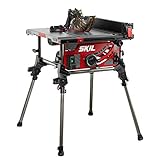
1. SKIL 15 Amp 10 Inch Portable Jobsite Table Saw with Folding Stand- TS6307-00
Overview:
The SKIL TS6307-00 is a robust 10-inch portable table saw designed for job site efficiency. Powered by a 15-amp motor, it delivers reliable performance for cutting hardwoods, plywood, and framing lumber. Its integrated folding stand enhances portability, making it ideal for contractors moving between locations.
What Makes It Stand Out:
This model features rack and pinion fence rails for smooth, accurate fence adjustments, ensuring precise cuts every time. The parallel blade alignment allows micro-adjustments to keep the blade aligned with the fence and miter slot. With a 4x4 cutting capacity at 90° and bevel cuts up to 47°, it handles thick materials and angled cuts with ease.
Value for Money:
Priced competitively, the SKIL TS6307-00 offers solid performance for its cost, especially given the included folding stand. It outperforms many budget models in accuracy and durability, making it a smart buy for DIYers and pros seeking a dependable portable saw.
Strengths and Weaknesses:
Strengths: Durable build, accurate fence system, deep cutting capacity, portable folding stand.
Weaknesses: Bevel adjustment lacks fine control; onboard storage is limited compared to competitors.
Bottom Line:
The SKIL TS6307-00 is a well-rounded, portable table saw that delivers professional-level performance at a mid-range price—ideal for job site versatility and precision.
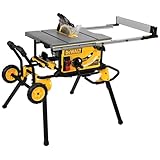
2. DEWALT Table Saw 10 Inch with Foldable Rolling Table Saw Stand, 15 Amp, 4800 RPM, 32-1/2-Inch Rip Capacity (DWE7491RS)
Overview:
The DEWALT DWE7491RS is a high-performance 10-inch table saw paired with a rolling stand, designed for portability and precision on job sites. Equipped with a 15-amp motor and 4800 RPM, it powers through dense materials effortlessly.
What Makes It Stand Out:
Its rack and pinion telescoping fence system ensures smooth, accurate rip cuts, while the 32.5-inch rip capacity exceeds most competitors. The onboard storage holds essential accessories, including a push stick and blade guard. The rolling stand offers excellent stability and fast setup.
Value for Money:
Though pricier than basic models, the DWE7491RS justifies its cost with superior build quality, expansive rip capacity, and convenient features like tool storage and a durable rolling stand—ideal for frequent on-site use.
Strengths and Weaknesses:
Strengths: Excellent rip capacity, sturdy rolling stand, precise fence system, ample onboard storage.
Weaknesses: Heavier than compact models; bevel adjustment can be stiff.
Bottom Line:
A top-tier portable table saw that excels in durability, accuracy, and convenience—highly recommended for professionals needing reliability and mobility.
3. DEWALT 15 Amp 8-1/4 in. Compact Portable Jobsite Table Saw (DWE7485)

Overview:
The DEWALT DWE7485 is a compact 8-1/4-inch table saw built for portability without sacrificing performance. With a 15-amp motor and 24.5-inch rip capacity, it’s engineered for cutting sheet goods and framing materials on the go.
What Makes It Stand Out:
Despite its smaller blade size, it delivers impressive 24.5-inch rip capacity—enough for most plywood ripping tasks. The rack and pinion fence system ensures accurate, repeatable cuts. Onboard storage keeps accessories organized, and the metal roll cage enhances durability.
Value for Money:
It offers excellent value for users prioritizing portability and durability. While the blade is smaller than 10-inch models, it’s more than capable for typical job site tasks and easier to transport.
Strengths and Weaknesses:
Strengths: Lightweight, durable roll cage, accurate fence, good rip capacity for size.
Weaknesses: Limited depth of cut compared to 10-inch saws; not ideal for thick hardwoods.
Bottom Line:
A reliable, portable table saw perfect for contractors and DIYers who need a lightweight, durable saw for sheet materials and general framing.
4. SKIL 15 Amp 8-1/4" Compact Portable Jobsite Table Saw (Stand SFS0001 Sold Separately)-TS6308-00

Overview:
The SKIL TS6308-00 is a compact 8-1/4-inch table saw tailored for job site flexibility. It features a 15-amp motor and delivers a 2.5-inch max depth of cut, making it capable of handling 3x lumber in a single pass.
What Makes It Stand Out:
With a 24.5-inch right rip and 12-inch left rip capacity, it handles sheet goods efficiently. The rack and pinion fence ensures smooth, parallel alignment for accurate cuts. Its compact design enhances portability and storage convenience.
Value for Money:
Offered at a competitive price, it delivers solid performance for light to medium tasks. Though the stand is sold separately, the core saw provides reliable functionality for budget-conscious users.
Strengths and Weaknesses:
Strengths: Deep cut capability for its class, expansive rip capacity, compact and portable.
Weaknesses: No included stand; fewer onboard accessories than premium models.
Bottom Line:
An efficient, affordable option for DIYers and pros needing a compact, capable saw for sheet materials and dimensional lumber—just budget extra for a stand.
5. Table Saw 10 Inch, 15 Amp 5000RPM Powerful Tablesaw With Stand & Protective Cover, 36 X 25 Inch Tabletop Saw 90° Cross Cut & 0-45° Bevel Cut, Adjustable Depth, for Woodworking, Metal, Plastic

Overview:
This 10-inch table saw combines power and versatility with a 15-amp motor and 5000 RPM speed, suitable for cutting wood, plastic, and even light metal. The 36 x 25-inch tabletop and included stand offer a stable working platform.
What Makes It Stand Out:
It supports 90° crosscuts and 0–45° bevel cuts with adjustable depth (74mm and 52mm respectively). The transparent blade guard improves safety and visibility, while dust collection and onboard tool storage enhance usability. The 24-month return policy adds peace of mind.
Value for Money:
It’s an affordable all-in-one package with a stand and protective cover. While not as durable as premium brands, it offers broad functionality for hobbyists and light-duty use.
Strengths and Weaknesses:
Strengths: Multi-material capability, good safety features, dust port, strong warranty.
Weaknesses: Build quality less robust; fence accuracy may drift over time.
Bottom Line:
A budget-friendly, versatile table saw ideal for hobbyists and occasional use—great value with solid features, though not for heavy professional work.
6. SKIL 10 Inch Heavy Duty Worm Drive Table Saw with Stand - SPT99-11

Overview:
The SKIL SPT99-11 is a rugged, professional-grade table saw designed for heavy-duty job site performance. Powered by a legendary worm drive system, it delivers exceptional torque for cutting through tough materials with ease. Its 30-1/2-inch rip capacity and 3-5/8-inch depth of cut make it ideal for demanding framing and construction tasks.
What Makes It Stand Out:
This saw’s worm drive design provides superior power and durability compared to standard direct-drive models. The precision rack and pinion fence system ensures smooth, accurate adjustments, while the rolling stand with 16-inch wheels offers unmatched mobility. The outfeed and left supports enable solo handling of large sheets.
Value for Money:
Priced competitively for its class, the SKIL SPT99-11 offers pro-level features without the premium cost. It outshines many portable saws in durability and cutting capacity, making it a smart investment for contractors.
Strengths and Weaknesses:
Strengths: High torque worm drive, excellent rip capacity, rugged stand, superior mobility.
Weaknesses: Heavier than standard models, dust collection could be more efficient.
Bottom Line:
The SKIL 10-inch worm drive saw is a powerhouse built for professionals who need reliable, high-performance cutting on the job site. Highly recommended for framing and construction use.
7. BOSCH GTS15-10 10 Inch Portable Jobsite Table Saw with Gravity-Rise Wheeled Stand, 15 Amp, 32-1/8 Inch Rip Capacity, 4 HP

Overview:
The BOSCH GTS15-10 is a high-performance portable table saw engineered for precision and convenience on the jobsite. With a robust 15-amp motor and Gravity-Rise stand, it combines power, accuracy, and ease of transport in one professional package.
What Makes It Stand Out:
Its standout feature is the Gravity-Rise wheeled stand, which allows smooth height adjustment with minimal effort. The convenience brake stops the blade in about three seconds, boosting productivity. Soft-start circuitry prevents power surges, while the open-frame design enhances durability.
Value for Money:
Though priced at the higher end, it delivers exceptional value through advanced safety, smooth operation, and long-term reliability. It outperforms many competitors in build quality and user-centric design.
Strengths and Weaknesses:
Strengths: Gravity-Rise stand, fast blade brake, soft-start motor, excellent rip capacity.
Weaknesses: Stand assembly can be cumbersome, dust collection is average.
Bottom Line:
The BOSCH GTS15-10 is a top-tier jobsite saw that excels in safety, convenience, and cutting performance—ideal for professionals seeking efficiency and precision.
8. DEWALT Portable Table Saw with Stand, 8-1/4 inch, up to 48-Degree Angle Cuts (DWE7485WS)

Overview:
The DEWALT DWE7485WS is a compact, job-site-ready table saw designed for portability and reliable performance. With an 8-1/4-inch blade and 24.5-inch rip capacity, it’s optimized for sheet goods and general carpentry work.
What Makes It Stand Out:
Its compact footprint makes it one of the most portable full-featured table saws available. The rack and pinion telescoping fence rails ensure smooth, accurate adjustments, while the blade brake and power-loss reset enhance safety and convenience.
Value for Money:
Offering DEWALT’s renowned durability at a mid-range price, it’s an excellent value for DIYers and pros needing a lightweight, dependable saw. The included stand adds to its practicality.
Strengths and Weaknesses:
Strengths: Lightweight and portable, reliable fence system, safety features, easy setup.
Weaknesses: Smaller blade limits depth of cut, stand feels less sturdy than premium models.
Bottom Line:
The DEWALT DWE7485WS is a smart choice for those prioritizing portability and safety without sacrificing performance—perfect for on-the-go cutting tasks.
9. Evolution R10TS 10" Jobsite Table Saw | 15A Powerful Motor | Multi-Material Cutting | 10" TCT Blade | 26” Rip Capacity | 3-3/8” Cut Depth | 0-45º Bevel | Precision Fence | Portable & Heavy-Duty

Overview:
The Evolution R10TS is a versatile, heavy-duty table saw engineered for multi-material performance. With a 15A motor and included 10-inch TCT blade, it handles wood, aluminum, and mild steel with ease, making it ideal for diverse job sites.
What Makes It Stand Out:
Its ability to cut metal without a separate blade is a game-changer. The dual rack and pinion fence system ensures micro-adjustable precision, while the 0-45° bevel and 3-3/8” cut depth provide excellent versatility. Onboard storage and outfeed support enhance usability.
Value for Money:
At its price point, it offers unmatched multi-material capability. The included blade and robust feature set deliver strong value, especially for metalworkers and finish carpenters.
Strengths and Weaknesses:
Strengths: Multi-material cutting, precise fence, strong motor, excellent safety features.
Weaknesses: Slightly heavier, bevel adjustment can be slow.
Bottom Line:
The Evolution R10TS is a powerhouse of versatility and precision—perfect for contractors who need one saw for multiple materials. Highly recommended.
10. Metabo HPT 10-Inch Single Bevel Compound Miter Saw, 15-Amp Power Saw with Xact Cut Shadow Line, Precision Miter Angles, Single Bevel 0-45°, 40T TCT Miter Saw Blade, Lightweight Design, C10FCG2

Overview:
The Metabo HPT C10FCG2 is a lightweight, precision-focused compound miter saw designed for accurate crosscuts and miter work. Powered by a 15-amp motor, it delivers 5,000 RPM for clean, fast cuts in wood and other materials.
What Makes It Stand Out:
The Xact Cut Shadow Line system projects a precise cut line, enhancing accuracy. The vice clamping system secures workpieces firmly, while the 0-52° miter and 0-45° bevel ranges offer excellent flexibility for trim and framing tasks.
Value for Money:
At a competitive price, it offers professional features like a high-tooth-count blade and a durable build. The 5-year warranty underscores its reliability, making it a solid investment.
Strengths and Weaknesses:
Strengths: Lightweight, accurate shadow line, strong clamping, quiet operation.
Weaknesses: Single bevel limits angled cuts, table support could be larger.
Bottom Line:
The Metabo HPT C10FCG2 is an excellent, user-friendly miter saw for precision work—ideal for trim carpenters and DIYers seeking accuracy and durability.
Understanding Table Saw Types and Their Uses
Before diving into features and specs, it’s essential to understand the different types of table saws available. Each category is designed with a specific purpose in mind, and choosing the right type sets the foundation for your entire buying decision.
Portable Table Saws
Portable table saws are lightweight, easy to transport, and ideal for job sites or small workshops. These models typically feature open stands, foldable designs, and lower power output. While they may lack the rigidity of heavier units, modern portable saws have improved dramatically in terms of accuracy and durability. They’re perfect for contractors or hobbyists who need mobility without sacrificing too much cutting performance.
Jobsite Table Saws
Sitting between portability and performance, jobsite table saws are built tougher than basic portable models. They often include enclosed stands with wheels, more powerful motors (usually 15-amp), and better dust collection. These saws are engineered to withstand daily construction site use while still being easy to move. If you split your time between the field and the shop, a jobsite saw might be your sweet spot.
Contractor Table Saws
Traditional contractor saws feature an open-stand design with a powerful motor mounted behind the blade. They offer more stability and cutting capacity than portable models and are often found in semi-professional workshops. One key characteristic is the use of a belt-driven system, which reduces noise and vibration. While less common today due to the rise of hybrid models, they’re still valued for their simplicity and repairability.
Hybrid Table Saws
Hybrid table saws blend elements of contractor and cabinet saws. They typically have enclosed cabinets, improved trunnion systems, and better dust collection than contractor models, all at a lower price point than full cabinet saws. These are excellent choices for serious hobbyists or small shop owners who want near-cabinet-saw performance without the cost or space requirements.
Cabinet Table Saws
At the top of the performance ladder are cabinet table saws. These are heavy-duty machines with fully enclosed cabinets, powerful direct-drive motors, and superior rigidity. Designed for continuous use in professional environments, they offer the highest levels of accuracy, smooth operation, and durability. While they require a dedicated space and significant investment, they deliver unmatched performance for precision woodworking.
Motor Power and Performance Considerations
The motor is the heart of any table saw, and understanding its capabilities is crucial to making an informed decision.
Horsepower and Amp Ratings
Motor power is typically expressed in amps (for corded models) or volts (for cordless). In North America, most table saws run on 15 amps, which is sufficient for ripping hardwoods up to 2 inches thick. However, higher-density materials or continuous heavy-duty cutting may demand more power. While some models boast “equivalent” horsepower, real-world performance often depends on the motor’s torque and thermal management.
Direct Drive vs. Belt Drive
Direct-drive motors connect straight to the blade arbor, offering higher RPMs and minimal power loss. Belt-drive systems, on the other hand, use pulleys and belts to transfer power, which can reduce vibration and noise. Belt drives also allow for better torque at lower speeds, making them ideal for demanding cuts. Each has trade-offs, and your choice should depend on your noise tolerance and cutting demands.
Soft-Start Technology
Many modern table saws include soft-start circuits that gradually ramp up motor speed at startup. This reduces electrical surges, extends motor life, and prevents sudden jolts that can destabilize the saw or the workpiece. It’s a small but valuable feature, especially in older electrical systems or shared workshops.
Blade and Arbor Compatibility
The blade is where the cutting happens, so compatibility and quality matter more than you might think.
Standard Arbor Size
Most table saws in North America use a 5/8-inch arbor, while European models often feature a 30mm arbor. Ensure your saw supports the blade size and type you plan to use—typically 10 inches, though some compact or specialized models use 8-inch blades. Adapter washers can sometimes allow smaller blades on larger arbors, but they may affect balance and safety.
Blade Quality and Selection
A high-quality blade can dramatically improve cut quality, reduce tear-out, and extend motor life. Different blade types—such as rip, crosscut, and combination—are optimized for specific tasks. Your saw should allow easy blade changes and provide adequate blade guard clearance for various blade thicknesses (kerf).
Blade Guard and Riving Knife Systems
Modern safety standards emphasize the importance of blade guards and riving knives. A riving knife, unlike an older-style splitter, moves with the blade height and tilt adjustments, reducing the risk of kickback. Look for systems that are easy to remove and reinstall, especially if you frequently switch between guarded and unguarded operations.
Table Size, Flatness, and Material
The table is your work surface, and its quality directly impacts accuracy and usability.
Cast Iron vs. Aluminum Tables
Cast iron tables are heavier, more rigid, and provide superior vibration damping. They also hold flatness better over time, which is essential for consistent cuts. Aluminum tables are lighter and resist rust but may flex slightly under heavy use. High-end aluminum tables with ribbed reinforcement can approach cast iron performance, but generally, cast iron remains the gold standard.
Table Flatness and Alignment
Even minor warping or misalignment can lead to binding, inaccurate cuts, and safety hazards. A flat table ensures smooth material movement, especially when using jigs or aftermarket fences. Many saws allow for trunnion and table alignment adjustments—familiarize yourself with these procedures before purchasing.
Extensions and Support Options
Larger workpieces require adequate support. Look for saws with built-in wings or the ability to add aftermarket extensions. Some models include fold-down or removable extension tables, which improve versatility without sacrificing portability.
Rip Capacity and Cutting Depth
These two specifications determine how large a piece you can cut and how thick a material you can handle.
Standard vs. Wide-Rip Configurations
Most table saws offer a standard rip capacity of 24 to 30 inches. If you regularly work with 4x8 sheets or wide slabs, consider models with 50-inch or even 54-inch rip capacity. Some saws achieve this with sliding tables or add-on rails, while others use extended fence systems.
Maximum Cutting Depth at 90 and 45 Degrees
Cutting depth determines how thick a material you can cut in a single pass. At 90 degrees, most 10-inch saws can cut up to 3 1/4 inches—sufficient for 4x4 stock. At 45 degrees, depth decreases due to blade angle. If you frequently cut thick dados or bevel large timbers, verify the maximum depth at both angles.
Fence Systems and Precision
The fence is arguably the most critical accessory for accuracy and repeatability.
Types of Fence Systems
T-style, Biesemeyer-style, and extruded aluminum fences dominate the market. Biesemeyer-style fences are renowned for rigidity and ease of micro-adjustment. T-style fences offer simplicity and affordability. Look for systems with minimal flex, smooth glide, and secure locking mechanisms.
Fence Alignment and Stability
A fence that wobbles or binds defeats the purpose of precision. Proper alignment—parallel to the miter slots and consistent across the table—is essential. Many high-end saws include tool-less adjustment systems or digital indicators to simplify setup.
Micro-Adjustment and Repeatability
Fine-tuning your fence position allows for precise cuts, especially in joinery. Systems with micrometer dials or vernier scales let you dial in measurements within thousandths of an inch. Repeatability ensures that once you set a dimension, you can return to it reliably.
Miter Gauges and Slot Compatibility
Miter cuts require precision, and the miter gauge system plays a big role.
Miter Slot Dimensions
Most saws use 3/4-inch wide miter slots, but depth and straightness can vary. Ensure your saw’s slots are machined accurately and parallel to the blade. Poor slot quality leads to binding or inaccurate angles.
Aftermarket Miter Gauge Options
Factory miter gauges are often basic. Upgrading to a digital or dual-pin miter gauge can greatly improve accuracy. Make sure the saw’s slots accept standard aftermarket gauges or offer T-track compatibility for enhanced customization.
Integrated Miter Systems
Some saws feature built-in miter fences or sliding crosscut tables. These systems offer greater support and precision than handheld gauges, especially for long crosscuts. Evaluate how easy it is to install and calibrate these accessories.
Dust Collection and Workshop Cleanliness
A clean shop is a safe and efficient shop. Dust collection is no longer an afterthought.
Dust Port Size and Placement
Look for a dust port that’s at least 2.5 inches in diameter—larger ports capture more fine dust. The port should be positioned to intercept dust at the source, typically near the blade and below the table. Poorly placed ports leave much of the debris behind.
Internal Design for Dust Flow
The saw’s internal cavity should be designed to channel dust toward the port. Fully enclosed cabinets with smooth internal surfaces perform better than open-stand designs. Some models include internal baffles or secondary ports for blade and blade guard collection.
Compatibility with Central or Mobile Dust Collectors
Ensure your saw works with your existing dust collection system. Hose attachment should be secure and easy to connect. Quick-connect fittings and swivel ports add convenience, especially in tight spaces.
Safety Features You Shouldn’t Overlook
Safety technology has advanced significantly in recent years, and some features are now essential.
Riving Knives and Anti-Kickback Devices
As mentioned earlier, a riving knife is a critical safety component. It prevents the kerf from closing and pinching the blade during a cut. Anti-kickback pawls help stop the workpiece from being thrown back, though they should be used carefully to avoid interfering with the cut.
Electronic Brake Systems
Some premium saws include electronic brakes that stop the blade in under two seconds after the power is cut. This reduces the risk of accidental contact and increases peace of mind, especially in busy workshops.
SawStop and Alternative Safety Systems
SawStop’s flesh-detecting technology is now licensed to other brands and has become a benchmark for safety. It stops the blade on contact with skin, minimizing injury. Alternatives like Bosch’s Reaxx use retractable blade systems. While effective, these systems require cartridge replacement after activation, adding to long-term costs.
Noise and Vibration Levels
A quieter, smoother saw isn’t just more pleasant—it’s often more accurate and durable.
Decibel Ratings and Sound Dampening
Table saws typically operate between 90 and 100 decibels. Some models incorporate sound-dampening materials or enclosures to reduce noise. If your workshop is in a residential area or you spend hours a day cutting, lower noise levels are a worthwhile consideration.
Vibration Reduction Techniques
Excessive vibration leads to poor cut quality and accelerated wear. Belt drives, cast iron construction, and balanced motors all help reduce vibration. Rubber isolation mounts and anti-vibration feet can also make a noticeable difference.
Space and Portability Needs
Your workshop layout and mobility requirements should heavily influence your choice.
Footprint and Clearance Requirements
Measure your space carefully. Cabinet saws can be over 30 inches wide and require rear clearance for motor access. Don’t forget to account for infeed and outfeed support—these can double the required floor space.
Weight and Mobility Features
Portable saws can weigh as little as 40 pounds, while cabinet saws exceed 500 pounds. Consider whether you need wheels, lifting handles, or detachable stands. Some models include folding stands with locking casters for easy repositioning.
Power Source and Electrical Requirements
Make sure your shop can support your saw’s power needs.
Corded vs. Cordless Models
Cordless table saws are emerging but remain niche due to power and runtime limitations. Most serious work still requires corded models. If you’re considering cordless, verify that it meets your cutting demands and has reliable battery-swapping systems.
Voltage and Circuit Needs
Standard 15-amp saws run on 120V and can plug into most household outlets. Larger cabinet saws often require 240V circuits, which may necessitate electrical upgrades. Always check the amperage draw and ensure your circuit won’t trip under load.
Digital Integration and Smart Features
The future of table saws is getting smarter.
Digital Readouts and Angle Displays
Digital angle gauges and fence position readouts eliminate guesswork. These systems provide real-time feedback on blade tilt and fence distance, improving setup speed and accuracy.
Connectivity and Firmware Updates
Some high-end models now offer Bluetooth or Wi-Fi connectivity for firmware updates, diagnostics, or integration with workshop management apps. While still emerging, these features could streamline maintenance and calibration.
Tool Memory and Preset Settings
Imagine recalling your last dado setup or preferred rip width with the press of a button. Advanced saws are beginning to include memory functions for common operations, reducing setup time and errors.
Budgeting and Long-Term Value
A table saw is a long-term investment—don’t focus solely on the sticker price.
Initial Cost vs. Total Ownership
Factor in maintenance, blade quality, dust collection upgrades, and potential safety cartridge replacements. A cheaper saw may cost more over time if it requires frequent repairs or lacks upgrade paths.
Warranty and Manufacturer Support
Look for brands with strong warranties (3+ years) and accessible customer service. Availability of replacement parts and technical support can extend your saw’s lifespan significantly.
Frequently Asked Questions
What’s the most important feature to look for in a table saw?
Accuracy and stability are paramount. A rigid table, reliable fence system, and proper alignment ensure consistent, repeatable cuts—more so than raw power.
Can I use a portable table saw for fine woodworking?
Yes, but with limitations. High-end portable saws can deliver good results, but they may lack the rigidity and dust control of stationary models. Fine woodworking often benefits from the precision of a cabinet or hybrid saw.
How often should I maintain my table saw?
Perform basic cleaning and blade checks after every few uses. Full maintenance—lubricating moving parts, checking alignment, and inspecting belts—should be done every 3 to 6 months, depending on usage.
Is a riving knife really necessary?
Absolutely. A riving knife is one of the most effective anti-kickback devices available. It moves with the blade and maintains consistent protection during height and tilt adjustments.
Do I need a 240V table saw?
Only if you’re running a heavy-duty cabinet saw in a professional setting. Most hobbyists and contractors can work efficiently with a 120V, 15-amp model.
How can I improve dust collection on my table saw?
Upgrade to a high-quality dust hood, use a larger diameter hose, ensure a tight seal at the port, and consider adding a secondary vacuum near the blade guard.
Are cheaper table saws dangerous?
Not inherently, but they may lack advanced safety features like riving knives, electronic brakes, or robust guarding systems. Always use push sticks, zero-clearance inserts, and proper technique regardless of price.
What’s the best way to calibrate a table saw?
Start by ensuring the miter slots are parallel to the blade, then align the fence to the slots. Check blade tilt accuracy with a digital gauge, and verify the table’s flatness with a straightedge.
Can I upgrade the fence on a budget table saw?
Yes—aftermarket fences like the Jessem or Microjig are compatible with many models and can dramatically improve accuracy and ease of use.
How long should a table saw last?
With proper care, a well-built table saw can last 20 years or more. Cast iron components, quality bearings, and routine maintenance are key to longevity.
See Also
- How to Choose the 10 Best Cabinet Table Saws for Pro Workshops in 2026
- How to Choose the 10 Best Compact Table Saws for Small Garages in 2026
- How to Choose the 10 Best Contractor Table Saws for Home Builders in 2026
- How to Choose the 10 Best Hybrid Table Saws for Garage Workshops in 2026
- How to Choose the 10 Best Hybrid Table Saws for Home Garages in 2026