Table of Contents
The modern mobile woodworker faces a unique paradox: the freedom to create anywhere comes with the invisible burden of breathing in some of the most hazardous airborne particles in any trade. Unlike stationary shop woodworkers who can install permanent dust collection systems, you’re packing your tools into a van, heading to job sites where air quality is an afterthought at best. That gorgeous reclaimed barn wood you’re sanding? It’s likely loaded with decades of pesticides, fungal spores, and crystalline silica. The MDF shelving you’re cutting in a client’s garage? It’s releasing formaldehyde and ultrafine particles that penetrate deep into lung tissue. In 2026, compact fold-up respirators have evolved from simple dust masks into sophisticated personal protection equipment, but navigating the options requires more than a quick Amazon search. This guide cuts through the marketing noise to help you understand what truly matters when your lungs are on the line and every cubic inch of your tool bag counts.
Top 10 Fold-Up Respirators
Detailed Product Reviews
1. 3M Aura Particulate N95 Respirator 9205+, Flat Fold Lightweight Design, Non-Valved, 20 Count (Pack of 1)

Overview: The 3M Aura 9205+ N95 Respirator delivers industrial-grade protection in a consumer-friendly 20-pack. This NIOSH-approved flat-fold design filters 95% of non-oil particles while maintaining a low profile that integrates seamlessly with safety glasses. The lightweight construction makes it suitable for extended wear during DIY projects, cleaning, or light construction work.
What Makes It Stand Out: The signature three-panel design allows natural facial movement, preventing that suffocating feeling common with cup-style masks. The embossed top panel effectively diverts exhaled air away from eyewear, significantly reducing fogging—a game-changer for bespectacled users. The innovative chin tab simplifies donning and adjustment, even with gloved hands. Unlike traditional N95s, the curved nose panel contours elegantly to facial features, creating a secure seal without pressure points.
Value for Money: At approximately $1-1.50 per mask, this 20-pack positions itself as a premium but accessible option. While cheaper alternatives exist, the Aura’s superior fit and comfort justify the modest price premium. For occasional users, this pack size prevents waste while ensuring you always have fresh respirators on hand. Heavy-duty users might find larger packs more economical.
Strengths and Weaknesses: Strengths include exceptional fit versatility across face shapes, minimal eyewear interference, and reliable filtration. The flat-fold design stores compactly. Weaknesses: lacks an exhalation valve, causing heat buildup during strenuous activity. The masks aren’t individually wrapped, potentially compromising hygiene in dirty environments. The non-valved design makes it unsuitable for some industrial applications where moisture exhaust is critical.
Bottom Line: Ideal for homeowners and hobbyists seeking N95 protection without sacrificing comfort. The fog-resistant design makes it particularly valuable for eyeglass wearers tackling dusty projects.
2. 3M Aura Particulate Respirator 9205+, N95, Pack of 20 Disposable Respirators, Individually Wrapped, 3 Panel Flat Fold Design Allows for Facial Movements, Comfortable, NIOSH Approved, Smoke

Overview: This 3M Aura 9205+ variant offers the same trusted N95 protection but with individual wrapping for enhanced hygiene. Each of the 20 respirators comes sealed, making this pack perfect for sporadic users or those requiring portable protection. The core three-panel flat-fold design maintains the Aura line’s reputation for comfort and reliable filtration against non-oil based particles.
What Makes It Stand Out: The individual packaging is the headline feature—each mask remains pristine until needed, crucial for toolbox or vehicle storage. The embossed panel and low-profile nose design continue to minimize eyewear fogging, while the chin tab ensures easy one-handed adjustment. The soft inner material and adjustable nose clip create a personalized seal that adapts to various face shapes without compromising protection.
Value for Money: Expect to pay a 15-20% premium over bulk-packaged equivalents. For most users, this upcharge is justified by extended shelf life and contamination prevention. The per-mask cost remains under $2, making it reasonable for quality-conscious consumers. However, the packaging creates more waste, and heavy users will find better value in larger quantities.
Strengths and Weaknesses: Strengths include superior hygiene control, consistent quality, excellent eyewear compatibility, and comfortable extended wear. The NIOSH approval guarantees performance standards. Weaknesses mirror the standard 9205+: no exhalation valve means heat and moisture retention during intense labor. The soft nose foam, while comfortable, may degrade faster than rubber alternatives. Individual wrapping, while protective, generates plastic waste.
Bottom Line: Perfect for contractors, inspectors, or DIYers who need grab-and-go protection. The individual wrapping ensures each mask performs optimally, making it worth the modest premium for intermittent use.
3. HAYANDLE Particulate Respirator Mask with Valve, Flat Fold Design Breathable Dust Sanding Construction Work, Made in Korea 10 Pack (White 10)

Overview: The HAYANDLE Particulate Respirator offers a compelling Korean-made alternative to American N95 standards. This 10-pack features a 3D flat-fold design with an exhalation valve, targeting users in hot, humid, or physically demanding environments. KOSHA certification provides assurance for construction, sanding, and woodworking applications where comfort during extended wear is paramount.
What Makes It Stand Out: The adjustable ear loops with S-hook conversion distinguish it from traditional headband designs, eliminating ear strain during all-day use. The advanced exhalation valve dramatically reduces heat and moisture buildup, while the 5-layer filtration claims 40-hour reusability—though this requires careful maintenance. Made in Korea, it offers build quality that rivals premium brands at a competitive price point.
Value for Money: Priced similarly to mid-tier 3M products but with valve inclusion and ear loop versatility, it presents solid value. The 10-pack size suits moderate users, though heavy users will find bulk 3M options more economical. The reusability claim could extend value, but users should follow manufacturer guidance strictly to maintain protection.
Strengths and Weaknesses: Strengths include superior breathability from the valve, comfortable ear loop system, effective fog reduction, and lightweight construction. Weaknesses: KOSHA certification differs from NIOSH, potentially affecting regulatory compliance in some US workplaces. The “reusable” claim may encourage unsafe extended use. Ear loops generally provide less secure sealing than headbands for high-movement tasks. Limited brand recognition raises long-term support questions.
Bottom Line: An excellent choice for DIYers and professionals prioritizing comfort in non-regulated environments. The valve and ear loop design make it ideal for hot conditions, but verify certification requirements for occupational use.
4. 3M Aura Particulate Respirator 9211+, N95, Pack of 10 Disposable Respirators, Individually Wrapped, Cool Flow Valve, Flat Fold Design Allows for Facial Movement, NIOSH Approved, Comfort Plus, Dust

Overview: The 3M Aura 9211+ represents the premium tier of disposable respirators, combining N95 filtration with the enhanced comfort of a Cool Flow Valve. This 10-pack targets professionals who refuse to compromise between protection and breathability. The flat-fold design maintains portability while the valve system exhausts heat and moisture at an accelerated rate compared to previous generations.
What Makes It Stand Out: The redesigned Cool Flow Valve is significantly more efficient, making this ideal for strenuous applications like demolition or heavy sanding. Braided headbands provide a secure, hair-friendly fit that maintains tension throughout long shifts. The low-profile nose panel preserves the Aura line’s excellent eyewear compatibility while the soft nose foam and adjustable clip ensure a custom seal without pressure points.
Value for Money: At roughly $3-4 per mask, this is a 50-75% premium over non-valved alternatives. For professionals working in hot, humid conditions or performing physically demanding tasks, this investment pays dividends in comfort and productivity. The individual packaging preserves each respirator’s integrity. Casual users won’t justify the cost, but tradespeople will appreciate the performance.
Strengths and Weaknesses: Strengths include exceptional breathability, superior comfort during extended wear, secure braided headbands, and maintained filtration efficiency. The valve reduces fogging and heat stress. Weaknesses: higher cost, valve unsuitable for sterile environments or situations requiring source control, and the 10-pack size may be insufficient for heavy users. The valve’s moving parts add a potential failure point.
Bottom Line: The ultimate choice for professionals in demanding environments. If you wear respirators for hours daily, the Cool Flow Valve transforms the experience, making the premium price entirely justified.
5. 3M Aura Particulate Respirator 9205+, N95, Pack of 440 Disposable Respirators, Individually Wrapped, 3 Panel Flat Fold Design Allows for Facial Movements, Comfortable, NIOSH Approved
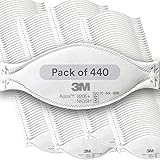
Overview: This massive 440-pack of 3M Aura 9205+ respirators delivers the same trusted N95 protection at industrial scale. Designed for facilities, contractors, and high-volume users, it eliminates the need for frequent reordering while maintaining the Aura line’s signature three-panel design and 95% filtration efficiency. Each mask is individually wrapped, ensuring hygiene across the entire supply.
What Makes It Stand Out: The sheer quantity transforms procurement strategy—workplaces can standardize on one respirator type while achieving economies of scale. The individual wrapping, rare in bulk packaging, maintains product integrity during storage and distribution. The consistent Aura performance means employees experience the same excellent fit, fog reduction, and comfort whether they’re on day one or day 400 of the supply.
Value for Money: Bulk pricing drives the per-mask cost below $1.50, representing 20-30% savings versus smaller packs. For businesses consuming 50+ masks monthly, the upfront investment pays for itself within months. The packaging reduces waste from damaged masks and ensures compliance with hygiene standards. Smaller operations should consider storage space requirements before committing.
Strengths and Weaknesses: Strengths include exceptional per-unit value, consistent quality, individual wrapping, reduced reordering frequency, and proven Aura design. The flat-fold format stores efficiently given the quantity. Weaknesses: significant upfront cost, requires climate-controlled storage to preserve elasticity, same limitations as standard 9205+ (no valve for moisture exhaust), and overkill for occasional users. The non-valved design may cause comfort complaints during summer months.
Bottom Line: Perfect for construction firms, manufacturing plants, and maintenance departments. The bulk savings and consistent performance make this a smart operational investment for any organization requiring reliable respiratory protection at scale.
6. 3M N95 Disposable Respirator, 9010, Pack of 50, Flat Fold, Individually Packaged, NIOSH Approved, Advanced Electrostatic Media, Stapled Headband, Soft Inner Layer

Overview: The 3M 9010 N95 respirator delivers industrial-grade protection in a conveniently portable package. This pack of 50 flat-fold masks meets stringent NIOSH standards with 95% filtration efficiency against non-oil aerosols, making it ideal for demanding work environments where reliability is non-negotiable.
What Makes It Stand Out: The flat-fold design and individual packaging set this respirator apart. Each mask stores compactly and stays hygienic until use—perfect for toolboxes, vehicles, or emergency kits. The advanced electrostatic media enhances particle capture while maintaining breathability, and the absence of natural rubber latex components prevents allergy concerns.
Value for Money: At approximately $1-2 per mask, the 3M 9010 sits in the mid-range for authentic NIOSH-approved respirators. The individual packaging adds premium value for mobile workers, though bulk-packed alternatives may cost less for stationary workplace use. You’re paying for the trusted 3M brand and packaging convenience.
Strengths and Weaknesses:
- Strengths: NIOSH certified; space-saving flat fold; individually wrapped; soft inner layer enhances comfort; stapled headbands provide secure fit; no latex allergens.
- Weaknesses: Stapled headbands may cause pressure points during extended wear; industrial appearance less suitable for public settings; not fluid-resistant for medical applications.
Bottom Line: For construction, woodworking, or industrial applications where portability matters, the 3M 9010 excels. The flat-fold convenience and reliable protection justify the moderate premium, though healthcare workers should choose fluid-resistant alternatives.
7. DEMETECH D95 Particulate Respirator Fold Style White with Black Earloops

Overview: DemeTECH’s D95 respirator offers American-made protection with a five-layer filtration system that exceeds 95% particle efficiency. Designed for all-day wear, this white mask with black earloops combines domestic manufacturing quality with comfort-focused engineering for reliable daily use.
What Makes It Stand Out: 100% US production in Miami, Florida ensures supply chain reliability and rigorous quality control. The five-layer construction includes two dedicated filtration layers, while specified resistance rates (<35 mm H2O exhalation, <25 mm H2O inhalation) demonstrate thorough testing. The black earloops provide a professional, modern aesthetic.
Value for Money: These typically retail at a slight premium over imported N95s, reflecting domestic manufacturing costs. However, for institutions prioritizing American-made PPE or requiring supply chain transparency, the price premium is justified. Bulk purchasing options improve cost-effectiveness for organizations and large facilities.
Strengths and Weaknesses:
- Strengths: Made in USA; five-layer protection; comfortable earloop design; specified breathing resistance ratings; no metal staples; suitable for public wear.
- Weaknesses: “D95” designation lacks NIOSH recognition; earloops may not seal as securely as headbands for all face shapes; limited long-term track record compared to 3M.
Bottom Line: Ideal for those valuing American manufacturing and earloop convenience, the DemeTECH D95 performs well for everyday protection. While not NIOSH-certified, its five-layer design and domestic production make it a solid choice for non-medical applications.
8. DEMETECH D95 Particulate Respirator Fold Style Blue with White Earloops

Overview: This blue variant of DemeTECH’s D95 respirator delivers the same five-layer American-made protection in a classic medical color scheme. The fold-style design provides reliable filtration exceeding 95% efficiency for everyday professional and personal use.
What Makes It Stand Out: Beyond the patriotic appeal of domestic manufacturing, the traditional blue colorway aligns seamlessly with healthcare and professional environments. Produced in Miami, Florida, it offers supply chain transparency that imported masks cannot match. The five-layer construction with dual filtration layers ensures robust particle capture and consistent performance.
Value for Money: Positioned at a modest premium over foreign alternatives, the value proposition centers on US production reliability and quality assurance. For medical offices, schools, or businesses preferring American-made PPE, the investment makes practical sense. Bulk orders further improve affordability for institutional buyers.
Strengths and Weaknesses:
- Strengths: Made in USA; five-layer filtration; comfortable earloop design; classic medical appearance; no latex or metal staples; consistent domestic supply chain.
- Weaknesses: Not NIOSH-certified; earloop seal inferior to headband models for some users; breathing resistance may exceed premium N95s; blue color shows soil more readily than white alternatives.
Bottom Line: The blue DemeTECH D95 suits organizations wanting American-made respirators with traditional medical aesthetics. It balances protection, comfort, and domestic sourcing, though critical healthcare settings may still require NIOSH-approved alternatives.
9. 3M 1870+ Health Care Health Care Particulate Respirator Mask, Flat Fold, Pack of 120

Overview: The 3M 1870+ represents the gold standard for healthcare respirators, offering N95-equivalent protection with critical added fluid resistance. This pack of 120 flat-fold masks serves high-volume medical environments requiring both respiratory and barrier protection against biological hazards.
What Makes It Stand Out: FDA clearance as a surgical mask distinguishes it from standard N95s, providing certified splash resistance against blood and bodily fluids. The flat-fold design enables compact storage, while individual packaging maintains sterility. 3M’s proprietary filter media balances breathability with superior filtration for extended surgical procedures and patient care.
Value for Money: Bulk packaging drives the per-mask cost down significantly, often under $1.50 each for healthcare purchasers. While pricier than industrial N95s, the dual surgical/respiratory certification eliminates need for separate masks, creating clear value for hospitals and clinics that require both protections daily.
Strengths and Weaknesses:
- Strengths: NIOSH-approved; FDA surgical clearance; fluid-resistant; large quantity packaging; trusted 3M healthcare quality; individually wrapped; comfortable for extended wear periods.
- Weaknesses: Over-specified for general public use; higher cost than industrial N95s; may be restricted to healthcare purchasers; headband version may be needed for some institutional protocols.
Bottom Line: Essential for healthcare workers, the 3M 1870+ delivers proven protection against airborne and fluid hazards. The 120-pack offers excellent value for medical facilities, though it’s unnecessary for typical consumer or industrial applications.
10. DEMETECH D95 Particulate Respirator Fold Style Earloops (Pink/White)

Overview: DemeTECH’s pink and white D95 respirator combines American manufacturing with a distinctive colorway supporting awareness campaigns or personal style preferences. The five-layer design maintains >95% filtration efficiency for reliable daily protection in various settings.
What Makes It Stand Out: The pink color scheme serves purposes beyond aesthetics—ideal for breast cancer awareness initiatives, pediatric settings, or branding differentiation. Like all DemeTECH products, it’s manufactured in Miami, Florida, ensuring domestic quality control and supply chain transparency. The five-layer construction with dual filtration layers meets high performance standards.
Value for Money: The pink variant carries the same price point as other DemeTECH D95 colors, positioned slightly above imported masks. For organizations wanting to make a visual statement while supporting American manufacturing, the premium is warranted. Specialty colors rarely cost more than standard options, adding value without extra expense.
Strengths and Weaknesses:
- Strengths: Made in USA; distinctive pink color for awareness; five-layer protection; comfortable earloops; no metal staples; supports domestic jobs and industry.
- Weaknesses: Not NIOSH-certified; earloop seal variability; pink may not suit all professional environments; identical performance to standard colors limits unique value proposition.
Bottom Line: Choose the pink DemeTECH D95 when color matters for awareness, branding, or personal preference. It delivers the same solid American-made protection as its blue and white siblings, making it a functional choice with added visual impact for appropriate settings.
Why Mobile Woodworkers Need Specialized Respiratory Protection
Mobile woodworking isn’t just shop work in a different location—it’s an entirely different respiratory risk profile. You’re dealing with unpredictable ventilation, varied materials, and the constant temptation to skip protection because you’re “only making a few cuts.” The particulate matter you generate doesn’t care about your timeline. Wood dust, especially from hardwoods like oak and maple, is a known nasal cavity carcinogen. Add in the occasional encounter with composite materials, old lead-based painted surfaces, or chemically-treated lumber, and you’re facing a cocktail of hazards that demand more than a disposable paper mask.
The fold-up respirator category has exploded specifically because stationary solutions fail mobile workers. Bulky half-face elastomeric masks take up precious space in your packout system and scream “professional contractor” when you might be working in a residential setting where appearance matters. Compact fold-up models disappear into your tool bag while providing near-identical protection to their rigid counterparts. The key is understanding that portability shouldn’t mean compromise—your mobile respirator needs to be as serious about protection as your table saw is about precision.
Understanding the Fold-Up Respirator Advantage
Fold-up respirators represent a engineering marvel in the PPE world. Unlike traditional cup-style masks that maintain their shape through rigid structural elements, foldable models use flexible, memory-retentent materials that collapse flat for storage then spring back to form when deployed. This design philosophy serves mobile woodworkers in three critical ways.
First, packability. A folded respirator takes up roughly 60% less volume than a rigid mask, slipping into the organizer pockets of your tool bag where dead space previously existed. Second, contamination control. Many fold-up designs include integrated hygiene features like sealable pouches or protective covers that keep the inside surface clean when stashed alongside dusty tools. Third, adaptability. The flexible structure often achieves a better facial seal across a wider range of face shapes, crucial when you’re not working in climate-controlled conditions where sweat and temperature changes affect fit.
Decoding Respirator Ratings: N95, P100, and Beyond
The alphabet soup of respirator ratings isn’t just bureaucratic labeling—it’s your roadmap to actual protection. For woodworking, you’re primarily concerned with particulate filters, designated by letters and numbers that tell you exactly what you’re protected against.
N-Series (Not Resistant to Oil): The N95 is the baseline, filtering 95% of airborne particles. For mobile woodworkers, this is your starting point, not your destination. N99 filters (99% efficiency) and N100 (99.97% efficiency) offer progressively better protection against fine dust. However, “N” rated filters degrade when exposed to oil mists, which can appear when cutting certain treated woods or using oil-based finishes nearby.
P-Series (Strongly Resistant to Oil): This is where serious woodworkers live. P95, P99, and P100 filters maintain their efficiency even with oil exposure. A P100 filter is essentially a HEPA filter for your face, capturing virtually all particulate matter. For the mobile professional who can’t predict every material they’ll encounter, P100 is the gold standard.
R-Series (Resistant to Oil): The middle child of ratings, rarely worth considering since P-series offers better protection for minimal additional cost.
In 2026, look for filters marked with a “CC” (Comfort Class) rating, a new standard indicating breathability under heavy work loads—crucial when you’re carrying lumber up three flights of stairs.
Filter Types: From Dust to Vapors
Wood dust is just the beginning. Mobile woodworkers encounter a spectrum of respiratory threats that require different filter media. Understanding the difference between particulate filters and chemical cartridges can save your life when that “quick laminate trim” involves solvent-based adhesives.
Mechanical Particulate Filters: These are your fibrous mats that physically trap particles. Quality matters enormously here—cheap filters use uniform fiber density, while premium filters create a gradient structure that loads dust throughout the media rather than just on the surface. This extends filter life significantly, a major consideration when you’re buying replacements on the road.
Electret Filters: Most modern filters use electrostatically-charged fibers that attract particles like a magnet. This allows for higher efficiency with less breathing resistance. The catch? They can lose charge when exposed to moisture or certain chemicals. For mobile work, look for “hydrophobic” electret treatments that resist sweat and humidity.
Combination Filters: Some fold-up respirators now accept stacked filter systems—a particulate filter with a thin activated carbon layer underneath. This won’t protect against high vapor concentrations, but it absolutely helps with nuisance levels of formaldehyde from MDF or that characteristic “old barn” smell that indicates microbial volatile organic compounds.
Odor-Removing Elements: Don’t confuse these with true vapor protection. Carbon-impregnated filters reduce smells but won’t protect against dangerous gas concentrations. They’re useful for comfort but shouldn’t replace proper ventilation when applying finishes.
The Critical Importance of Fit and Seal
A respirator is only as good as its seal. You could wear a $500 mask with the world’s best filters, but if air leaks around the edges, you’re breathing unfiltered dust. For mobile woodworkers, achieving a proper fit presents unique challenges: you’re often hot, sweaty, and moving between environments that cause facial hair to shift and skin to oil up.
Fit Factor Fundamentals: A proper fit means no air leakage. This is quantified as a “fit factor”—the ratio of particles outside the mask to those inside. For woodworking, you need a fit factor of at least 100, meaning the mask is removing 99% of particles. This requires more than just “it feels snug.”
Facial Hair Realities: Let’s be honest: many woodworkers have beards. Any respirator requiring a tight seal to bare skin will fail with facial hair. The 2026 market includes several fold-up designs that use alternative sealing technologies—wrap-around silicone skirts or adhesive perimeter seals—that can work with short, well-groomed beards. But understand this is a compromise; clean-shaven will always provide better protection.
Fit Testing: OSHA requires quantitative fit testing for professional environments, but mobile workers rarely get this luxury. Learn to perform your own qualitative fit test: put on the respirator, cover the filters with your hands, and inhale sharply. The mask should collapse against your face with no air leakage. Then exhale forcefully—no air should escape around the edges. Do this every time you put it on.
Comfort Features for All-Day Wear
You’ll wear a comfortable respirator; you’ll leave an uncomfortable one in your bag. Mobile woodworking often means 8-10 hour days with the mask on and off repeatedly. Comfort features directly impact compliance, which directly impacts your long-term health.
Headstrap Design: Look for wide, adjustable straps that distribute pressure across the back of your head, not just your neck. The latest designs use segmented straps that allow you to customize the angle of pull—critical when you’re wearing the mask with different headwear (hard hat, beanie, nothing) across job sites.
Exhalation Valve Engineering: A quality exhalation valve reduces heat and moisture buildup by 40-60%. The valve should be positioned to avoid directing your breath onto safety glasses (preventing fogging) and should have a protective cover to prevent sawdust from clogging it when the mask is stored. In 2026, look for “bi-directional” valves that reduce breathing resistance on both inhale and exhale.
Nose Bridge Customization: This is where most masks fail. A malleable but memory-retentive nose piece that you can shape once and have it stay shaped is invaluable. Some premium fold-ups now include inflatable nose seals that adapt to your exact facial contours—think of it as a custom-fit gasket.
Weight Distribution: Every gram matters when it’s hanging from your face all day. The best fold-up respirators position filter elements to balance weight centrally, reducing neck strain. Some designs even use offset filters that tuck under your chin, improving your field of vision while lowering the center of gravity.
Portability Factors: Weight, Size, and Packability
When you’re packing a mobile shop into a Sprinter van or even just a rolling tool chest, space is measured in cubic inches, not cubic feet. A respirator’s portability is about more than just being small when folded.
Folded Dimensions: The most compact models collapse to under 1 inch thick, roughly the size of a large smartphone. This allows storage in the lid organizers of your tool bag or the chest pocket of your work jacket. Compare this to traditional cup-style masks that remain 3-4 inches deep even when “stored.”
Weight Targets: Aim for under 100 grams (3.5 ounces) for the mask body itself. Filters add another 20-40 grams each. When you’re carrying everything you own to a third-floor remodel, this weight savings matters. The lightest effective fold-up respirators in 2026 tip the scales at just 85 grams.
Storage Hygiene: How does the mask protect itself when stored? Premium models include rigid cases or sealable pouches that prevent the interior from contacting contaminated tools. Some even integrate antimicrobial liners that prevent mold growth when your bag sits in a hot vehicle overnight.
Quick-Deploy Features: The best designs unfold and are ready to seal in under 5 seconds. Look for models with intuitive orientation—you shouldn’t have to think about which side is up when dust starts flying. Color-coded straps or tactile indicators help you don the mask correctly without looking.
Durability in Harsh Workshop Conditions
Your respirator will be crushed, dropped, soaked in sweat, and exposed to temperature extremes that would make a camel uncomfortable. Mobile work is brutal on equipment, and a torn strap or cracked seal at the wrong moment leaves you unprotected.
Material Science: Modern fold-up respirators use proprietary polymer blends that maintain flexibility from -10°F to 120°F. The crease points—the areas that fold repeatedly—should be reinforced with ripstop-style weaving or embedded fibers. Inspect these areas carefully; they’re the first to fail.
Strap Longevity: Elastic straps degrade with UV exposure, sweat, and repeated stretching. Look for silicone-blend straps that resist ozone and have sewn (not glued) attachment points. Some manufacturers now offer replaceable strap systems, extending mask life from months to years.
Filter Housing Integrity: The interface where filters attach to the mask body sees constant stress. Threaded connections strip; snap-fit connections crack. The sweet spot is a bayonet-style twist lock with a positive click indicator. This provides security without requiring Hulk-level strength to change filters in the field.
Chemical Resistance: You’ll inevitably spray WD-40 or wipe down with mineral spirits while wearing your respirator. The mask body should resist degradation from common shop chemicals. Look for “broad-spectrum chemical resistance” in specifications, particularly against petroleum distillates and alcohols.
Exhalation Valves: Performance and Considerations
That little plastic flap on your respirator is arguably its most complex component. In 2026, exhalation valve technology has become a key differentiator between budget and premium fold-up respirators, directly impacting both comfort and safety.
Valve Mechanics: A proper exhalation valve opens at minimal pressure (under 20 Pascals) to release your breath, then seals instantly on inhale. Cheap valves stick or leak, either letting unfiltered air in or failing to reduce moisture. The best designs use silicone flaps with micro-textured surfaces that prevent sticking even when coated in condensation.
Directional Control: Advanced valves direct exhaled air downward and away from your face. This isn’t just about comfort—it prevents fogging of safety glasses and reduces the “blowback” of dust from your workpiece when you’re doing fine detail work. Some models even offer adjustable valve angles to customize the airflow pattern.
Maintenance Access: Sawdust will find its way into your valve. It’s inevitable. Valves that can be removed for cleaning without tools are worth their weight in gold. Look for designs where the valve cover twists off, allowing you to rinse the silicone flap under running water. This simple feature can double the effective life of your respirator.
Noise Levels: Believe it or not, valve design affects sound. A chattering or whistling valve is not just annoying; it indicates turbulent airflow and potential leakage. Premium valves operate silently, a sign of precise engineering that also indicates better seal performance.
Maintenance and Filter Replacement Schedules
A respirator is not a “buy it and forget it” tool. It’s a system requiring regular maintenance, especially when it’s bouncing around in your vehicle and exposed to varying environments. Developing a maintenance routine is as important as sharpening your chisels.
Filter Lifespan Variables: The standard advice is “replace filters when breathing becomes difficult,” but that’s dangerously vague for mobile work. Instead, track hours of use. For general hardwood dust, P100 filters last approximately 40-60 hours of continuous use. But cutting MDF or sanding old paint can clog them in 10-15 hours. Create a log—yes, a physical log—in your tool kit. Note the date installed and material types worked.
Visual Inspection Protocol: Before each use, hold the filter up to light. Evenly distributed dust loading is normal; dark spots indicate channeling where air is bypassing the media. Check the mask body for cracks, especially at fold lines. Stretch the straps and look for fraying. This 30-second inspection can prevent catastrophic failure.
Cleaning Procedures: The mask body (not the filters!) should be cleaned weekly with mild soap and warm water. Avoid alcohol-based cleaners that can degrade silicone seals. Let it air dry completely before storage—folding a damp mask is inviting mold growth. Some pros keep two masks, rotating them to ensure complete drying.
Storage Best Practices: Never store your respirator in a sealed plastic bag unless it’s completely dry. Instead, use breathable mesh bags or the original ventilated case. Keep it out of direct sunlight, which degrades both straps and the mask body. And never, ever store it in the same compartment as your finishing supplies—chemical vapors will saturate the filter media even without use.
Common Mistakes Mobile Woodworkers Make
Even experienced craftspeople make critical errors with respiratory protection, often because they’re adapting shop-honed habits to mobile environments where those habits break down.
The “Just One Cut” Fallacy: This is the mobile woodworker’s curse. You’re on a job site, need to make a quick miter cut, and don’t want to walk back to your vehicle for your respirator. That 30-second exposure to MDF dust is equivalent to smoking several cigarettes in terms of lung inflammation. Keep a backup respirator in your primary tool bag, not just your vehicle.
Improper Donning Sequence: You can’t just slap on a respirator. The correct sequence is: wash hands, inspect mask, position on face, adjust top straps, adjust bottom straps, perform fit check. Skipping steps, especially with dirty hands, introduces contaminants directly to the seal area. On mobile sites where handwashing facilities are scarce, keep hand sanitizer in your tool belt.
Ignoring Facial Changes: Gaining or losing 10 pounds, growing a beard, even a sunburn can change your facial contours enough to break the seal. Re-check fit weekly, not just when you first buy the mask. Some pros take a “fit selfie” when they know the seal is perfect, giving them a reference image for strap adjustment.
Filter Overconfidence: P100 filters capture particles, but they don’t last forever. Using clogged filters increases breathing resistance, which causes you to loosen straps for comfort, which breaks the seal. It’s a death spiral of decreasing protection. When in doubt, swap it out. Filters are cheaper than lung tissue.
Budget vs. Premium: Understanding the Trade-offs
The respirator market spans from $5 disposable masks to $200+ professional systems. For mobile woodworkers, the sweet spot lies in the $40-$80 range for the mask body, with filters costing $8-$15 per pair. Understanding what you’re paying for helps avoid both false economy and unnecessary extravagance.
Budget Tier ($15-$30): At this price, you’re getting basic N95 or P95 protection. Straps are simple elastic that loses tension quickly. The fold mechanism may last a few dozen cycles before developing permanent creases that compromise the seal. These are emergency backups, not daily drivers.
Mid-Range ($40-$80): This is the mobile professional’s happy place. You get P100 filtration, robust folding mechanisms rated for 500+ cycles, adjustable straps with silicone elements, and quality exhalation valves. Durability typically runs 6-12 months of daily mobile use. Most include storage cases.
Premium Tier ($100+): You’re paying for marginal gains: slightly lighter weight, exotic materials, replaceable component systems, and brand support. For most mobile woodworkers, this is overkill unless you’re working in extreme conditions or require specialized sizing. The exception is if you need powered air-purifying elements in a fold-up form factor—a niche but growing category.
Total Cost of Ownership: Calculate filter replacement costs over a year. A $50 mask requiring $12 filter changes every 40 hours is cheaper than a $30 mask needing $15 filters every 20 hours if you’re working full-time. Do the math based on your actual usage.
Regulatory Compliance and Certifications
In 2026, respirator certification has become more stringent, with new standards addressing the unique needs of mobile workers. Understanding the alphabet soup ensures you’re legally protected and actually safe.
NIOSH Approval: Any respirator you consider must be NIOSH-approved (or equivalent international standard). The approval number should be printed directly on the mask, not just the packaging. Beware of counterfeit masks that display fake NIOSH numbers—verify them on the CDC’s online database.
OSHA Silica Standard: If you’re cutting concrete backer board, fiber cement, or even some engineered stones, you’re subject to OSHA’s silica standard, which requires a fit factor of 100+ and documented fit testing. Your fold-up respirator must be capable of achieving this, and you must have records. Mobile apps now exist to track and document fit tests using your phone’s camera.
New 2026 Standards: The ASTM F3502 standard for barrier face coverings has evolved to include mobile worker-specific tests for repeated folding/unfolding cycles and contamination resistance during storage. Look for the “MW” (Mobile Worker) designation on packaging. This indicates testing for vibration resistance and temperature cycling—exactly what your vehicle subjects equipment to.
Insurance Implications: Some contractor insurance policies now require documented use of P100-level protection for woodworking operations. Using an uncertified or improperly maintained respirator can void coverage in the event of a claim. Check your policy and keep purchase receipts and filter change logs.
Emerging Technologies in 2026
The respirator industry has finally caught up to the needs of mobile tradespeople, with several technologies moving from prototype to production in the past year. These innovations are changing what we should expect from compact protection.
Smart Filter Indicators: Embedded pressure sensors now monitor breathing resistance in real-time, changing color from green to red when filters are spent. No more guessing. Some models even connect via Bluetooth to your phone, logging exposure hours and sending replacement reminders. The best part? The electronics are embedded in the filter itself, so they get replaced with the filter.
Self-Sanitizing Materials: Copper and silver ion-infused mask bodies actively kill microbes between uses. For the mobile worker who stores their mask in less-than-sterile conditions, this reduces the risk of skin infections and prevents that “locker room” smell that develops in warm vehicles.
Modular Filter Systems: New designs allow you to snap different filter types onto the same mask body without tools. Start with P100 particulate filters for morning demolition, then switch to combination filters for afternoon finishing work. This flexibility reduces the number of masks you need to carry.
Adaptive Folding Mechanisms: Memory polymers allow the mask to “remember” your facial contours after repeated folding. The mask actually becomes more comfortable over time as it adapts to your specific face shape while maintaining structural integrity at fold points.
Transparent Panels: Small clear windows near the nose bridge allow you to see facial expressions, crucial when communicating with clients or assistants on job sites. This seemingly minor feature dramatically improves compliance because you don’t feel socially isolated.
Creating Your Mobile Respiratory Protection Kit
A respirator alone isn’t enough. Mobile woodworkers need a complete system that ensures protection is always available, always effective, and never left behind. Building this kit is as important as selecting the right saw blade for the cut.
The Primary Respirator: Your daily driver, stored in your main tool bag or packout system. This should be your best-fitting, most comfortable unit with fresh P100 filters installed. Keep it in a rigid, ventilated case that protects it from crushing.
The Backup Respirator: A sealed, unopened NIOSH-approved mask stored in your vehicle’s glove box. This is your emergency unit for when your primary fails or you forget it. Rotate it annually even if unused, as the straps degrade over time.
Filter Cache: Carry one spare set of filters in your tool bag, sealed in a ziplock bag. Store your main supply in a climate-controlled location (not your vehicle). Heat dramatically reduces filter shelf life. Label filters with purchase dates—most have a 5-year shelf life unopened.
Fit Testing Supplies: A small mirror and a bottle of saccharine solution for qualitative fit testing. The mirror helps you check strap placement; the saccharine lets you verify seal integrity without fancy equipment.
Cleaning Kit: Travel-sized baby shampoo (gentler than regular soap), microfiber cloths, and a small container of talc-free powder to reduce skin irritation. Store these in a separate pouch to avoid chemical contamination.
Documentation: Laminated card with your respirator model, filter type, and last filter change date. If you work on commercial sites requiring safety documentation, this proves compliance without digging through your phone.
Frequently Asked Questions
1. How often should I really replace the filters if I’m only doing light work?
Filter replacement depends on total exposure, not just perceived dust. Even “light” woodworking generates millions of fine particles that clog filters invisible to the eye. Track hours rigorously: P100 filters last roughly 40-60 hours of cumulative use. If you’re working two hours a day, that’s monthly replacement. Cutting MDF or sanding finishes cuts that to 10-15 hours. When breathing resistance increases or you notice odors, replace immediately—regardless of hours.
2. Can I wear a fold-up respirator with a beard and still be protected?
Any facial hair that passes under the seal reduces protection by 50-95%. Short, groomed stubble might work with alternative sealing systems like adhesive perimeter seals or wrap-around skirts, but these are compromises. For legitimate protection, be clean-shaven in the seal area. If you must have a beard, consider a powered air-purifying respirator with a loose-fitting hood—though these aren’t compact fold-up designs.
3. Why does my respirator fog up my safety glasses, and how do I stop it?
Fogging indicates exhaled air is escaping upward, breaking the seal at your nose bridge. First, re-mold the nose piece firmly to your contours. Second, adjust the top straps to angle the mask slightly downward. Third, look for respirators with downward-directed exhalation valves. As a last resort, apply anti-fog coating to your glasses. Persistent fogging means poor fit—try a different size or model.
4. Is it safe to store my respirator in my work vehicle during summer?
Vehicles can exceed 150°F, degrading straps and filter media rapidly. Filters especially suffer—heat accelerates the breakdown of electrostatic charges that capture fine particles. Store your primary respirator in your tool bag inside the vehicle, not on the dashboard. Keep spare filters in a climate-controlled location. The glove box backup is for emergencies only, and should be replaced annually due to heat exposure.
5. What’s the difference between a respirator and a dust mask, and why does it matter legally?
Dust masks (like basic surgical-style masks) are not respirators. They lack NIOSH approval, don’t require fit testing, and offer minimal protection. Legally, if you’re subject to OSHA regulations, you must use a NIOSH-approved respirator with documented fit testing for silica or lead work. Using a dust mask on a regulated job site can result in personal fines. The fold-up models discussed here are true respirators, just in a portable format.
6. How do I clean my respirator between job sites when I don’t have access to running water?
Carry a spray bottle with diluted baby shampoo (1:10 ratio) and clean paper towels. Spray the mask interior, wipe thoroughly, then spray with clean water and wipe again. Let it air dry completely before folding. For quick sanitizing, alcohol-free respirator cleaning wipes are available. Never use hand sanitizer or alcohol wipes—they degrade silicone seals. Always remove filters before any wet cleaning.
7. Can I use woodworking respirator filters for spray finishing or working with solvents?
No. Particulate filters (P100, N95) only protect against dust and mist. Solvent vapors require chemical cartridges specific to the contaminant (organic vapor, acid gas, etc.). Using the wrong filter is like wearing a raincoat to go scuba diving—it might look similar but provides zero protection. For occasional finishing, use a combination filter with a thin carbon layer for nuisance levels, but for dedicated spraying, you need a full-face respirator with proper vapor cartridges.
8. What size respirator do I need, and how do I measure for it?
Most fold-up respirators come in small, medium, and large. Measure from the bridge of your nose to the bottom of your chin. Under 3.5 inches typically needs small; 3.5-4.5 inches is medium; over 4.5 inches is large. But facial width matters too. Many manufacturers offer printable sizing guides—use them. The best approach is to buy a fit test kit that includes multiple sizes, test them all, and keep what works. A proper seal is more important than the size label.
9. How do I know if my respirator is counterfeit or substandard?
Counterfeit respirators are rampant. Verify the NIOSH approval number on the CDC website. Check for proper spelling on packaging—counterfeits often have typos. The mask itself should feel substantial; flimsy materials indicate fakes. Buy only from authorized distributors, not random Amazon third-party sellers. In 2026, some manufacturers include QR codes on filters that verify authenticity when scanned. If the price seems too good to be true, it is.
10. Should I wear my respirator when I’m just sweeping up or moving materials?
Absolutely. Sweeping is one of the dustiest activities in woodworking, launching settled fine particles into the air where they remain suspended for hours. These “fugitive emissions” are often finer and more respirable than dust from cutting. The same applies when loading/unloading materials from your vehicle—wood dust accumulates in vans and gets disturbed constantly. Make putting on your respirator as automatic as putting on your safety glasses. Your future lung capacity will thank you.
See Also
- 10 Compact Workbenches for Apartment Woodworkers in 2026
- Mobile Workbenches 2026: 7 Space-Saving Builds for Compact Garages
- 5 Honing Guides & Jigs Hacks to Speed Up Your Hand-Tool Sharpening by 40%
- The 10 Ultimate Adjustable Height Workbenches for Tall Woodworkers in 2026
- Stop Back Pain: 10 Adjustable Height Workbenches for Tall Woodworkers in 2026