Table of Contents
Stepping onto a job site as an apprentice carpenter in 2026 means carrying tools that work as hard as you do. Your chisel set isn’t just another item in your tool bag—it’s the extension of your hands that will shape joints, clean mortises, and refine details that separate rough work from master craftsmanship. While power tools dominate modern construction, the humble chisel remains the true test of a carpenter’s skill and patience.
Choosing your first serious chisel set feels overwhelming when you’re balancing apprenticeship wages against the pressure to perform like a journeyman. The market has evolved dramatically, with new steel alloys, ergonomic designs, and manufacturing techniques that didn’t exist five years ago. But here’s the truth: the best chisel set for you isn’t necessarily the most expensive—it’s the one that matches your learning curve, respects your budget, and grows with you from basic framing to fine finish work.
Top 10 Wood Chisel Sets
Detailed Product Reviews
1. HURRICANE 4 Piece Wood Chisel Set for Woodworking. CR-V Steel Beveled Edge Blades with Safety Caps. Durable PVC High Impact Handle, for Precision Carving & DIY Projects (1/4", 1/2", 3/4", 1")

Overview: The HURRICANE 4-piece chisel set targets DIY enthusiasts and beginner woodworkers seeking reliable tools without professional-grade investment. Featuring drop-forged CR-V steel blades with heat-treated edges, this collection covers essential sizes from 1/4-inch to 1-inch. The 25° beveled edges accommodate various wood types, from soft pine to hardwoods and laminates. Complete with protective safety caps, the set prioritizes user safety and blade preservation during storage.
What Makes It Stand Out: The lightweight PVC high-impact handles distinguish this set, offering a comfortable grip for hand-controlled precision work while remaining sturdy enough for mallet strikes. Unlike many entry-level options, the included blade guards demonstrate thoughtful attention to safety and edge retention. The multi-purpose 25° bevel angle strikes an optimal balance between sharpness and durability, making these chisels versatile enough for both paring cuts and mortise work without requiring immediate angle adjustments.
Value for Money: Positioned as an affordable entry-point kit, this set delivers professional-grade steel quality at a fraction of premium brand prices. While it lacks sharpening accessories, the durable CR-V construction ensures extended edge retention, reducing replacement frequency. For hobbyists and homeowners tackling occasional projects, it offers better durability than basic carbon steel alternatives without the cost of pro-level sets.
Strengths and Weaknesses: Strengths include sharp, durable CR-V steel blades, ergonomic PVC handles, protective safety caps, and versatile 25° bevel edges. The four-size range covers most DIY needs. Weaknesses involve the absence of sharpening tools, PVC handles that may not withstand heavy professional use, and limited size options for specialized work. The brand lacks the recognition of established names.
Bottom Line: An excellent starter set for hobbyists and homeowners. The HURRICANE kit provides reliable performance for light to medium woodworking tasks, offering impressive steel quality and safety features at an accessible price point. Ideal for those building their first tool collection.
2. Yunziling 10Pcs Wood Chisel Sets, 6Pcs Premium Wood Chisels with Honing Guide, Sharpening Stone & Carpenter Pencils, Wood Carving Tools Kit for DIY & Professional Use (6-38mm)

Overview: Yunziling’s comprehensive 10-piece kit represents a complete woodworking solution, bundling six chisels (6mm to 38mm) with essential sharpening accessories. The vacuum heat-treated chrome vanadium steel blades promise twice the durability of carbon steel, accommodating high-density woods like oak and walnut. This all-in-one package targets both novices needing guidance and professionals seeking convenience, incorporating a honing guide, sharpening stone, and carpenter pencils for immediate project readiness.
What Makes It Stand Out: The integrated sharpening system with 25°-30° adjustable angle calibrator sets this kit apart, enabling consistent edge maintenance without guesswork. The heavy-duty striking cap demonstrates professional-grade engineering, allowing high-frequency mallet work while resisting deformation. Non-slip PVC ergonomic handles ensure fatigue-free extended use, and the inclusion of two carpenter pencils shows attention to practical workshop needs rarely seen in bundled sets.
Value for Money: Exceptional value for those wanting a complete starter ecosystem. The sharpening accessories alone would cost $20-30 separately, making the bundled price highly competitive. While the brand lacks Dewalt-level recognition, the vacuum heat-treatment and comprehensive inclusions deliver features typically found in premium sets costing significantly more.
Strengths and Weaknesses: Strengths include the complete sharpening system, wide size range, durable CR-V steel, heavy-duty striking caps, and thoughtful accessories. The ergonomic handles enhance control. Weaknesses involve unknown brand longevity, potentially inconsistent quality control, and possibly unnecessary extras for casual users. The metric sizing may confuse those preferring imperial measurements.
Bottom Line: Best overall value for woodworkers wanting everything in one purchase. Ideal for serious beginners or budget-conscious professionals, this kit eliminates the need for separate sharpening investments while providing professional-grade durability.
3. 4 Piece Wood Chisel Sets Woodworking Tools Set, Wood Chisels for Woodworking with Steel Hammer End, Wood Tools Chisel Set Woodworking with Ergonomic Plastic Handle, 6mm, 12mm, 18mm, 24mm

Overview: This utilitarian 4-piece chisel set delivers fundamental woodworking capabilities with practical protective features. Constructed from sturdy carbon steel with metric sizing (6mm, 12mm, 18mm, 24mm), the tools target craftspeople seeking reliable performance without premium pricing. The steel hammer end cap represents a standout design element, preventing handle damage during heavy mallet work. Pre-oiled blades with individual plastic guards ensure corrosion resistance and safe storage.
What Makes It Stand Out: The protective steel hammer end distinguishes this budget set, a feature often omitted in economical options. This reinforcement allows confident heavy pounding without compromising handle integrity. The pre-oiled blades demonstrate manufacturer attention to maintenance, immediately protecting the carbon steel from rust. Ergonomic non-slip handles provide comfortable control for both beginners and experienced users, while the tight connection between handle and blade suggests durable construction.
Value for Money: Highly competitive pricing makes this an attractive entry-level option. While carbon steel requires more frequent sharpening than CR-V alternatives, the included protective features and hammer-end durability offset this limitation. For intermittent use and light-to-medium projects, it offers essential functionality without unnecessary frills that inflate cost.
Strengths and Weaknesses: Strengths include the steel hammer end protection, pre-oiled corrosion resistance, ergonomic handles, and protective blade covers. The metric sizing suits international standards. Weaknesses involve carbon steel’s inferior edge retention compared to CR-V, unknown brand reputation, absence of sharpening accessories, and limited size range for specialized tasks.
Bottom Line: A solid budget-conscious choice for occasional woodworkers. The hammer-end protection and corrosion prevention add unexpected value at this price point, making it suitable for light to medium-duty tasks where extreme precision isn’t paramount.
4. Amazon Basics 8-Piece Wood Carving Chisel Set with Honing Guide, Sharpening Stone and Storage Case, 1/4" - 1-1/2"
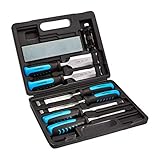
Overview: Amazon Basics delivers an organized carving solution with this 8-piece set, combining six chisels (1/4-inch to 1-1/2-inch) with a honing guide, dual-grit sharpening stone, and blow-molded storage case. The heat-treated chrome vanadium steel alloy blades feature narrow side bevels, optimizing them for detailed carving work. Contoured handles reduce hand strain during extended sessions, while the integrated case ensures tool security and workshop organization.
What Makes It Stand Out: The comprehensive storage case distinguishes this set, providing dedicated slots for each tool and accessory—a rarity at this price tier. Amazon’s brand backing ensures reliable customer service and consistent quality standards. The narrow side bevels specifically cater to carving applications, offering enhanced maneuverability for detailed work compared to standard bench chisels. The included honing guide and 120/240 grit stone enable immediate edge maintenance.
Value for Money: Strong value for organization-focused hobbyists. The storage case eliminates aftermarket purchase needs, while the sharpening components add significant worth. Positioned between budget unknown brands and premium names, it leverages Amazon’s purchasing power to deliver professional-grade steel quality with consumer-friendly packaging and support.
Strengths and Weaknesses: Strengths include the excellent storage case, CV steel durability, contoured ergonomic handles, sharpening accessories, and wide size range. Amazon’s warranty support provides peace of mind. Weaknesses involve the “Basics” branding that may imply lower quality, handles potentially lacking heavy-duty strike caps, and limited suitability for heavy mortising work due to carving-focused design.
Bottom Line: Perfect for organized hobbyists and carvers. The storage case and Amazon backing make this ideal for those prioritizing tool protection and customer support over professional-grade strike durability. Best for detailed work rather than heavy chopping.
5. Dewalt Pro Wood Chisel Set 3 Piece

Overview: Dewalt’s Pro 3-piece set embodies professional-grade minimalism, focusing on maximum durability for demanding job site conditions. Featuring tempered carbon-steel blades with a protective lacquer coating, these chisels prioritize longevity and corrosion resistance. The thick metal strike cap provides a flat, robust surface for effective hammer and mallet strikes, while the ergonomic handle maintains comfort during prolonged use. This streamlined set targets professionals who value quality over quantity.
What Makes It Stand Out: Dewalt’s legendary job site reputation ensures these chisels withstand rigorous daily use where lesser tools fail. The thick metal strike cap represents superior engineering, distributing impact force evenly while preventing handle fracture—a critical feature for heavy timber framing and demolition work. The lacquered blade treatment provides exceptional corrosion protection, maintaining edge integrity in humid or outdoor environments where rust typically compromises performance.
Value for Money: Premium pricing reflects professional-grade construction rather than accessory abundance. While only three chisels, their exceptional durability and Dewalt’s warranty deliver long-term value for tradespeople. For DIYers, the cost may prove excessive compared to comprehensive kits, but professionals will appreciate the reduced replacement frequency and trusted brand reliability.
Strengths and Weaknesses: Strengths include Dewalt’s professional reputation, thick strike cap durability, lacquered corrosion protection, tempered carbon-steel edge retention, and ergonomic lightweight design. The tools excel in heavy-duty applications. Weaknesses involve the limited three-piece selection, absence of sharpening accessories, higher price point, and unspecified sizes that may not cover all needs.
Bottom Line: Designed for professionals who demand unwavering reliability. This set justifies its premium price through superior strike durability and brand trust. Ideal for contractors and serious woodworkers prioritizing tool longevity over comprehensive size ranges. Casual users should consider more inclusive kits.
6. GREBSTK 4 Pcs Wood Chisel Set CRV Steel Bevel Sharp Edge Bench Chisels with Safety Caps for Woodworking and DIY Projects 1/4", 1/2", 3/4", 1"

Overview: The GREBSTK 4-piece chisel set delivers essential sizes for woodworking enthusiasts seeking quality without complexity. Measuring 9.5 inches with blades ranging from 1/4" to 1", this collection targets DIYers and professionals who value precision over quantity. The drop-forged CR-V steel construction promises durability, while the beechwood handles offer traditional craftsmanship appeal. Packaged in a protective storage bag, these chisels arrive ready for door installations, detailed paring, and general carpentry tasks.
What Makes It Stand Out: This set distinguishes itself through thoughtful simplicity and safety integration. The chrome-plated striking hoops reinforce the beechwood handles against mallet impacts, a feature often missing in budget sets. The included safety caps protect edges during storage, preventing dulling and accidental cuts. With an industry-standard 25° bevel pre-ground to razor sharpness, these chisels require minimal setup. The professional storage bag prevents blade contact during transport, addressing a common frustration with basic tool rolls.
Value for Money: Priced competitively for a four-piece CR-V set, this offering balances affordability with professional-grade materials. Comparable individual chisels from premium brands cost $15-25 each, making this package economical for hobbyists. While it lacks sharpening accessories, the quality steel reduces frequent replacement costs. The storage bag adds value by eliminating the need for separate blade protection purchases. For users focused on essential sizes rather than comprehensive collections, this represents smart spending.
Strengths and Weaknesses: Strengths:
- Precision heat-treated CR-V steel maintains sharpness
- Reinforced striking hoops prevent handle splitting
- Safety caps included for all four chisels
- Compact storage solution prevents blade damage
- Optimal 9.5" length provides excellent control
Weaknesses:
- Limited size range lacks medium options like 3/8" or 5/8"
- No sharpening stone or honing guide included
- Beechwood handles may not suit those preferring rubber grips
- Storage bag offers less protection than hard cases
Bottom Line: The GREBSTK set excels as a streamlined, safety-conscious choice for woodworkers prioritizing core functionality. Ideal for beginners and professionals needing reliable basics, though serious craftsmen will want to supplement with additional sizes and sharpening tools.
7. REXBETI 10pcs Premium Wood Chisel Set, 6pcs Wood Chisel with 1 Honing Guide, 1 Sharpening Stone and 2 Carpenter Pencils, Heat-Treated Cr-V Alloy Blades
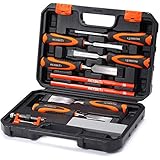
Overview: REXBETI’s 10-piece kit provides a complete woodworking solution with six chisels spanning 1/4" to 1-1/2", plus essential maintenance accessories. The heat-treated chrome vanadium alloy blades feature narrow side bevels for improved access in tight spaces. Thickened rubber handles with steel end caps accommodate heavy mallet work, while the blow-molded case organizes everything neatly. This comprehensive package targets beginners and intermediate users seeking an all-in-one setup.
What Makes It Stand Out: The integrated sharpening system sets this apart from basic sets. The honing guide maintains consistent 25° and 30° angles, crucial for novices learning proper technique. Including two carpenter pencils demonstrates attention to workshop practicality. The rubber handles provide superior shock absorption compared to wooden alternatives, reducing hand fatigue during extended use. The expanded size range, particularly the 1-1/4" and 1-1/2" additions, handles larger mortising tasks that smaller sets cannot.
Value for Money: This kit delivers exceptional value by bundling $40-50 worth of sharpening accessories with quality chisels. Individual purchase of a honing guide and stone would cost $25-35 alone. The six chisels cover virtually all common woodworking applications, eliminating future size purchases. While not professional-grade, the CR-V steel offers adequate durability for hobbyists. The case prevents loss and damage, saving replacement costs. For under $60, this represents one of the most complete entry-level packages available.
Strengths and Weaknesses: Strengths:
- Comprehensive size range from 1/4" to 1-1/2"
- Complete sharpening station included
- Rubber handles reduce vibration and improve grip
- Steel end caps protect against overstrike damage
- Organized blow-molded case for portability
Weaknesses:
- Rubber handles may lack traditional aesthetic appeal
- Blade steel quality below premium Japanese or Western brands
- No blade guards for safe storage
- Case hinges and latches may wear with heavy use
Bottom Line: REXBETI offers unmatched completeness for newcomers. The sharpening accessories alone justify the price, making this the smartest starter investment. Perfect for DIYers wanting immediate workshop capability without separate tool purchases.
8. HAWERK Wood Chisel Set - Wood Chisel Sets with Premium Wooden Case - Small Carving Wood Chisels for Woodworking - Includes 6 pcs Wood Working Chisels & 2 Sharpening Stones
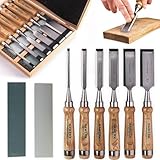
Overview: HAWERK positions itself as a premium option with six chisels from 6mm to 38mm, housed in an attractive wooden case. The fine-grained, tempered chrome vanadium steel blades target users undertaking challenging woodworking projects. This set emphasizes precision carving capabilities with lightweight handles for detailed control. Two sharpening stones support edge maintenance, while the wooden case provides elegant storage and gifting appeal. It serves amateur and professional carpenters seeking aesthetic and functional balance.
What Makes It Stand Out: The dual sharpening stones represent a unique value-add, allowing coarse and fine grit progression for superior edge refinement. The wooden case distinguishes it from plastic alternatives, offering better moisture protection and professional presentation. Lightweight handles combined with sharp level edges enable high-precision work, particularly beneficial for carving and trim applications. The comprehensive size range matches more expensive sets, while the steel’s heat resistance promises longevity during heavy material removal.
Value for Money: Mid-range pricing reflects the wooden case and dual stones, though core chisel quality remains comparable to budget CR-V sets. The case adds $15-20 value versus purchasing separate storage. However, lacking a honing guide may frustrate users unfamiliar with freehand sharpening. For those valuing presentation and organized storage, the premium is justified. Serious woodworkers might find better steel hardness in similarly priced options. The set occupies a middle ground between basic kits and professional collections.
Strengths and Weaknesses: Strengths:
- Attractive wooden case with professional presentation
- Two sharpening stones for complete edge maintenance
- Wide size range covers most applications
- Lightweight handles enhance carving precision
- Heat-resistant steel suitable for heavy use
Weaknesses:
- No honing guide complicates sharpening for beginners
- Handle durability concerns without striking caps
- Wooden case adds cost but reduces portability
- Brand recognition lags behind established competitors
- No blade protection caps included
Bottom Line: HAWERK suits style-conscious woodworkers wanting organized storage and sharpening capability. Best for intermediate users comfortable with freehand sharpening. The wooden case makes it gift-worthy, though practical users may prefer more rugged alternatives.
9. EZARC 6 Pieces Wood Chisel Tool Sets Woodworking Carving Chisel Kit with Premium Wooden Case for Carpenter Craftsman

Overview: EZARC’s six-piece set emphasizes immediate usability with pre-sharpened, ready-to-use chisels ranging from 1/4" to 1". The HRC60-rated chrome-vanadium steel targets seasoned woodworkers and beginners alike, promising long-lasting sharpness. Beechwood handles provide dense, renewable material choice, while the premium wooden case ensures organized storage. The set focuses on essential sizes with precise 25° bevels, enabling mortising, paring, and glue removal straight from the package.
What Makes It Stand Out: The HRC60 hardness rating exceeds many competitors, indicating superior edge retention and wear resistance. EZARC highlights environmental responsibility through beechwood selection, appealing to eco-conscious buyers. The extremely sharp factory edge eliminates immediate sharpening needs, a rare convenience. The size selection includes practical intermediate widths like 3/8", 5/8", and 13/16", bridging gaps common in four-piece sets. The wooden case offers better blade protection than fabric rolls while maintaining professional aesthetics.
Value for Money: Positioned as a mid-tier option, the price reflects quality steel and wooden case without reaching premium brand levels. The HRC60 hardness typically commands $20-30 per chisel from high-end manufacturers, making this set economical. The ready-to-use sharpness saves time and initial sharpening equipment costs. While lacking a honing guide, the hardness reduces re-sharpening frequency. For users prioritizing steel quality over accessory count, this delivers strong performance-per-dollar value.
Strengths and Weaknesses: Strengths:
- High HRC60 hardness ensures excellent edge retention
- Includes useful intermediate sizes (3/8", 5/8", 13/16")
- Factory-sharpened edges ready for immediate use
- Dense beechwood handles resist wear and splitting
- Premium wooden case protects and organizes tools
Weaknesses:
- No sharpening accessories included
- Beechwood handles lack shock absorption of rubber
- No striking caps risk handle damage from mallets
- Limited to six sizes, missing larger options
- Wooden case less durable than blow-molded alternatives
Bottom Line: EZARC delivers professional-grade steel hardness in a ready-to-work package. Perfect for woodworkers wanting quality blades without accessory clutter. Invest in a separate honing guide to maximize the excellent steel’s potential.
10. ENERTWIST 13pcs Wood Chisel Set, Premium Woodworking Chisel Sets w/ 8 CRV Construction Wood Chisels, 1 Sharpening Stone, 1 Honing Guide, 2 Carpenter Pencils, 1 Sharpener for Wood Carving in Hard Case

Overview: ENERTWIST’s 13-piece collection offers the most comprehensive package with eight chisels from 1/4" to 1-1/2", complete sharpening station, and workshop accessories. The drop-forged CR-V blades feature bevel edges for multi-purpose use across wood types. Ergonomic rubber handles with hardened steel strike caps prioritize user safety and comfort. The hard case organizes all components, including carpenter pencils and a dedicated sharpener, creating a mobile woodworking station for professionals and serious hobbyists.
What Makes It Stand Out: The eight-size range exceeds typical six-chisel sets, adding 3/8" and 5/8" options for finer work progression. The anti-impact curve surface on steel end caps demonstrates advanced safety engineering, protecting hands from glancing blows. Including both honing guide and sharpening stone, plus pencils and sharpener, creates a truly complete kit. Each chisel features its own protection cap, a detail often overlooked in comprehensive sets. The ergonomic rubber handle design balances comfort with striking durability better than many competitors.
Value for Money: Despite being the largest set, it maintains excellent value by bundling $50-60 in accessories. The eight chisels alone would cost $80-120 from premium brands. The hard case’s sturdy interior prevents tool damage during transport, saving replacement costs. For professionals needing mobile capability, this eliminates multiple separate purchases. While individual component quality may not match luxury brands, the completeness justifies the price. This represents maximum utility for investment, particularly for those starting from scratch.
Strengths and Weaknesses: Strengths:
- Most comprehensive size range (8 chisels)
- Complete sharpening and marking accessories
- Individual blade protection caps for safety
- Ergonomic handles with advanced strike protection
- Professional hard case with organized interior
Weaknesses:
- Large set may overwhelm absolute beginners
- Rubber handles lack traditional woodworking feel
- Storage case bulk reduces portability
- Blade steel quality adequate but not exceptional
- Many accessories may duplicate existing workshop tools
Bottom Line: ENERTWIST provides ultimate convenience for serious woodworkers wanting everything in one purchase. The safety features and comprehensive sizing make it ideal for professionals. Best value for those building a workshop from the ground up, though experienced users may prefer higher-grade individual tools.
Understanding Wood Chisel Anatomy for Beginners
Before you can evaluate quality, you need to speak the language. Every chisel consists of three critical components that determine its performance, durability, and suitability for your work. Understanding these parts transforms you from a passive buyer into an informed craftsperson who can spot value and avoid gimmicks.
The Blade: Heart of the Tool
The blade’s composition and geometry dictate everything from edge retention to how it feels when mallet strikes wood. Look for blades forged from high-carbon steel or modern chrome-vanadium alloys, which offer that sweet spot of holding an edge without becoming brittle. The bevel angle—typically 25 degrees for the primary grind with a 30-degree micro-bevel—determines how the tool cuts and how easily you can sharpen it. A well-forged blade will have a smooth, consistent taper from the cutting edge to the shoulder, indicating quality manufacturing.
Pay attention to the back of the blade, known as the “flat.” A truly flat back is non-negotiable for clean paring cuts and proper sharpening technique. Factory-ground flats should be polished to at least 400 grit; anything less means hours of frustrating flattening work before the tool becomes usable. The blade’s length matters too—longer blades (4-5 inches) offer more clearance for hand positioning but can feel unwieldy for detail work.
The Handle: Comfort and Control
Your relationship with a chisel happens at the handle. Traditional wooden handles, typically made from ash or hornbeam, transmit vibration beautifully and develop a patina that reflects your years of work. Modern composite handles, often reinforced with fiberglass or rubber overmolds, withstand job site abuse and resist swelling from moisture. The key is finding a handle that fits your grip without forcing your hand into an unnatural position.
Test the handle’s shape if possible. A slight bulb at the end prevents the tool from slipping through your hand during mallet work. The transition between handle and ferrule should be seamless—any gap indicates poor manufacturing and will eventually split under impact. For apprentices who work in varying weather conditions, consider how the handle material responds to cold mornings and hot afternoons.
The Ferrule and Tang: Structural Integrity
The ferrule—that metal band at the handle’s striking end—protects against splitting when you whale on it with a mallet. A proper ferrule extends at least an inch down the handle and should be made from solid brass or steel, not thin stamped metal. The tang, which is the blade’s extension into the handle, comes in two varieties: socket tangs that fit over the handle like a sleeve, and tang chisels that insert into the handle.
Socket chisels handle heavy mallet blows better and can be replaced if the handle breaks, making them ideal for rough work. Tang chisels offer more finesse and feedback for paring but require a perfectly fitted handle to prevent loosening. For apprentices building a versatile set, a mix of both types across different sizes creates a balanced toolkit.
Why Apprentice Carpenters Need Quality Chisel Sets
Cheap chisels cost more in the long run. They dull quickly, chip easily, and frustrate you with poor performance that slows your learning. A quality set becomes your training partner—its consistent performance teaches you what sharp really means, how wood fibers respond to different angles, and what proper technique feels like in your hands. When you’re starting out, every mistake gets magnified by inferior tools, creating bad habits that take years to unlearn.
Investing in decent chisels early accelerates your skill development exponentially. You’ll spend less time fighting your tools and more time understanding grain direction, practicing controlled cuts, and building the muscle memory that defines expert craftspeople. Plus, a well-maintained chisel set lasts decades, becoming more valuable to you as you progress from apprentice to journeyman to master carpenter.
Essential Chisel Types Every Apprentice Should Master
Building a comprehensive set means understanding which chisel types handle specific tasks. Rather than buying a random assortment, focus on acquiring tools that cover the full spectrum of carpentry work you’ll encounter during your apprenticeship.
Bench Chisels: Your Daily Workhorses
Bench chisels form the core of any carpenter’s kit. These versatile tools handle everything from chopping waste in dovetails to cleaning up hinge mortises. For apprentices, starting with bevel-edge bench chisels in 1/4", 1/2", 3/4", and 1" widths provides immediate capability across most tasks. The beveled sides allow access to tight corners while maintaining blade strength.
Look for bench chisels with blades long enough for comfortable hand positioning but not so long they feel clumsy. The balance point should sit just forward of the ferrule, giving you control for both mallet work and hand-guided paring. As you develop skills, you’ll reach for these chisels 90% of the time, making them the most critical investment in your set.
Mortise Chisels: For Heavy-Duty Joinery
Mortise chisels are the linebackers of your toolkit—thick, heavy, and built to withstand serious abuse. Their robust blades, often 1/4" to 1/2" wide, chop deep rectangular holes for traditional joinery. The extra steel mass absorbs mallet blows without flexing, creating clean, straight mortise walls. While power tools handle most production mortising today, understanding hand-cut mortises builds fundamental knowledge of joint mechanics.
For apprentices, one quality mortise chisel in 3/8" or 1/2" size proves invaluable for fitting doors, installing locksets, and repairing historic work. The handle should be substantial enough for heavy mallet work, and the blade should be significantly thicker than bench chisels of similar width. This added mass helps the tool plow through end grain without deflecting.
Paring Chisels: Precision Refinement
Paring chisels feature long, thin blades designed for shaving and refining rather than chopping. These tools work purely by hand pressure—never with a mallet—and excel at trimming joints flush, cleaning up glue lines, and fitting delicate details. The extended blade length provides exceptional control and visibility of the cutting edge.
Apprentices often overlook paring chisels, but mastering them elevates your work from competent to exceptional. Start with a 1" wide paring chisel for general cleanup work. The blade should feel almost flexible compared to bench chisels, and the handle is typically lighter to reduce fatigue during extended handwork sessions. Learning to pare with precision teaches you grain reading and tool control that transfers to every other aspect of carpentry.
Corner Chisels: Specialty Detail Work
Corner chisels, with their L-shaped cutting edges, clean up the corners of routed or chopped recesses. While not daily drivers, they save hours of frustration when fitting hardware or creating precise rectangular openings. A single 3/8" corner chisel handles most applications. The key is finding one where the two cutting edges meet perfectly at a 90-degree angle without any gap or overlap.
Blade Materials Demystified
The steel in your chisel determines how long it stays sharp, how easily it sharpens, and how it behaves under stress. Modern metallurgy offers several excellent options, each with distinct characteristics that affect your daily workflow.
High-Carbon Steel vs. Chrome Vanadium
High-carbon steel, typically containing 0.6% to 0.9% carbon, takes an incredibly keen edge and sharpens easily on water stones or oil stones. It feels more “alive” in your hands, transmitting subtle feedback about the wood’s grain. However, it’s more prone to rust and requires diligent maintenance, especially in humid job site conditions.
Chrome-vanadium steel adds chromium and vanadium to the mix, creating a tougher, more corrosion-resistant blade. These chisels hold their edge longer between sharpenings and withstand impact better, making them ideal for rough work. The trade-off is slightly more difficulty in achieving that razor edge and less tactile feedback during delicate cuts. For apprentices, a mixed set—chrome-vanadium for general work and high-carbon for fine joinery—offers the best of both worlds.
Understanding Rockwell Hardness Ratings
The Rockwell C scale (HRC) measures blade hardness. Quality chisels typically range from HRC 58 to 62. Softer blades (HRC 56-58) sharpen easily but require frequent touch-ups. Harder blades (HRC 60-62) maintain their edge longer but chip more easily if abused and demand more skill to sharpen properly. For apprentices, targeting HRC 59-61 provides that sweet spot of durability without excessive brittleness.
Be wary of manufacturers who don’t publish hardness ratings—this often indicates inconsistent heat treatment or lower-quality steel. The best producers specify both the steel type and hardness, showing confidence in their metallurgy.
Handle Materials: Wood, Plastic, or Composite?
The handle material debate often divides traditionalists from modernists, but the reality is that each material serves different needs on a job site. Your choice should reflect your work environment and personal preferences.
Wooden handles, particularly those turned from dense hardwoods like hornbeam or oak, offer unmatched feel and shock absorption. They warm to your hand and develop character over time. However, they can crack if left in extreme temperatures or struck with excessive force. Look for handles finished with penetrating oil rather than varnish, which becomes slippery with sweat.
Composite handles, often made from reinforced polypropylene or fiberglass-filled nylon, laugh off abuse that would destroy wood. They resist moisture, chemicals, and temperature extremes while providing excellent durability. The best composite handles feature rubber overmolds or textured surfaces that improve grip. Some premium composites even incorporate vibration-dampening materials that rival wood’s natural shock absorption.
For apprentices, consider where you’ll work most. Outdoor framing and remodeling favor composites for their weather resistance. Indoor finish work and cabinetmaking reward wooden handles for their finesse. Many professionals build a split set: composites for rough work, wood for fine work.
Sizing Strategy: Building Your Progressive Collection
The temptation to buy a massive 12-piece set is strong, but smart apprentices build their collection strategically. Start with the four essential bench chisel sizes: 1/4", 1/2", 3/4", and 1". These four handle 95% of common tasks and teach you to adapt your technique rather than constantly switching tools.
Add specialty sizes as specific needs arise. A 1/8" chisel proves invaluable for cleaning out narrow grooves and adjusting tight joints. A 1 1/2" chisel excels at paring large surfaces flush and trimming door edges. Avoid buying chisels in 1/16" increments initially—this creates clutter without adding capability. Instead, master the tools you have and purchase new sizes only when you repeatedly encounter tasks that your current set cannot handle.
Bevel Edge vs. Straight Edge: Making the Right Choice
Bevel-edge chisels feature angled sides that taper toward the cutting edge, allowing access to tight corners and dovetails. This design sacrifices some lateral strength for versatility. Straight-edge chisels maintain full blade thickness to the edge, providing maximum strength for heavy chopping but limiting access to acute angles.
For apprentices, bevel-edge chisels should form the foundation of your set. Their versatility teaches you a wider range of techniques and adapts to more situations. However, include at least one straight-edge chisel (typically 3/4" or 1") for tasks requiring brute force, such as chopping deep mortises or working in tough hardwoods. The straight edge resists twisting and deflection better, making it more forgiving when your technique is still developing.
The Importance of Factory Grind Quality
A chisel’s factory grind reveals the manufacturer’s commitment to quality. The primary bevel should be uniform across the blade width, with crisp, consistent edges. The back must be flat and polished, not just ground. Many cheap chisels ship with backs that are slightly concave or convex, requiring hours of corrective work.
Examine the cutting edge under good light. It should appear as a continuous, sharp line without any chips, rolls, or irregularities. The transition from bevel to back should be precise—a wire edge or burr indicates rushed manufacturing and poor quality control. Some premium chisels come with micro-bevels already established, saving you initial setup time.
The best test is the thumbnail test: carefully drag the edge across your thumbnail at a 45-degree angle. A sharp edge will bite and stop; a dull or damaged edge will slide. Every chisel should pass this test straight from the package.
Storage Solutions: Rolls, Blocks, and Cases
How you store your chisels determines how long they stay sharp and how quickly you can access them on site. Tool rolls made from heavy canvas or leather protect edges and organize sizes logically. They roll compactly for transport and hang conveniently in your work area. Look for rolls with individual pockets for each chisel and a sturdy tie closure.
Wall-mounted blocks, typically wood or magnetic, keep chisels visible and accessible in a shop environment. The best designs hold chisels by the handle, leaving blades exposed for quick identification. Magnetic blocks must use rare-earth magnets strong enough to prevent accidental dislodging but not so strong that you fight to remove tools.
Molded plastic cases offer maximum protection during transport but can trap moisture, leading to rust. If you choose a case, store it open when possible and add silica gel packets to absorb humidity. Many apprentices start with a roll for daily use and keep the original case for long-term storage or job site moves.
Sharpening Systems: The Non-Negotiable Companion
A dull chisel is a dangerous chisel, requiring excessive force and offering poor control. Your sharpening system is as important as the chisels themselves. Start with a simple combination water stone: 1000 grit for establishing edges and 6000 grit for polishing. This two-stone approach handles 90% of sharpening needs without overwhelming complexity.
Add a flattening stone or diamond plate to keep your water stones true. A leather strop loaded with honing compound maintains that razor edge between full sharpenings, extending time on the job. For apprentices, learning freehand sharpening builds fundamental skills, but a honing guide ensures consistent bevel angles while you’re developing muscle memory.
Avoid complex jigs and power sharpening systems initially. They create dependency and mask the development of essential skills. Master the basics on stones first; you can always add faster methods later when time becomes money.
Budget Considerations for Apprentices
Your apprenticeship wages shouldn’t prevent you from acquiring quality tools. The good news is that several manufacturers offer “apprentice series” that balance affordability with performance. These sets typically feature chrome-vanadium steel for durability and composite handles for weather resistance, sacrificing some refinement for rugged reliability.
Consider buying a smaller set of quality chisels rather than a large set of mediocre ones. Four excellent bench chisels outperform eight cheap ones every time. Many suppliers offer payment plans or apprentice discounts—ask at your local tool store or check with your union training center for partnership programs.
Watch for seasonal sales, particularly around holidays and trade show seasons. Some manufacturers release updated models in spring, making previous versions available at significant discounts. These “last year’s models” often differ only cosmetically and represent excellent value.
Safety Protocols Every Apprentice Must Follow
Chisels demand respect. Always cut with the blade pointing away from your body, and keep both hands behind the cutting edge. When chopping, use a wooden mallet, not a steel hammer, which damages handles and creates dangerous metal shards. Never strike the blade itself—only the handle’s reinforced striking surface.
Wear safety glasses, especially when chopping mortises or working overhead. A chipped chisel can launch steel fragments at eye-level velocity. Keep your sharpening stones clean and flat; a wobbly stone leads to unpredictable edges and potential slips. Store chisels properly between uses—loose chisels in a tool bag become damaged and create puncture hazards.
Develop the habit of inspecting your chisels before each use. Look for chips, cracks, or loose handles. A damaged chisel belongs in the sharpening pile, not in your hand. Your journeyman will respect your discipline, and your fingers will thank you.
Red Flags: What to Avoid When Buying
The tool market contains traps for unwary apprentices. Avoid chisel sets where the manufacturer doesn’t specify steel type or hardness—this screams low quality. Skip sets with handles that feel lightweight or hollow; they won’t withstand daily mallet work. Be suspicious of “lifetime guarantee” claims that require you to pay shipping both ways or jump through hoops.
Watch for chisels with overly thick bevels, which indicate poor grinding and make sharpening difficult. Avoid sets where all chisels share the same handle size—proper scaling means wider blades deserve larger handles for balance. Finally, steer clear of “combo” sets that include chisels, saws, and planes. These rarely offer quality in any component and represent marketing gimmicks rather than serious tools.
Building Your Skills: Chisel Techniques to Master
Your chisel set is only as good as your technique. Master the three fundamental grips: the power grip for mallet work, with your hand wrapped around the handle; the pencil grip for paring, holding the chisel like a pencil for fine control; and the shoulder grip for maximum force, with the handle braced against your shoulder.
Practice chopping technique on scrap wood first. Position the chisel vertically, strike firmly but controlled, then advance the cut in small increments. Learn to read the wood’s grain direction—cutting with the grain produces clean shavings; cutting against it causes tear-out. Develop your paring skills by creating paper-thin shavings; this teaches edge control and tool sensitivity that transfers to all your work.
Frequently Asked Questions
What size chisel set should I buy first as an apprentice carpenter?
Start with four bench chisels in 1/4", 1/2", 3/4", and 1" widths. This covers nearly all common tasks without overwhelming you with choices. Add specialty sizes only after you’ve mastered these fundamentals and encounter specific needs on the job.
How much should I expect to spend on a quality apprentice chisel set?
Plan to invest $150-$300 for a solid starter set of four to six chisels. This price range gets you quality steel, comfortable handles, and proper factory grinding. Avoid sets under $100, as they typically require extensive tuning and won’t hold an edge.
Can I use my chisels on both softwood and hardwood?
Yes, but adjust your technique. Softer woods require sharper edges and lighter cuts to prevent crushing fibers. Hardwoods demand steeper bevel angles and more frequent sharpening. Keep a dedicated set of chisels for rough work and another for fine joinery to maximize edge life.
How often should I sharpen my chisels during daily use?
Sharpen when performance drops, not on a schedule. The thumbnail test is your best indicator—when the edge slides instead of bites, it’s time to hone. Most apprentices touch up edges on a strop every few hours of heavy use and fully sharpen weekly.
What’s the difference between a woodworking chisel and a carpentry chisel?
Woodworking chisels prioritize refinement and finesse for fine furniture making. Carpentry chisels emphasize durability and versatility for construction tasks. As an apprentice, choose carpentry-grade tools that withstand job site conditions while still delivering precision for finish work.
Should I buy chisels with wooden or composite handles?
Composite handles survive job site abuse better and resist weather, making them ideal for framing and outdoor work. Wooden handles offer superior feel and feedback for fine interior work. Many apprentices start with composites for their first set, then add wooden-handled chisels as they specialize.
Is a honing guide necessary for sharpening?
A honing guide helps beginners maintain consistent bevel angles while developing freehand skills. It’s not mandatory but significantly accelerates your learning curve. Consider it training wheels for sharpening—useful initially, but aim to develop freehand technique within your first year.
Why do some chisels have such different price points if they look similar?
Price reflects steel quality, heat treatment consistency, factory grinding precision, and handle construction. Expensive chisels use premium alloys, undergo meticulous quality control, and arrive ready to work. Budget chisels require significant setup time and may have inconsistent hardness across the blade.
Can I damage my chisel by hitting it too hard with a mallet?
Absolutely. Excessive force can chip the cutting edge, loosen handles, or crack the blade. Let the tool’s weight and sharpness do the work. If you’re swinging wildly, your chisel is dull, or you’re trying to remove too much material at once. Sharp chisels require surprisingly little force.
How do I know when a chisel is beyond repair and needs replacement?
A chisel is finished when the blade has been sharpened back past the temper line (the colored band near the shoulder), when cracks appear in the steel, or when the tang is damaged. With proper care, quality chisels last decades. Most “worn out” chisels simply need professional regrinding or handle replacement.