Table of Contents
There’s something almost primal about the sound of a blade cutting cleanly through wood—the hum of a motor, the fine sawdust spiraling into the air, the precision of a perfectly straight cut. For woodworkers, whether hobbyists or seasoned craftspeople, the table saw is the undisputed heart of the workshop. It’s the tool that transforms raw lumber into furniture, cabinetry, trim work, and art. But with so many models on the market—ranging from compact benchtop units to industrial-grade cabinet saws—choosing the right one can feel overwhelming.
This year, advancements in motor efficiency, dust collection, safety systems, and blade control have elevated what a table saw can do. Whether you’re building your first workbench or upgrading an aging model, understanding the features that truly matter can save time, improve accuracy, and keep you safe. Let’s break down everything you need to know before investing in one of the most important tools you’ll ever own.
Top 10 Table Saws
Detailed Product Reviews
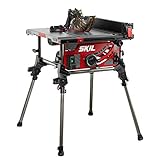
1. SKIL 15 Amp 10 Inch Portable Jobsite Table Saw with Folding Stand- TS6307-00
Overview:
The SKIL TS6307-00 is a robust 10-inch portable table saw designed for contractors and DIYers who demand precision and mobility. Powered by a 15-amp motor, it delivers reliable performance on job sites or in the workshop, handling everything from framing lumber to sheet goods with ease.
What Makes It Stand Out:
Its rack and pinion fence rails ensure smooth, accurate rip cuts by maintaining perfect blade-to-fence alignment. The integrated folding stand enhances portability and storage, while the 4x4 cutting capacity at 90° makes it capable of handling thick stock in a single pass. Micro-adjustable parallel blade alignment fine-tunes accuracy, a feature typically found on higher-end models.
Value for Money:
Priced competitively, the TS6307-00 offers pro-level features without the premium cost. It outperforms many budget saws with its durable construction and precision engineering, making it a smart buy for serious users.
Strengths and Weaknesses:
Strengths: Excellent fence system, solid cutting depth, folding stand, and accurate bevel stops.
Weaknesses: No onboard storage for accessories; heavier than compact models.
Bottom Line:
A dependable, accurate, and portable jobsite saw that delivers strong performance for its class—ideal for professionals and serious hobbyists alike.
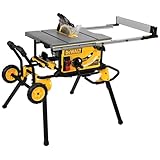
2. DEWALT Table Saw 10 Inch with Foldable Rolling Table Saw Stand, 15 Amp, 4800 RPM, 32-1/2-Inch Rip Capacity (DWE7491RS)
Overview:
The DEWALT DWE7491RS combines power and portability in a well-engineered 10-inch table saw. With a 15-amp motor and 32.5-inch rip capacity, it’s built for handling large sheet materials with ease, making it a favorite among contractors.
What Makes It Stand Out:
The rack-and-pinion telescoping fence system ensures smooth, precise adjustments, while the patented material support improves stability during narrow rips. The rolling stand allows quick setup and transport, and the onboard storage keeps essential accessories like the push stick, miter gauge, and blade guard within reach.
Value for Money:
While pricier than entry-level models, the DWE7491RS justifies its cost with superior build quality, enhanced stability, and thoughtful features that boost efficiency and safety on the job site.
Strengths and Weaknesses:
Strengths: Large rip capacity, excellent fence system, rolling stand, comprehensive onboard storage.
Weaknesses: Stand can feel bulky when folded; bevel adjustment lacks micro-control.
Bottom Line:
A top-tier portable table saw that excels in durability, accuracy, and convenience—highly recommended for professionals needing reliable performance.
3. DEWALT 15 Amp 8-1/4 in. Compact Portable Jobsite Table Saw (DWE7485)

Overview:
The DEWALT DWE7485 is a compact yet powerful 8-1/4-inch table saw tailored for portability without sacrificing essential performance. Its 15-amp motor and 24.5-inch rip capacity make it ideal for on-site woodworking tasks.
What Makes It Stand Out:
Despite its smaller blade size, it delivers impressive 2x4 cross-cut capacity and efficient sheet goods handling. The rack-and-pinion fence ensures smooth, accurate alignment, while onboard storage keeps accessories organized. The rugged metal roll cage enhances durability in tough job site conditions.
Value for Money:
It offers excellent value for users prioritizing portability and durability. It undercuts larger models in price while maintaining DEWALT’s trusted reliability and precision.
Strengths and Weaknesses:
Strengths: Lightweight, durable build, accurate fence, onboard storage, easy transport.
Weaknesses: Limited bevel capacity; smaller blade reduces depth compared to 10-inch models.
Bottom Line:
A highly portable, well-built saw perfect for contractors who need reliable performance in tight spaces or frequent job site moves.
4. SKIL 15 Amp 8-1/4" Compact Portable Jobsite Table Saw (Stand SFS0001 Sold Separately)-TS6308-00

Overview:
The SKIL TS6308-00 is a compact, corded 8-1/4-inch table saw designed for mobility and precision on the job site. With a 15-amp motor and a 24.5-inch rip capacity, it balances power and portability effectively.
What Makes It Stand Out:
It offers a maximum 2.5-inch cutting depth at 0°, allowing it to cut 3x material in one pass—an exceptional feature for its class. The rack-and-pinion fence rails ensure consistent alignment for accurate cuts, and the expansive 24.5-inch right and 12-inch left rip capacity supports full sheet processing.
Value for Money:
Competitively priced, it delivers strong cutting performance and thoughtful design. While the stand is sold separately, the saw itself offers excellent capabilities for DIYers and pros needing a lightweight option.
Strengths and Weaknesses:
Strengths: High cutting depth, precise fence system, large rip capacity for size, compact design.
Weaknesses: Stand not included; no integrated wheels; limited bevel adjustment details.
Bottom Line:
A powerful, compact saw with impressive cutting depth and accuracy—ideal for users needing portability without compromising performance.
5. Table Saw 10 Inch, 15 Amp 5000RPM Powerful Tablesaw With Stand & Protective Cover, 36 X 25 Inch Tabletop Saw 90° Cross Cut & 0-45° Bevel Cut, Adjustable Depth, for Woodworking, Metal, Plastic

Overview:
This 10-inch table saw packs a 15-amp motor and 5000 RPM output into a 36” x 25” frame, catering to DIYers and hobbyists. It supports cross-cutting, bevel cuts, and even non-wood materials, backed by a protective cover and sturdy metal stand.
What Makes It Stand Out:
The adjustable depth and 0–45° bevel cuts offer versatility, while the transparent blade guard enhances safety without obstructing visibility. Dust port integration and side storage for wrenches and push rods improve usability. The 24-month return policy adds strong consumer confidence.
Value for Money:
It’s an affordable all-in-one package with a stand and safety features typically seen in more expensive models. Suitable for light to medium-duty tasks in home workshops.
Strengths and Weaknesses:
Strengths: Budget-friendly, includes stand and cover, good safety features, dual-material capability.
Weaknesses: Build quality may not match premium brands; fence accuracy can be inconsistent.
Bottom Line:
A solid entry-level table saw offering versatility and value—perfect for beginners and casual users.
6. SKIL 10 Inch Heavy Duty Worm Drive Table Saw with Stand - SPT99-11

Overview:
The SKIL SPT99-11 is a rugged, jobsite-ready table saw designed for professionals who demand durability and precision. Featuring a traditional worm drive system, it delivers high torque for aggressive cutting through dense materials, making it ideal for framing and heavy-duty carpentry.
What Makes It Stand Out:
Its legendary worm drive gearing provides exceptional power and a 3-5/8 inch depth of cut, outperforming many direct-drive competitors. The precision rack and pinion fence system ensures smooth, accurate adjustments, while the rolling stand with 16-inch wheels enhances mobility on rough terrain.
Value for Money:
Priced competitively for a worm drive saw, it offers superior cut depth and rip capacity (30-1/2 inches) without the premium cost of some brands. The included stand adds significant value for contractors needing portability.
Strengths and Weaknesses:
Strengths: High torque output, excellent depth of cut, durable stand, superior mobility, accurate fence system.
Weaknesses: Heavier than direct-drive models, slightly slower startup, dust collection could be more efficient.
Bottom Line:
The SKIL SPT99-11 is a powerful, mobile workhorse that delivers professional-grade performance at a reasonable price—ideal for builders and framers needing reliable, deep-cut capability on the jobsite.
7. BOSCH GTS15-10 10 Inch Portable Jobsite Table Saw with Gravity-Rise Wheeled Stand, 15 Amp, 32-1/8 Inch Rip Capacity, 4 HP

Overview:
The Bosch GTS15-10 combines power, precision, and smart design for serious DIYers and professionals. With a 15-amp motor and Gravity-Rise stand, it balances performance and convenience for frequent job-site use.
What Makes It Stand Out:
The standout Gravity-Rise wheeled stand allows effortless setup and folding, reducing strain during transport. Its 32-1/8-inch rip capacity accommodates full sheet goods, while the convenience brake stops the blade in about three seconds, boosting workflow safety.
Value for Money:
It justifies its price with high-end features like soft-start circuitry and a durable open-frame design. The CLAMPZONE areas add utility, turning the table into a secondary work surface—smart for tight spaces.
Strengths and Weaknesses:
Strengths: Excellent rip capacity, Gravity-Rise stand, fast blade stop, soft-start motor, sturdy build.
Weaknesses: Dust collection is average, stand can feel bulky when folded, higher noise level.
Bottom Line:
The Bosch GTS15-10 excels in usability and power, offering professional features in a portable package—making it a top-tier choice for contractors prioritizing efficiency and ease of transport.
8. DEWALT Portable Table Saw with Stand, 8-1/4 inch, up to 48-Degree Angle Cuts (DWE7485WS)

Overview:
The DEWALT DWE7485WS is a compact yet capable table saw tailored for on-the-go woodworkers. Its 8-1/4-inch blade and lightweight design make it highly portable without sacrificing essential performance.
What Makes It Stand Out:
With a 24.5-inch rip capacity, it handles 4x8 sheets with ease. The rack and pinion telescoping fence rails deliver smooth, accurate adjustments, and the blade brake enhances safety. Its compact size is perfect for vans and tight storage.
Value for Money:
It offers excellent value for DIYers and small contractors. The power-loss reset prevents accidental restarts, a critical safety feature often missing at this price. Stand included adds convenience.
Strengths and Weaknesses:
Strengths: Highly portable, accurate fence, blade brake, power-loss reset, affordable.
Weaknesses: Smaller blade limits depth of cut, not ideal for thick hardwoods, stand less robust than premium models.
Bottom Line:
The DWE7485WS is a smart, safe, and portable option for users needing reliable performance on job sites or in garages—particularly those prioritizing mobility and sheet material handling.
9. Evolution R10TS 10" Jobsite Table Saw | 15A Powerful Motor | Multi-Material Cutting | 10" TCT Blade | 26” Rip Capacity | 3-3/8” Cut Depth | 0-45º Bevel | Precision Fence | Portable & Heavy-Duty

Overview:
The Evolution R10TS is a versatile, heavy-duty table saw built for professionals tackling diverse materials. With a 15A motor and multi-material capability, it stands out in mixed-material job environments.
What Makes It Stand Out:
It can cut wood, aluminum, and mild steel without blade changes—thanks to its included 10” TCT blade. The dual rack and pinion fence system ensures repeatable accuracy, while the bevel adjustment (0–45º) adds flexibility.
Value for Money:
Its ability to handle metal saves time and tools on the job site, justifying the price. Onboard storage, electronic blade brake, and anti-kickback features enhance utility and safety.
Strengths and Weaknesses:
Strengths: Multi-material cutting, precise fence, excellent safety features, portable steel frame.
Weaknesses: Rip capacity slightly below competitors, limited aftermarket support, heavier than some portables.
Bottom Line:
The Evolution R10TS is a powerhouse for diverse cutting needs, offering unmatched versatility and safety—ideal for contractors working with mixed materials who need precision and portability.
10. Metabo HPT 10-Inch Single Bevel Compound Miter Saw, 15-Amp Power Saw with Xact Cut Shadow Line, Precision Miter Angles, Single Bevel 0-45°, 40T TCT Miter Saw Blade, Lightweight Design, C10FCG2

Overview:
The Metabo HPT C10FCG2 is a lightweight, precision-focused miter saw designed for trim work, framing, and finish carpentry. Its 15-amp motor and 5,000 RPM speed deliver clean, fast cuts.
What Makes It Stand Out:
The Xact Cut Shadow Line system projects cut lines for pinpoint accuracy. The vice clamping system secures workpieces, and the large table provides excellent support—uncommon in its class.
Value for Money:
At a competitive price, it includes a high-quality 40T TCT blade and a robust 5-year warranty. Lightweight at 24 lbs, it offers pro performance without the weight.
Strengths and Weaknesses:
Strengths: Lightweight, accurate Xact Cut guide, solid clamping, durable build, great warranty.
Weaknesses: Single bevel only, limited miter range compared to dual-bevel models, no laser.
Bottom Line:
The Metabo HPT C10FCG2 is a reliable, precise, and portable miter saw that delivers professional results—perfect for carpenters who value accuracy, ease of transport, and long-term durability.
Understanding the Different Types of Table Saws
Table saws are not one-size-fits-all. They come in distinct categories, each designed for specific use cases, workspace sizes, and skill levels. Knowing the differences will help you focus on models that align with your woodworking goals.
Benchtop Table Saws
Compact and portable, benchtop saws are ideal for those with limited space or who frequently move their tools. Lightweight and often powered by universal motors, they’re great for DIYers and small projects. However, their smaller size comes with trade-offs in stability, power, and accuracy. These are best suited for occasional use, not heavy-duty jobs.
Contractor Table Saws
A step up from benchtop models, contractor saws feature more powerful motors and larger work surfaces. Traditionally, they have an open-stand design with the motor mounted at the rear. While not as robust as cabinet saws, they offer a solid balance of performance and mobility. They’re a popular choice among serious hobbyists and semi-professionals who need more power without sacrificing portability.
Cabinet Table Saws
These are the workhorses of the woodworking world. Built with fully enclosed cast-iron or steel cabinets, cabinet saws deliver exceptional stability, powerful induction motors, and superior dust collection. They’re designed for continuous use in professional environments but require a dedicated space. If you’re doing high-volume or precision work, a cabinet saw is often the gold standard.
Hybrid Table Saws
Blending features of contractor and cabinet saws, hybrid models offer a middle ground. They typically have enclosed stands and more powerful motors than contractor saws but at a lower price point than full cabinet units. For woodworkers who want industrial-level performance without the industrial-level cost, hybrids are a compelling option.
Jobsite Table Saws
Engineered for durability on construction sites, jobsite saws are rugged, portable, and built to handle daily abuse. They often come with wheels, foldable stands, and protective covers. While not as accurate or powerful as stationary models, modern jobsite saws have closed the performance gap significantly. They’re perfect for trim carpenters and remodelers who need reliable cuts on the go.
Key Features to Evaluate Before Buying
When shopping for a table saw, it’s easy to focus on price or brand reputation. But the real value lies in the features that directly impact safety, precision, and ease of use. Here’s what to prioritize.
Motor Power and Type
The motor is the engine that drives your saw. Horsepower (HP) and amperage determine how well the saw handles dense hardwoods or thick stock. For most home shops, a 1.5 to 3 HP motor is sufficient. Induction motors are quieter and longer-lasting, while universal motors are lighter and more common in portable models.
Blade Size and Arbor Compatibility
Most table saws use a 10-inch blade, though some cabinet models offer 12-inch options for deeper cuts. Ensure the arbor size (usually 5/8 inch or 1 inch) matches the blades you plan to use. Compatibility with dado blades is also worth considering if you frequently make grooves or rabbets.
Rip Capacity and Fence System
Rip capacity refers to how far the blade can cut from the fence, determining the width of material you can handle. A standard 30-inch rip is common, but larger models extend to 50 inches or more. The fence system must be rigid, easy to adjust, and perfectly parallel to the blade. A high-quality fence is arguably the most critical component for accurate cuts.
Table Surface and Flatness
The table supports your workpiece during cutting. A larger, cast-iron or precision-ground steel table provides stability and reduces vibration. Look for a surface that’s smooth, flat, and resistant to rust. Some tables come with extensions to support wider panels.
Miter Gauge and Slot Quality
A reliable miter gauge is essential for crosscuts and angled work. Integrated miter slots should be machined to tight tolerances and remain parallel to the blade. Aftermarket gauges can improve performance, but a good stock miter system saves time and money.
Dust Collection Efficiency
Sawdust isn’t just messy—it’s hazardous. A well-designed dust collection system captures debris at the source, improving visibility and reducing respiratory risks. Look for models with sealed enclosures, large dust ports (2.5 inches or more), and compatibility with shop vacs or central dust collection systems.
Safety Features Worth Having
Modern table saws come with a range of safety innovations. Riving knives prevent kickback by keeping the kerf open behind the blade. Blade guards protect against accidental contact. Some models include advanced systems like braking technology that stops the blade in milliseconds upon contact with skin.
Mobile Bases and Stand Options
If you need to move your saw frequently, a mobile base is a game-changer. Most cabinet and hybrid saws can be fitted with rolling stands. Look for heavy-duty casters, locking mechanisms, and ease of deployment.
Precision and Calibration
A table saw should stay calibrated over time. Look for easy-to-adjust trunnions, tilt mechanisms with positive stops, and smooth blade height and angle controls. The ability to fine-tune blade alignment ensures long-term accuracy.
The Role of Safety in Modern Table Saw Design
Safety has evolved beyond just wearing goggles and push sticks. Today’s best saws integrate engineering solutions that reduce risk without compromising performance.
The Riving Knife vs. Splitter Debate
Both prevent kickback, but riving knives are generally superior. They maintain a consistent distance from the blade, move with blade height adjustments, and are less likely to interfere with non-through cuts. Always ensure yours is properly installed and aligned.
Advanced Safety Systems
Some high-end saws now feature active safety technology. These systems use electrical signals to detect contact with skin and instantly stop and retract the blade. While they come at a premium, the peace of mind they offer is invaluable—especially for high-volume workshops.
Kickback Prevention Techniques
Kickback occurs when the workpiece is violently thrown back toward the operator. Proper blade alignment, use of a riving knife, and correct feeding technique minimize this risk. Never remove safety components unless absolutely necessary—and always reinstall them afterward.
How Your Workshop Space Influences Your Choice
Your physical workspace plays a major role in determining which type of saw makes the most sense.
Space Constraints and Layout
Small garages or basements might only accommodate a benchtop or compact contractor saw. Larger shops can house cabinet saws with outfeed tables. Consider not just the saw’s footprint but also clearance for material handling and dust collection.
Power Supply Requirements
Cabinet saws often require 240-volt circuits, which may not be available in all home shops. Verify your electrical setup before purchasing. Some models offer dual-voltage capability, adding flexibility.
Noise and Vibration Considerations
Induction motors are quieter than universal ones, which matters if your shop is near living areas. Vibration can affect cut quality and user fatigue—look for well-balanced motors and solid stands.
Matching the Saw to Your Woodworking Projects
Your typical projects should dictate your tool choices.
Fine Furniture and Cabinet Making
These crafts demand precision, so opt for a cabinet or hybrid saw with a high-quality fence, smooth blade control, and excellent dust management. Consistent accuracy over long sessions is key.
Framing and Construction Work
Jobsite saws shine here. Durability, portability, and quick setup matter more than ultra-fine tolerances. Look for rugged construction and easy blade changes.
Hobby and Weekend Projects
If you’re building birdhouses or simple shelves, a benchtop or entry-level contractor saw may be plenty. Don’t overspend on features you won’t use.
Maintenance and Long-Term Ownership
A table saw is a long-term investment. Proper care ensures it performs well for years.
Routine Cleaning and Lubrication
Remove sawdust from the blade, table, and undercarriage regularly. Lubricate moving parts like the elevation mechanism and fence rails according to the manufacturer’s guidelines.
Blade Care and Replacement
A sharp blade makes cleaner cuts and reduces strain on the motor. Inspect blades for dullness, resin buildup, or warping. Replace or sharpen them as needed.
Calibration Checks
Even the best saws can go out of alignment. Check blade parallelism, fence squareness, and miter gauge accuracy monthly—or after any significant movement or impact.
Future-Proofing Your Investment
Technology and safety standards continue to advance. When choosing a saw, consider features that will remain relevant.
Upgradeability
Some models allow for aftermarket fences, better miter gauges, or improved dust collection. This flexibility extends the saw’s useful life.
Compatibility with Accessories
Look for saws that support dado stacks, tenoning jigs, and panel-feeding systems. The more versatile your saw, the more projects you can tackle.
Frequently Asked Questions
What is the most important feature to look for in a table saw?
The fence system is arguably the most critical component. A rigid, accurate, and easy-to-adjust fence ensures straight, repeatable cuts and directly impacts the quality of your work.
Can I use a 10-inch blade on a 12-inch table saw?
No. Blade size must match the saw’s specifications. Installing an undersized blade can create safety hazards and reduce performance. Always use the blade size the manufacturer recommends.
How often should I replace my table saw blade?
There’s no fixed timeline—it depends on usage and material. Replace blades when they produce rough cuts, require excessive force, or show visible wear. Regular cleaning can extend blade life.
Is a riving knife necessary?
Yes. A riving knife significantly reduces the risk of kickback, especially during rip cuts. It’s one of the most effective safety features on a modern table saw.
Can I plug a cabinet saw into a regular outlet?
Most cabinet saws require a 240-volt outlet due to their high power demands. Check the voltage requirements before purchasing, and consult an electrician if needed.
What’s the difference between a contractor saw and a cabinet saw?
Contractor saws are lighter, more portable, and often have open stands with rear-mounted motors. Cabinet saws are heavier, more powerful, fully enclosed, and designed for stationary, high-duty use.
Do I need a mobile base?
If you plan to move your saw often, yes. Mobile bases make it easy to reposition even heavy saws. For permanent installations, a fixed stand may be more stable.
How can I improve dust collection on my table saw?
Ensure all seals are intact, use a high-quality dust hood, connect to a powerful vacuum or dust collector, and consider adding aftermarket shrouds or baffle systems.
Are table saw safety systems worth the extra cost?
For many woodworkers, yes—especially if you work long hours or have others using the saw. Advanced safety systems can prevent life-altering injuries and offer peace of mind.
Can I use a table saw outdoors?
While some jobsite saws are designed for outdoor use, prolonged exposure to moisture and debris can damage any saw. Always cover or store your saw when not in use, and never operate it in wet conditions.
See Also
- The 10 Best Cabinet Table Saws Every Professional Needs This Year
- The 10 Best Cabinet Table Saws Every Wood Shop Needs This Year
- The 10 Best Compact Table Saws Every Apartment Woodworker Needs This Year
- The 10 Best Hybrid Table Saws Every Home Shop Needs This Year
- The 10 Best Mini Table Saws Every DIYer Needs This Year