Table of Contents
Woodworking is a craft that blends creativity with precision, and for beginners, the right tools can make all the difference. At the heart of any well-equipped workshop lies the table saw—a versatile powerhouse capable of transforming raw lumber into masterpieces. If you’re just stepping into the world of DIY furniture, cabinetry, or home projects, choosing your first table saw might feel overwhelming. With so many models, features, and price points on the market, it’s easy to get lost in the noise. But fear not—your journey begins here.
By 2026, advancements in safety, motor technology, and ergonomics have made table saws more accessible and beginner-friendly than ever. Whether you’re working in a garage, basement, or compact urban workshop, there’s a table saw designed to match your skill level, workspace, and budget. This guide will walk you through everything you need to know before making a purchase—cutting through the confusion so you can focus on what matters: building with confidence.
Top 10 Table Saws For Beginners
Detailed Product Reviews
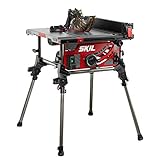
1. SKIL 15 Amp 10 Inch Portable Jobsite Table Saw with Folding Stand- TS6307-00
Overview:
The SKIL TS6307-00 is a robust 10-inch portable table saw designed for contractors and DIYers who need reliable performance on the jobsite. Powered by a 15-amp motor and paired with a folding stand, it balances portability with cutting power, making it ideal for frequent transport and storage in tight spaces.
What Makes It Stand Out:
Its rack and pinion fence rails ensure smooth, precise adjustments while maintaining alignment with the blade—critical for accurate rip cuts. The integrated folding stand enhances mobility, and the 4x4 cutting capacity at 90° offers solid versatility. Micro-adjustable parallel blade alignment allows fine-tuning for precision work, while the 0° to 47° bevel range covers most common angle cuts.
Value for Money:
Priced competitively, the SKIL saw delivers features typically found in higher-end models. Its durability, accuracy, and portability offer excellent value for professionals and serious hobbyists seeking a dependable portable saw without overspending.
Strengths and Weaknesses:
Strengths: Durable folding stand, accurate fence system, strong motor, and good cutting capacity.
Weaknesses: Slightly heavier than comparable models; dust collection could be more effective.
Bottom Line:
The SKIL TS6307-00 is a well-rounded, portable table saw that excels in accuracy and convenience, making it a smart choice for on-the-go woodworkers who demand performance and reliability.
2. Mini Table Saw for Crafts[Dual 795 Motors & Switches] Max 200W/12,000RPM/26mm Adjustable Height Table Saw with Accessories.Gift for Men and Women’s Creating Handmade Gifts,Exploring Hobbies,Models

Overview:
This mini table saw is engineered for precision crafting, model-making, and small DIY projects. Equipped with dual 795 motors and a dual-switch safety system, it’s tailored for hobbyists who require fine control and enhanced safety during detailed work.
What Makes It Stand Out:
The dual-motor system allows independent operation of cutting and sanding functions, reducing risk and motor strain. With a maximum output of 200W and 12,000 RPM, it delivers exceptional speed and efficiency. The innovative small-window blade change saves time, while the 26mm cutting height and 12cm-wide table accommodate a range of materials.
Value for Money:
At its price point, it offers premium upgrades like smart zoning, shock-absorbing feet, and comprehensive accessories. It’s ideal for crafters seeking professional-level precision in a compact tool.
Strengths and Weaknesses:
Strengths: High RPM, dual safety switches, easy blade changes, excellent stability, and dust management.
Weaknesses: Not suitable for large wood pieces; risk of overload if both switches are used simultaneously.
Bottom Line:
A top-tier mini table saw for detail-oriented users, combining safety, precision, and versatility—perfect as a gift or for enhancing small-scale creative projects.
3. Complete Table Saw Book, Revised Edition: Step-by-Step Illustrated Guide to Essential Table Saw Skills, Techniques, Tools, and Tips (Fox Chapel Publishing) 9 Custom Projects; Maintain, Tune, & Improve
Overview:
The Complete Table Saw Book is a comprehensive, visually driven guide for woodworkers at all levels. This revised edition covers everything from basic setup to advanced techniques, making it a valuable resource for anyone using a table saw.
What Makes It Stand Out:
Richly illustrated with step-by-step photos, it demystifies complex operations like tuning, dado cuts, and blade selection. The inclusion of nine custom projects helps readers apply skills practically. It also details maintenance, safety, and shop setup, offering holistic knowledge.
Value for Money:
Affordable and packed with expert advice, this book delivers exceptional educational value. It outshines many digital resources with its clarity and hands-on approach.
Strengths and Weaknesses:
Strengths: Clear visuals, practical projects, thorough coverage, beginner-friendly.
Weaknesses: Not a physical tool; limited digital content or video support.
Bottom Line:
An indispensable guide for table saw users—recommended for novices and seasoned woodworkers alike seeking to improve skill, safety, and project outcomes.
4. DEWALT 15 Amp 8-1/4 in. Compact Portable Jobsite Table Saw (DWE7485)

Overview:
The DEWALT DWE7485 is a compact yet powerful 8-1/4-inch table saw built for portability and durability on construction sites. Its 15-amp motor and 24.5-inch rip capacity make it capable of handling full sheets of plywood with ease.
What Makes It Stand Out:
Despite its smaller blade size, it delivers impressive performance thanks to rack-and-pinion fence rails for smooth, accurate adjustments. The on-board storage compartment keeps accessories organized, and the metal roll cage base provides rugged jobsite protection.
Value for Money:
It’s a cost-effective solution for contractors needing a lightweight, reliable saw. The balance of size, power, and durability justifies its price, especially for those prioritizing transportability.
Strengths and Weaknesses:
Strengths: Compact and lightweight, excellent fence system, onboard storage, durable build.
Weaknesses: Smaller blade limits depth of cut compared to 10-inch models; dust collection is average.
Bottom Line:
The DWE7485 is an outstanding portable table saw for professionals seeking a compact, durable, and accurate tool for on-site woodworking tasks.
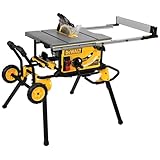
5. DEWALT Table Saw 10 Inch with Foldable Rolling Table Saw Stand, 15 Amp, 4800 RPM, 32-1/2-Inch Rip Capacity (DWE7491RS)
Overview:
The DEWALT DWE7491RS is a high-performance 10-inch jobsite table saw paired with a foldable rolling stand, designed for maximum portability and cutting capacity. With a 32-1/2-inch rip capacity, it’s built for large-scale projects.
What Makes It Stand Out:
The rack-and-pinion telescoping fence ensures precise adjustments, while the patented material support aids in narrow rip cuts. The rolling stand enables easy setup and transport, and the onboard storage holds all essential accessories, including a push stick and miter gauge.
Value for Money:
Although pricier than basic models, its professional-grade build, extended rip capacity, and included stand offer excellent long-term value for contractors and serious woodworkers.
Strengths and Weaknesses:
Strengths: Large rip capacity, rolling stand, robust storage, accurate fence system.
Weaknesses: Heavier when assembled; assembly of stand may take time.
Bottom Line:
A top-tier portable table saw system that combines power, precision, and mobility—ideal for pros who need reliability and efficiency on demanding job sites.
6. SKIL 15 Amp 8-1/4" Compact Portable Jobsite Table Saw (Stand SFS0001 Sold Separately)-TS6308-00

Overview:
The SKIL TS6308-00 is a full-featured portable table saw designed for contractors and DIYers who need reliable performance on job sites. With a powerful 15-amp motor and an 8-1/4-inch blade, it delivers up to 2-1/2 inches of cutting depth, enabling single-pass cuts through thick lumber and sheet goods.
What Makes It Stand Out:
Its rack-and-pinion fence system ensures smooth, precise, and parallel alignment—critical for clean rip cuts. The expansive 24.5-inch right and 12-inch left rip capacity accommodates full sheets of plywood. Despite its robust capabilities, the saw maintains a compact footprint, enhancing portability and storage convenience.
Value for Money:
Priced competitively, the TS6308-00 offers professional-grade features without the premium cost of high-end models. While the stand is sold separately, the saw’s durability and accuracy justify the investment for regular users.
Strengths and Weaknesses:
Strengths: Powerful motor, excellent rip capacity, accurate fence system, deep cut capability.
Weaknesses: No stand included, slightly heavy at 55 pounds, dust collection could be improved.
Bottom Line:
A dependable, high-performance table saw ideal for serious DIYers and pros needing precision and power in a portable design—highly recommended for jobsite efficiency.
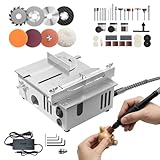
7. MIMYTH Mini Table Saw for Crafts, Multifunctional Portable Table Saws Adjustable Cutting Angle,Speed,SawDepth; Small Table Saw for Cutting, Grinding, Sanding All-in-one; Tablesaw
Overview:
The MIMYTH Mini Table Saw is a compact, multi-functional tool tailored for crafters, model builders, and hobbyists. It combines a circular saw, drill chuck, and sanding disc in one desktop unit, enabling precise cutting, sanding, drilling, and engraving on small materials.
What Makes It Stand Out:
Dual 795 pure copper motors power the saw and auxiliary functions independently, boosting performance and safety. The inclusion of four specialized 2.5-inch blades—PCB, HSS, alloy, and resin—ensures optimal results across materials like balsa wood, acrylic, and copper pipes. Adjustable blade height (up to 0.59”) and 0°–90° angle cuts enhance versatility.
Value for Money:
At its price point, the MIMYTH offers exceptional functionality. Its multifunctionality eliminates the need for multiple tools, making it a smart buy for hobbyists with limited space.
Strengths and Weaknesses:
Strengths: Multi-tool capability, precise laser-etched scale, stable rubber feet, excellent blade variety.
Weaknesses: Not for heavy-duty tasks, dual-motor complexity may increase maintenance, no dust extraction port.
Bottom Line:
A highly capable, versatile mini saw perfect for detailed craftwork and small projects—ideal for hobbyists seeking an all-in-one desktop solution.
8. Table Saw Handbook For Beginners: Complete Guide To Use Table Saw And Cut Angles

Overview:
The Table Saw Handbook For Beginners is a comprehensive instructional guide designed to help novices safely and effectively use table saws. It covers essential techniques, safety protocols, and precision cutting methods, including angle and rip cuts.
What Makes It Stand Out:
Though lacking product specs, its value lies in demystifying table saw operation. It likely features step-by-step illustrations, cutting charts, and practical tips for setting up blades, fences, and miter gauges—critical for avoiding common beginner errors.
Value for Money:
As a standalone educational resource, it offers excellent value for those new to woodworking. Avoiding costly mistakes through proper guidance justifies the purchase, especially when paired with entry-level saws.
Strengths and Weaknesses:
Strengths: Educational focus, beginner-friendly approach, likely clear diagrams and instructions.
Weaknesses: No hands-on functionality, dependent on content quality (unverifiable without details), may lack advanced techniques.
Bottom Line:
An essential companion for novice woodworkers—recommended for building foundational skills and confidence with table saws.
9. Mini Table Saw, Sinpiode Multi-Functional Desktop Portable Table Saw for Crafts with Adjustable Speed & Angle, All-in-One Cutting, Sanding, Engraving & Drilling Tool for Wood, Acrylic, Plastic, PCB
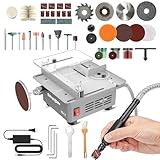
Overview:
The Sinpiode Mini Table Saw is a compact, desktop powerhouse built for precision crafting. Measuring just 7.48×8.66×2.17 inches, it’s ideal for small workshops and hobbyists needing accurate cuts on materials like PCBs, acrylic, and thin wood.
What Makes It Stand Out:
Its 100W all-copper motor delivers up to 6000 RPM with 7-speed control, allowing fine-tuned performance across materials. The laser-etched cast iron worktable ensures ±0.2mm accuracy. Four specialized blades—PCB, HSS, alloy, and resin—plus sanding and drilling capabilities enhance its versatility.
Value for Money:
Priced for accessibility, it offers professional-grade precision in a miniaturized format. The inclusion of high-quality components like cast iron and multiple blades adds significant value.
Strengths and Weaknesses:
Strengths: High precision, 7-speed control, durable build, excellent blade variety, transparent guard.
Weaknesses: Simultaneous blade and sanding operation raises safety concerns, limited to thin materials (max 0.59”), no dust port.
Bottom Line:
A top-tier mini table saw for detailed craft projects—recommended for hobbyists prioritizing accuracy and multifunctionality in a compact tool.
10. Mini Table Saw, RTOVZON 96W Mini Desktop Electric Saw Cutter 7.1"x5.5", Cut Thickness Adjustable Precision Craft Table Saw with Speed & Angle Adjust 4* Blades, Available for Wood/PCB/Acrylic/Plastic

Overview:
The RTOVZON 96W Mini Table Saw is a lightweight, precision-focused tool designed for intricate craft and model-making tasks. Weighing just 3.9 lbs, it’s built for portability without sacrificing functionality.
What Makes It Stand Out:
Constructed with lightweight aluminum alloy, it combines durability with ease of transport. Seven-speed settings allow material-specific optimization, while adjustable blade height (0–0.6”) ensures clean cuts. A standout feature is the 0–180° miter gauge for versatile angle cuts. The included dust pipe enhances workshop cleanliness and user safety.
Value for Money:
Offering a dust extraction system and four specialized blades at a competitive price, RTOVZON delivers strong value. It’s well-suited for users needing precision and clean operation in confined spaces.
Strengths and Weaknesses:
Strengths: Lightweight aluminum build, dust pipe, wide angle range, 7-speed control.
Weaknesses: Lower motor power than competitors, small table size limits larger workpieces, blade guard design not detailed.
Bottom Line:
A well-designed, health-conscious mini saw ideal for detailed hobby work—recommended for crafters seeking clean, precise cuts with efficient dust management.
Understanding the Role of a Table Saw in Woodworking
At its core, a table saw is the backbone of a woodworking shop. It’s designed to make straight, repeatable cuts with incredible accuracy. From ripping long boards to crosscutting panels, a table saw handles the bulk of layout and preparation tasks. For beginners, mastering this tool early on unlocks the ability to tackle a wide range of projects—from simple shelves to complex joinery.
Unlike handheld tools, a table saw provides a stable platform and consistent blade alignment, which significantly improves cut quality. It’s not just about power; it’s about control. With the right setup, even novice woodworkers can achieve professional-grade results.
Types of Table Saws for Beginners
Not all table saws are created equal, and understanding the different types will help you match the tool to your needs and workspace.
Benchtop Table Saws
Compact and portable, benchtop models sit on a workbench or stand and are ideal for those with limited space. These saws are lightweight and affordable, making them popular among hobbyists and apartment-based woodworkers. While they sacrifice some power and cutting capacity, modern benchtop saws have improved significantly in stability and accuracy.
Contractor-Style Table Saws
Slightly larger and more powerful, contractor saws typically feature an open-stand design with a belt-driven motor. They offer better durability and larger table surfaces than benchtop models. These are excellent choices for beginners who plan to work on larger projects and don’t mind a bit more setup time.
Cabinet-Style Table Saws
These are the heavy-duty champions of the table saw world. With fully enclosed cabinets, direct-drive motors, and superior dust collection, they deliver unmatched power and precision. While they’re often overkill for absolute beginners due to cost and size, some entry-level cabinet saws are now within reach of serious hobbyists.
Hybrid Table Saws
Blending features from contractor and cabinet models, hybrids offer a balanced mix of performance and affordability. They’re a smart choice for intermediate beginners who want professional features without the full investment.
Key Features to Consider When Buying a Table Saw
Selecting the right table saw isn’t just about price—it’s about functionality, safety, and long-term usability.
Motor Power and RPM
The motor is the engine of your saw. For beginners, a 15-amp motor (or equivalent in cordless models) is ideal for handling hardwoods and thick materials. Higher RPM ensures smoother cuts, while adequate torque prevents stalling during demanding tasks.
Blade Size and Arbor Compatibility
Most table saws use a 10-inch blade, though some compact models use 8-inch. Ensure the saw accepts standard 5/8-inch or 1-inch arbors so you can use common blades. Blade compatibility affects cutting depth and versatility.
Cutting Capacity and Rip Capacity
Rip capacity—the distance from the blade to the far edge of the fence—determines how wide a board you can cut. A minimum of 24 inches is recommended for most beginner projects, while 30 inches or more offers more flexibility for sheet goods.
Table Size and Material
A larger table provides better support for large panels and improves cut accuracy. Look for a cast aluminum or steel tabletop with a smooth, flat surface. Durable finishes resist rust and make blade changes easier.
Fence System Quality
The fence is critical for straight, repeatable cuts. A robust, easy-to-adjust fence with micro-adjustments and secure locking mechanisms ensures precision. Avoid flimsy fences that wobble or drift during use.
Miter Gauge and Slot Compatibility
A good miter gauge helps with angled and crosscuts. Check that the saw includes a reliable miter gauge and compatible T-slots for jigs and accessories.
Safety Features for New Users
Safety should never be an afterthought. Look for models with riving knives, blade guards, anti-kickback pawls, and emergency stop buttons. By 2026, many saws now include advanced safety systems like brake cartridges that stop the blade on contact.
Dust Collection Efficiency
Sawdust isn’t just messy—it’s a health hazard. A built-in dust port that connects to a shop vac or dust collector keeps your workspace cleaner and your lungs safer. Effective dust management also improves visibility and blade performance.
Portability and Setup
If you’re working in a shared space or need to store your saw between uses, portability matters. Folding stands, wheels, and lightweight designs enhance mobility. However, ensure portability doesn’t compromise stability during operation.
Ease of Assembly and Adjustments
Beginners benefit from intuitive setups and clear instructions. Look for saws with tool-free blade changes, quick fence adjustments, and easy calibration. The less time you spend tinkering, the more time you spend creating.
Noise and Vibration Levels
A quieter, smoother-running saw makes for a more enjoyable experience. Excessive vibration can affect cut quality and lead to user fatigue over long sessions.
Compatibility with Accessories and Jigs
The best table saws grow with you. Ensure the model supports add-ons like dado blades, featherboards, crosscut sleds, and outfeed supports. Universal compatibility expands your capabilities as your skills progress.
Price vs. Value: What’s a Fair Investment?
Entry-level table saws start around $200, while premium models can exceed $1,000. For beginners, investing $300–$600 often strikes the best balance between features, durability, and performance. Remember: a slightly higher upfront cost can save money in the long run by reducing frustration and rework.
Common Mistakes Beginners Make with Table Saws
Even with the best tool, mistakes happen. The most common include improper fence alignment, using dull blades, neglecting safety gear, and forcing the wood through the cut. Always take time to set up correctly—measure twice, cut once.
Another frequent error is ignoring the importance of a stable work surface. Wobbly stands or uneven floors can throw off alignment and compromise safety. Invest in a solid base and take time to level your saw.
How to Maintain Your Table Saw for Longevity
A well-maintained table saw lasts for decades. Regular cleaning, especially under the table and around the blade, prevents buildup that can affect performance. Lubricate moving parts like the elevation and tilt mechanisms periodically.
Check blade alignment and fence calibration monthly. A misaligned fence leads to inaccurate cuts and potential kickback. Replace worn belts and damaged components promptly.
Building Confidence: From First Cuts to Advanced Projects
Start simple. Practice with scrap wood to get a feel for feed rate, blade height, and fence positioning. Learn how to read the blade’s kerf and how to use push sticks and featherboards for safer operation.
As you gain confidence, experiment with dado cuts, bevels, and joinery. The table saw becomes a gateway to more complex techniques—once you master the basics, the possibilities expand dramatically.
The Future of Table Saws: What’s New in 2026?
By 2026, table saws are smarter and safer. We’re seeing more integration with digital readouts, Bluetooth connectivity for firmware updates, and AI-assisted alignment tools. Cordless models with high-capacity lithium batteries offer greater mobility without sacrificing power.
Safety innovations continue to evolve, with more brands adopting contact-sensing technology that stops the blade in milliseconds upon skin contact. These advancements are making woodworking more accessible and less intimidating for newcomers.
Frequently Asked Questions
What is the safest table saw for beginners?
The safest models include built-in riving knives, blade guards, anti-kickback systems, and advanced safety brakes. Look for saws with positive user feedback on safety performance and intuitive guard systems that don’t get in the way.
Can I use a table saw in a small apartment?
Yes—compact benchtop saws are designed for tight spaces. Just ensure you have proper ventilation, dust collection, and a stable work surface. Always wear hearing and respiratory protection in confined areas.
Do I need a dado blade as a beginner?
Not immediately. Dado blades are great for joinery but require a saw that supports them. Master basic ripping and crosscutting first, then consider adding a dado stack as your skills grow.
How often should I change the blade?
Blade life depends on usage and material. Replace or sharpen when cuts become rough, require more force, or produce excessive burning. High-quality blades can last years with proper care.
Is a cordless table saw worth it?
Cordless models are improving rapidly and ideal for mobile setups or outdoor work. However, they may lack the sustained power of corded saws for heavy-duty tasks. Consider your workspace and project types.
What’s the difference between a riving knife and a splitter?
Both prevent kickback, but a riving knife moves with the blade’s height and angle, offering better protection during bevel cuts. Splitters are fixed and less versatile.
Can I cut materials other than wood?
Stick to wood and wood-based composites. Cutting metal, plastic, or masonry can damage the blade, void warranties, and create dangerous situations.
How do I prevent kickback?
Ensure the blade is sharp, the fence is parallel to the blade, and use a riving knife. Never remove the blade guard unless absolutely necessary, and always feed wood steadily without forcing it.
Should I buy a stand for my table saw?
A stand improves stability, height ergonomics, and portability. Many stands include wheels and folding mechanisms—highly recommended for benchtop and contractor saws.
What’s the first project I should try with my table saw?
Start with a simple cutting board or bookshelf. These projects let you practice straight cuts, measuring, and assembly without complex joinery. Success builds confidence fast.