Table of Contents
There’s something almost meditative about watching a segmented bowl emerge from a lathe—each precisely cut ring spinning into a seamless, flowing curve that defies the eye to find where one piece of wood ends and another begins. But here’s the truth that every master turner knows: that effortless beauty is built on a foundation of microscopic precision. In segmented bowl turning, a half-degree error doesn’t just add up—it multiplies, turning what should be a masterpiece into a wobbly-rimmed reminder that geometry is unforgiving.
As we move into 2026, the tools available to segmented turners have evolved far beyond the simple plastic protractors of yesteryear. Today’s instruments blend traditional craftsmanship with smart technology, offering resolution and accuracy that would make a machinist nod in approval. Whether you’re crafting your first eight-segment ring or engineering a complex closed-form vessel with 64 precisely angled pieces, understanding what separates a mediocre protractor from a professional-grade measuring companion is the difference between frustration and flow state in your shop.
Top 10 Protractors For Bowl Turning
Detailed Product Reviews
1. CLPA clearly printed 14" circle center finder tool, protractor, and circle maker tool and compass for woodworking and wood turning. Find the center of timber or dowel with our center finder ruler.
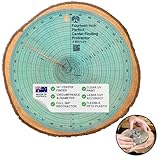
Overview: The CLPA 14" center finder represents Australian engineering excellence for serious woodturners and woodworkers. This multi-functional tool combines a center finder, ruler, 360-degree protractor, and circle maker in one robust package, designed to maximize material utilization and precision in your projects.
What Makes It Stand Out: Its integrated 360-degree protractor marked every 10° sets it apart from basic center finders, allowing precise angle layout for complex turning projects. The tool features dual metric scales—centimeter diameter circles and a millimeter linear radius scale—catering to woodworkers who prefer metric measurements. The innovative nail-fixation design enables you to secure the tool directly onto irregular surfaces, ensuring accuracy even on challenging stock.
Value for Money: Positioned in the mid-to-premium range, this tool justifies its price through genuine Australian manufacturing and four-in-one functionality. Compared to purchasing separate center finders, protractors, and rulers, it offers significant cost savings while reducing workshop clutter. The quality printing and durable construction ensure longevity.
Strengths and Weaknesses: Strengths include versatile multi-functionality, clear and durable markings, the unique protractor integration, and the secure nail-fixation method. The 14" size handles substantial stock effectively. Weaknesses include its metric-only focus, which may frustrate imperial-measurement users, and its larger footprint requiring more storage space. The printed markings, while clear, could wear over years of heavy use.
Bottom Line: For metric-using woodturners seeking a comprehensive, space-saving solution, this Australian-made tool delivers exceptional precision and versatility. It’s a worthwhile investment that eliminates the need for multiple separate tools.
2. DDWT 200mm/ 8 Inch Round Center Finder Compass for Wood Turners Lathe Work Bowls Lathe Wood Turning Drawing Circles Clear Acrylic

Overview: The DDWT center finder offers a straightforward, transparent approach to locating centers and drawing circles on your turning stock. This 8-inch acrylic disc provides crystal-clear visibility, allowing you to see exactly what you’re marking without obstruction.
What Makes It Stand Out: Its 5mm thickness provides exceptional durability compared to thinner acrylic alternatives, resisting warping and breakage in busy workshops. The laser-etched markings ensure the 5mm increment circles remain crisp and permanent, eliminating concerns about wear or fading. Unlike many competitors, this tool works across multiple materials—including wood, metal, glass, and composites—making it incredibly versatile beyond just woodturning.
Value for Money: This represents excellent budget-conscious value. Acrylic center finders typically cost less than their printed or metal counterparts, and the DDWT’s robust construction means you won’t sacrifice durability for savings. For hobbyists or those starting in woodturning, it delivers professional functionality without premium pricing.
Strengths and Weaknesses: Strengths include outstanding visibility, impressive material versatility, durable 5mm thickness, and permanent laser markings. The compact 8-inch size stores easily. Weaknesses include the smaller diameter limiting use on larger stock, acrylic’s susceptibility to scratching over time, and the lack of integrated protractor or ruler functions found in more complex tools. The absence of a fixation mechanism means you must hold it steady manually.
Bottom Line: This clear acrylic center finder excels in visibility and versatility at an accessible price point. It’s ideal for bowl turners working with stock under 200mm and makers who prioritize seeing their workpiece clearly during layout.
3. CLPA clearly printed 10" circle center finder tool, protractor, and circle maker tool and compass for woodworking and wood turning. Find the center of timber or dowel with our center finder ruler.

Overview: This compact 10" version of CLPA’s acclaimed center finder brings the same Australian quality and multi-functionality in a more manageable size. It seamlessly integrates a center finder, ruler, protractor, and circle maker, specifically designed for woodworkers using imperial measurements.
What Makes It Stand Out: Unlike its metric siblings, this model features imperial scales with half-inch circle diameter readings and one-tenth inch radius measurements, making it perfect for traditional American woodworkers. The 360-degree protractor with 10° increments remains a standout feature rarely found in competing tools. Its smaller footprint makes it ideal for workshops with limited bench space or for turners who primarily work with medium-sized stock.
Value for Money: Priced similarly to larger models but offering enhanced portability, this tool provides excellent value for imperial-measurement users. The four-in-one design eliminates the need for separate measuring tools, saving both money and space. Australian manufacturing quality ensures durability despite the compact size.
Strengths and Weaknesses: Strengths include imperial measurement scales, integrated protractor, portable 10" size, nail-fixation capability, and clear printing. The tool excels at maximizing yield on medium stock. Weaknesses include its imperial-only focus, which limits appeal for metric users, and the reduced capacity compared to larger models. The printed markings may show wear over extended use.
Bottom Line: For woodturners committed to imperial measurements, this 10" CLPA tool offers the perfect balance of functionality, portability, and precision. It’s a space-saving powerhouse that delivers professional results.
4. CLPA clearly printed 350mm circle center finder tool, protractor, and circle maker tool and compass for woodworking and wood turning. Find the center of timber or dowel with our center finder ruler.

Overview: The 350mm CLPA center finder stands as the largest offering in their Australian-made lineup, designed for professional woodturners tackling substantial stock. This comprehensive tool combines center finding, ruling, protracting, and circle making in one oversized, precision instrument.
What Makes It Stand Out: Its generous 350mm diameter accommodates large logs and bowl blanks that smaller tools simply cannot handle, maximizing material yield on substantial stock. The tool maintains CLPA’s signature 360-degree protractor with 10° radial lines, providing unmatched layout versatility for large-scale turning projects. Dual metric scales—centimeter diameter and millimeter radius—ensure precise measurements, while the nail-fixation design keeps the tool secure on even the most irregular surfaces.
Value for Money: As the premium option in the CLPA range, it commands a higher price but delivers proportionate value for professionals. The ability to process larger stock efficiently saves material costs over time. For serious turners, the investment eliminates the frustration of inadequate tools and reduces the need for separate large-format measuring devices.
Strengths and Weaknesses: Strengths include maximum capacity, versatile multi-functionality, durable Australian construction, protractor integration, and secure fixation method. Weaknesses include premium pricing, substantial storage requirements, and metric-only scales that exclude imperial users. The large size can be unwieldy for smaller projects or cramped workshops.
Bottom Line: Professional woodturners working with large stock will find this 350mm tool indispensable. Its capacity and precision justify the premium, making it a wise long-term investment for serious craftsmen who demand the best Australian-made quality.
5. Round Center Finder Compass Clear Acrylic Lathe Centering Tool, 30cm/11.8 Inch Circle Gauge for Wood Turners Lathe Work Bowls Lathe Wood Turning Woodworking Compass

Overview: This 30cm acrylic center finder strikes a practical balance between size and visibility for bowl turners and woodworkers. Its clear construction provides unobstructed views of your workpiece while helping optimize material yield on logs up to 300mm diameter.
What Makes It Stand Out: The integrated center hole simplifies alignment and fixation, allowing you to quickly secure the tool with a nail or awl through the center point. This design feature streamlines the often-fiddly process of centering on irregular stock. The tool’s versatility across materials—wood, plastic, metal, glass, and composites—extends its utility beyond the lathe to general shop layout tasks. Clearly marked circles in 5mm increments provide precise diameter selection.
Value for Money: This tool occupies the budget-friendly segment without sacrificing core functionality. Acrylic center finders offer significant cost savings over printed or metal alternatives, and this mid-size option covers the most common bowl-turning diameters. For hobbyists or turners building their tool collection, it delivers essential capabilities at an accessible price point.
Strengths and Weaknesses: Strengths include excellent clarity, convenient center hole design, versatile material compatibility, and practical 30cm size for typical bowl work. The 5mm increments suit most projects. Weaknesses include acrylic’s vulnerability to scratching, the 300mm limitation on larger stock, and absence of integrated protractor or ruler functions. Manual holding is required as there’s no dedicated fixation mechanism.
Bottom Line: This transparent center finder offers exceptional value for bowl turners working with medium-sized stock. Its clarity and center hole design make centering intuitive, representing a smart, affordable addition to any woodturner’s toolkit.
6. OHAOYU Rockler Bowl Turner’s Lathe Tool Rest – S-Shaped Wood Turning Tool Rest Features Two Curves – Stainless Steel for Heft and Resistance to Corrosion - Wood Lathe Tools and Accessories

Overview: The OHAOYU Rockler Bowl Turner’s Lathe Tool Rest is a specialized S-shaped rest designed specifically for bowl and hollow vessel turning on mini and midi lathes. Its unique profile mirrors the curvature of bowls, allowing turners to maintain consistent tool control throughout both exterior shaping and interior hollowing operations.
What Makes It Stand Out: This tool rest features a clever dual-curve design—one gradual and one angular—that accommodates various bowl profiles and allows access to narrow vessel openings. The angular end tucks neatly into tight spaces while rounding corners during hollowing. Constructed from solid stainless steel, it provides substantial heft that dampens vibration and resists corrosion, ensuring longevity in demanding shop environments.
Value for Money: Priced in the mid-range for specialized tool rests, this OHAOYU offering justifies its cost through premium materials and thoughtful engineering. Compared to generic straight rests, the time saved and quality gained in bowl turning makes it a worthwhile investment for serious woodturners. The stainless steel construction means it will outlast mild steel alternatives.
Strengths and Weaknesses: Strengths include the ergonomic S-shape that reduces fatigue, excellent corrosion resistance, smooth finish for effortless chisel glide, and compatibility with most mini/midi lathes. The dual-curve versatility is genuinely useful. Weaknesses involve limited application for non-bowl work, potential incompatibility with some lathe banjos, and a price point that may deter casual hobbyists. The specialized nature means it’s not a general-purpose tool.
Bottom Line: For bowl turners using mini or midi lathes, this tool rest is an excellent upgrade that will immediately improve control and comfort. While not universal, its specialized design delivers tangible benefits for its intended purpose.
7. WHAMVOX Round Center Tool for Woodworking Centering Ruler for Accurate Drawing Measuring Gauge for Lathe and Bowl Turning Versatile Compass Tool

Overview: The WHAMVOX Round Center Tool is an acrylic centering ruler and compass designed to help woodworkers create precise circles and locate centers for lathe work. This versatile tool serves dual purposes in both layout and turning applications, making it valuable for bowl turners and general woodworkers alike.
What Makes It Stand Out: Crafted from durable acrylic, this tool offers exceptional clarity for precise alignment while resisting deformation better than many plastic alternatives. Its design functions as both a center finder and a circle-drawing compass, eliminating the need for separate tools. The transparent material allows you to see the wood grain beneath, ensuring accurate placement every time.
Value for Money: This is an affordable accessory that punches above its weight class. For less than the cost of a single premium chisel, you get a tool that improves accuracy across multiple project types. Compared to metal center finders, the acrylic construction keeps costs down while maintaining adequate durability for typical shop use.
Strengths and Weaknesses: Strengths include lightweight portability, clear visibility for precise positioning, versatility for both rough and finish carpentry, and resistance to warping. The dual-function design saves toolbox space. Weaknesses involve acrylic’s susceptibility to scratching over time, limited size capacity for very large circles, and less durability than metal equivalents for heavy-duty applications. It may slide on smooth surfaces without adequate hold-down.
Bottom Line: The WHAMVOX Center Tool is a smart, budget-friendly addition to any woodworker’s toolkit. While not indestructible, its precision and versatility make it particularly valuable for turners and layout work.
8. Garneck Stainless Steel Double Ended Bowl Calipers for Measuring Wall Thickness and Depth Woodturning Projects Resistant Tool for Precision Measurements

Overview: The Garneck Stainless Steel Double Ended Bowl Calipers are essential measuring tools for woodturners seeking consistent wall thickness in bowls and hollow vessels. These calipers feature a unique double-ended design that allows measurement transfer without removing the tool from your work, streamlining the turning process.
What Makes It Stand Out: The innovative double-ended configuration lets you measure interior dimensions with one end while the opposite end simultaneously displays the identical measurement, enabling immediate comparison and transfer. This eliminates guesswork and repeated measurements. Made from stainless steel, these calipers resist corrosion and maintain their accuracy over time, even in dusty shop environments.
Value for Money: These calipers represent excellent value for turners serious about precision. They function as both inside and outside calipers, essentially providing two tools in one. The time saved during repetitive measuring tasks quickly justifies the modest investment, and the durable construction ensures years of reliable service.
Strengths and Weaknesses: Strengths include the efficient measurement transfer capability, robust stainless steel build, versatility for both wall thickness and depth measurements, and compact size ideal for bowl work. They excel at maintaining consistent thin walls. Weaknesses include a learning curve for beginners unfamiliar with caliper use, limited span for very large diameter work, and the basic design lacks fine adjustment mechanisms found on premium models. The pivot point may loosen over time without proper maintenance.
Bottom Line: For woodturners focused on precision and consistency, these double-ended calipers are a must-have accessory. They simplify a critical aspect of bowl turning and deliver reliable performance at a fair price.
9. Hurricane Turning Tools, 5" Diameter Curved Tool Rest For Turning Small Bowls on Wood Lathe, 1" Diameter Post, 4" Post Length

Overview: Hurricane Turning Tools offers this 5-inch diameter curved tool rest specifically designed for turning small bowls on wood lathes with 1-inch banjo posts. The 4-inch post length makes it ideal for mini and mid-size lathes, providing excellent access to workpieces while maintaining stability.
What Makes It Stand Out: This tool rest features a modular design with a separate steel bar, post, and washer that requires assembly, allowing for replacement of individual components. The precisely engineered curved profile supports small bowl turning with optimal tool control. Hurricane provides an extensive compatibility list covering major brands like Jet, Delta, Powermatic, and Oneway for 14" and 16" lathes.
Value for Money: Positioned as a mid-range option, this tool rest delivers solid value for turners with compatible machines. The modular construction means you can replace worn components rather than the entire unit, extending its lifespan. While assembly is required, the cost savings compared to OEM tool rests from major manufacturers is significant.
Strengths and Weaknesses: Strengths include robust steel construction, perfect sizing for small bowls, wide compatibility with popular lathe models, and the economical modular system. The curved design enhances tool support during bowl hollowing. Weaknesses involve the assembly requirement that may frustrate some users, explicit incompatibility with Laguna lathes, and the need to verify banjo measurements before purchase. The tool rest holder/banjo is not included, which may confuse some buyers.
Bottom Line: If you own a compatible 14" or 16" lathe and turn small bowls, this Hurricane tool rest is an excellent, cost-effective choice. Just verify your measurements first and don’t mind the minor assembly.
10. Hurricane Turning Tools, 5" Diameter Curved Tool Rest For Turning Small Bowls on Wood Lathe, 1" Diameter Post, 6" Post Length
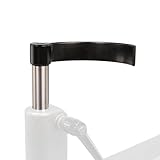
Overview: This Hurricane Turning Tools curved tool rest shares the same 5-inch diameter bowl-optimized design as its shorter counterpart but features a 6-inch post for larger lathes. Designed for 18" to 25" lathes with 1-inch banjo posts, it provides extended reach for turning small to medium bowls on full-size machines.
What Makes It Stand Out: The extended 6-inch post length allows turners with larger lathes to maintain proper tool rest position when working on smaller bowls that sit farther from the banjo. Like the 4-inch version, it uses a modular system with separate components for easy replacement. The comprehensive compatibility list includes major full-size lathe brands such as Powermatic, Oneway, and Robust.
Value for Money: This tool rest offers the same excellent value proposition as the shorter version, providing a cost-effective alternative to manufacturer-specific parts. For owners of larger lathes, finding appropriately sized accessories can be challenging and expensive. This Hurricane model fills that gap affordably while maintaining quality construction.
Strengths and Weaknesses: Strengths include the extended reach for larger lathes, durable steel construction, versatile 5-inch curved profile, and broad compatibility with popular full-size machines. The modular design remains economical long-term. Weaknesses mirror the 4-inch version: required assembly, incompatibility with Laguna lathes, and the critical need to verify banjo measurements. The taller 6 5/8" overall height may feel unwieldy on some setups, and the tool rest holder is not included.
Bottom Line: For turners with compatible 18" or larger lathes, this extended-post tool rest is a practical, well-priced solution for small bowl work. Verify your lathe’s specifications and embrace the modular assembly for a quality accessory.
Understanding the Critical Role of Precision in Segmented Bowl Turning
Segmented bowl turning isn’t just woodworking—it’s three-dimensional geometry made manifest in woodgrain. Each ring consists of individual segments cut at specific angles that, when multiplied around the circumference, must sum to a perfect 360 degrees. A typical bowl might contain anywhere from 8 to 64 segments per ring, with multiple rings stacked to create height and form. When you’re dealing with a 16-segment ring where each piece requires an 11.25-degree angle, there’s zero room for approximation.
Why Standard Protractors Fall Short for This Specialized Craft
That protractor from your high school geometry class? It’s practically a toy in this context. Standard educational protractors typically offer accuracy of only ±0.5 degrees, which might work for a simple picture frame but becomes catastrophic in segmented turning. The error compounds with every segment: 16 pieces each off by 0.5 degrees creates a total discrepancy of 8 degrees—enough to leave a gaping void in your ring. Worse yet, their flimsy plastic construction warps with temperature changes and shop humidity, while their coarse markings force you to squint and guess at fractional degrees.
The Anatomy of a Segmented Bowl: How Angles Dictate Success
Every segmented bowl tells a story in angles. The segment end angle determines how many pieces form a ring (360° ÷ number of segments ÷ 2 = end angle). But that’s just the beginning. Advanced turners work with compound angles for staved constructions, beveled segment edges for seamless glue-ups, and precise miter adjustments for feature rings. Your protractor must not only measure these angles but help you visualize them in three dimensions. Understanding this relationship between the flat measurement and the final curved form is what transforms a simple tool into an extension of your creative vision.
Key Features That Define a Professional-Grade Segmented Bowl Turning Protractor
When you’re ready to invest in a serious measuring tool, certain non-negotiable features separate professional instruments from workshop novelties. The best protractors for segmented turning in 2026 share a common DNA: they’re built for repeatability, designed for visibility, and engineered to withstand the unique demands of a woodshop environment where sawdust is a constant companion and a dropped tool is an inevitability, not a possibility.
Material Matters: From Stainless Steel to Digital Alloys
The substrate of your protractor determines its long-term reliability. Premium stainless steel rules with etched markings provide durability and won’t expand or contract with seasonal humidity swings. Look for 300-series stainless with deep-etched graduations filled with high-contrast enamel that won’t wear off after a year of wiping glue fingerprints. For digital models, the conversation shifts to reinforced polycarbonate displays and aluminum alloy bodies that protect sensitive electronics while remaining lightweight enough for constant handling. The sweet spot in 2026 is emerging in composite materials that combine the stability of steel with the shock absorption of polymer frames.
Resolution and Accuracy: Decoding the Numbers That Matter
Here’s where specifications become critical. For segmented turning, you need a protractor that guarantees accuracy of at least ±0.1 degrees, though ±0.05 degrees is the professional standard. Resolution—the smallest increment displayed—should be 0.05 degrees or finer. This means when you’re setting up for that 11.25-degree cut, you can trust the reading isn’t actually 11.3 or 11.2. Digital models now offer resolution down to 0.01 degrees, but be wary: high resolution without corresponding accuracy is just a more precise lie. Always check the manufacturer’s accuracy certification, which should be traceable to NIST or equivalent standards.
Scale Readability: Why Contrast and Markings Make or Break Your Workflow
In a dimly lit shop, staring at a shiny silver protractor scale is a recipe for eye strain and mistakes. Modern protractors designed for woodworkers feature matte finishes that kill glare and high-contrast markings in white, yellow, or even illuminated options. The scale should be readable from both sides for versatility, and some 2026 models now incorporate photoluminescent markings that glow faintly in low light—a subtle but game-changing innovation for evening shop sessions. Font size matters too: look for markings at least 1mm high, with fractional degrees clearly distinguished from whole numbers.
Digital vs. Analog: The 2026 Landscape for Segmented Turning Tools
The debate between digital and analog tools has matured from tribal loyalty to practical selection based on workflow. Both have earned their place in the modern segmented turner’s arsenal, and many professionals now keep both within arm’s reach, selecting based on the specific task at hand.
The Case for Traditional Analog Protractors in a Digital Age
Analog protractors offer something digital can’t: instant, intuitive visualization of angle relationships without batteries or boot-up sequences. A quality analog model with a long swing arm lets you physically see the angle against your segment, making micro-adjustments feel more organic. There’s no lag, no screen glare, and crucially, no electronic failure when a wayward droplet of glue finds its way into the housing. In 2026, premium analog protractors have evolved with ceramic ball-bearing pivots that maintain tension without slop, and some feature integrated magnifying lenses that swing into place for reading fine graduations.
How Smart Digital Protractors Are Revolutionizing Segmented Turning
Digital protractors in 2026 have become miniature computers on your workbench. Bluetooth connectivity now allows you to send angle data directly to apps that calculate segment counts and compensate for blade kerf. Some models feature audio readouts that announce the angle, letting you keep your eyes on the blade and workpiece. The most innovative include tilt sensors that warn you when the protractor isn’t perfectly vertical, eliminating a common source of parallax error. Look for models with IP54 or better dust protection, auto-calibration routines, and replaceable batteries—because nothing’s worse than a dead tool mid-project.
Specialized Design Elements That Elevate Your Segmenting Game
Beyond basic measurement, the protractors that truly shine in segmented turning incorporate design features that address the specific challenges of this craft. These aren’t gimmicks—they’re solutions born from thousands of hours at the lathe.
Integrated Center-Finding Capabilities
The best segmented turning protractors feature a center-finding scale or reference edge that lets you quickly locate the midpoint of a segment for marking opposite angles. This is invaluable when you’re flipping pieces to cut complementary angles. Some advanced models in 2026 incorporate laser-etched crosshairs on the pivot point that align with center marks on your workpiece, taking the guesswork out of positioning. This feature alone can cut your layout time in half while improving accuracy.
Magnetic Bases and Stability Features
A protractor that won’t stay put is a protractor that can’t be trusted. Rare-earth magnet inserts along the base let you securely attach the tool to your table saw or miter gauge for repeated cuts, freeing both hands to position the workpiece. The magnets should be recessed and switchable—engaged when you need them, disengaged when working with non-ferrous materials or delicate surfaces. Some models now feature micro-suction bases that grip smooth surfaces without leaving marks, a brilliant solution for MDF and phenolic sub-fences.
Extension Arms and Auxiliary Scales: When Size Matters
Short swing arms work fine for small segments, but when you’re laying out a 6-inch tall stave for a feature ring, you need reach. Protractors with detachable extension arms—preferably 12 to 18 inches—allow you to transfer angles across larger workpieces while maintaining precision. The arm should lock positively without drift and store conveniently on the tool body. Auxiliary scales that show complementary angles (the angle you actually set your blade to versus the angle on the segment end) eliminate mental math and reduce errors, especially when you’re tired and rushing to finish before the glue sets.
Ergonomics and Workflow Integration: The Overlooked Essentials
A tool can be perfectly accurate and still miserable to use. The protractors that become extensions of your hand rather than constant irritants pay attention to how humans actually work in a shop environment.
Hands-Free Operation: Clamps, Holders, and Third-Hand Solutions
Advanced segmented turners know that holding the protractor while marking and cutting is a recipe for inconsistency. Look for models with integrated clamping points or accessory holders that mount to your saw fence. Some 2026 protractors feature a “third-hand” accessory—a small articulating arm that holds the tool at the perfect angle while you make fine adjustments. This isn’t laziness; it’s repeatability. When your protractor stays fixed, every segment sees the identical reference, eliminating the micro-movements that occur when you’re juggling tools and wood.
Portability and Shop-Floor Durability
Your protractor should be tough enough to survive a drop onto concrete yet light enough to carry in your apron pocket all day. The ideal weight is between 6 and 10 ounces—substantial enough to feel quality, not so heavy it drags your apron down. Edge protection is crucial: look for models with rubber corner guards or a protective boot that slips on when not in use. The best designs include a lanyard loop or strong rare-earth magnet for temporary storage on your bandsaw or lathe bed, keeping it within reach but off your cluttered work surface.
Calibration and Maintenance: Protecting Your Investment
A protractor is only as good as its last calibration. In the dust-filled, vibration-rich environment of a woodshop, even premium tools drift out of spec. Establishing a maintenance routine is as important as the initial purchase decision.
The 5-Minute Daily Calibration Routine
Before starting a critical project, take five minutes to verify your protractor against known references. For analog models, this means checking the zero point against a reliable square and verifying the 90-degree stop with a certified machinist’s block. Digital models should have a one-button calibration function—use it daily. Keep a small granite surface plate in your shop; its guaranteed flatness provides the perfect reference for checking that your protractor’s rule sits true. This routine isn’t paranoid—it’s professional. Catching a 0.1-degree drift before you cut 32 segments saves hours of frustration.
Long-Term Storage and Care Strategies
Never toss your protractor in a drawer where it can be knocked around. Store it in its original case or a dedicated pouch, preferably with a desiccant pack to control moisture. For digital models, remove batteries if you won’t use the tool for more than a month—leaky batteries are the number one killer of electronics in shops. Once a year, send your protractor for professional calibration, especially if you do commission work where tolerances are contractually specified. This costs less than a single spoiled bowl blank and provides documented traceability that impresses clients.
Common Pitfalls: What Separates Amateurs from Masters
Even with the best tools, human error creeps in. Recognizing these common mistakes before they cost you expensive wood is what elevates your work from craft to art.
The Compounding Error Trap in Multi-Ring Bowls
Here’s the math that destroys projects: if each of your 12-segment rings is off by just 0.1 degrees, stacking five rings creates a cumulative error that can prevent them from nesting properly. The rim might measure perfectly, but the base will show gaps. Professional turners use their protractor to check not just individual segments, but the assembly as it grows. After gluing each ring, measure the actual angle achieved versus the intended angle, and adjust the next ring accordingly. This feedback loop turns your protractor from a layout tool into a quality control instrument.
Temperature and Humidity: Silent Saboteurs of Accuracy
Wood moves with moisture, but so does metal—just less dramatically. A steel protractor brought from a cold garage into a warm shop can take 30 minutes to stabilize, during which its readings may drift by 0.05 degrees or more. Store your protractor in the same climate where you work. For digital models, temperature swings affect battery performance and LCD response times. The best practice? Keep a shop thermometer and let your tools acclimate for 15 minutes before critical measurements. Some 2026 digital protractors now include temperature compensation algorithms, but they’re not foolproof—environmental awareness remains your responsibility.
Expert Techniques for Maximizing Protractor Performance
Owning a precision instrument is one thing; wielding it like a master is another. These advanced techniques will squeeze every bit of accuracy from your tool.
The Mirror Method for Verifying Compound Angles
When cutting compound angles for staved constructions, place a small mirror against the segment end and adjust until the protractor’s reflection aligns perfectly with the actual protractor. This technique, borrowed from machinists, eliminates parallax error and ensures you’re measuring the true angle, not a skewed view. It takes practice but delivers accuracy that rivals $10,000 coordinate measuring machines for this specific application.
Creating Custom Reference Templates
Once you’ve dialed in the perfect angle for a specific project, don’t trust your memory or the tool alone. Use your protractor to create a physical template from 1/4-inch MDF or phenolic. Cut the angle, verify it with the protractor from both sides, and label it clearly. These shop-made templates become your gold standards, allowing you to quickly set up repeat projects without re-measuring. Store them on a dedicated rack, and they’ll outlast your protractor while providing instant visual verification that a digital readout simply can’t match.
Future-Proofing Your Toolkit: 2026 Innovations on the Horizon
The segmented turning world is experiencing a quiet revolution in measurement technology. Augmented reality apps are beginning to integrate with Bluetooth protractors, overlaying angle data directly onto your workpiece through a tablet camera. AI-assisted angle calculation is emerging, where you input your desired bowl form and the software calculates optimal segment counts and angles, sending them wirelessly to your protractor.
More practically, we’re seeing the rise of “forever protractors” with lifetime accuracy guarantees and modular designs where digital displays can be swapped out while preserving the precision-machined mechanical components. For the forward-thinking turner, investing in a system rather than a single tool makes sense—choose a protractor family that offers interchangeable arms, upgradeable electronics, and a robust accessory ecosystem.
Frequently Asked Questions
What accuracy level do I really need for segmented bowl turning?
For professional results, aim for ±0.05 degrees accuracy. While ±0.1 degrees might suffice for simple 8-12 segment bowls, the error becomes unacceptable as you increase segment count or stack multiple rings. The investment in higher accuracy pays for itself in reduced wood waste and frustration.
Can I use a digital angle finder from the hardware store?
Most hardware store angle finders prioritize durability over precision, typically offering only ±0.5 degrees accuracy. They’re fine for framing but will disappoint in segmented turning. Look for tools specifically marketed to woodturners or machinists, where accuracy specs are clearly stated and certified.
How do I verify my protractor is still accurate after a year of use?
Invest in a certified angle block set (commonly 15°, 30°, 45°, 60°, 90°). Place the block on a flat surface, zero your protractor against it, and check the reading. Repeat for each block. If readings drift beyond the tool’s stated accuracy, it’s time for professional recalibration or replacement.
What’s the ideal resolution: 0.1°, 0.05°, or 0.01°?
Resolution finer than your tool’s accuracy is marketing fluff. If accuracy is ±0.05°, resolution beyond 0.05° gives false precision. However, 0.01° resolution can be useful for monitoring trends and drift during setup, even if the absolute accuracy is lower. For most turners, 0.05° resolution matched to ±0.05° accuracy is the practical sweet spot.
Should I choose a protractor with a locking mechanism?
Absolutely. A positive locking mechanism prevents the arm from shifting while you transfer measurements or mark segments. Look for lever-operated locks rather than thumbscrews—they’re faster and provide more consistent pressure. Some premium models feature dual locks: one for the arm, one for the base, ensuring nothing moves until you want it to.
How do magnetic bases affect accuracy?
Quality rare-earth magnets won’t affect readings if properly shielded and recessed. In fact, they improve accuracy by holding the tool steady during measurement. Avoid models with exposed magnets that can attract metal filings, which may interfere with the pivot mechanism. The magnet should be an aid to stability, not a substitute for proper technique.
Can temperature changes really affect my measurements?
Yes, significantly. A 20°F temperature swing can cause a 6-inch steel rule to expand by nearly 0.001 inches—enough to shift a critical angle by 0.02 degrees. Always acclimate your protractor to shop temperature before use, and avoid taking measurements immediately after bringing tools in from a vehicle or unheated storage.
What’s the best way to clean glue off my protractor?
Use a plastic scraper to remove dried glue, then clean with isopropyl alcohol on a microfiber cloth. Never use acetone or harsh solvents on plastic components or digital displays. For steel rules, a light coat of paste wax after cleaning prevents future glue adhesion and inhibits rust. Clean your protractor weekly, not just when it’s visibly dirty.
Are combination square/protractor tools worth considering?
Combination tools excel at setup but often compromise on protractor quality. If you choose this route, verify the protractor head meets the same accuracy standards as dedicated tools. For dedicated segmented turning, separate tools usually perform better, but a high-quality combination set can be an excellent starting point for beginners building their kit.
How much should I budget for a professional-grade protractor in 2026?
Expect to invest between $75 and $200 for a tool that will last a career. Premium digital models with Bluetooth and advanced features may reach $300, but the law of diminishing returns applies beyond that price point. Remember: this tool pays for itself by saving one exotic wood blank from the scrap bin. Quality isn’t expensive—it’s economical.
See Also
- 10 Most Accurate Digital Protractors for Crown Molding Cuts in 2026
- 10 Affordable Protractors for Crown Molding Angles in 2026
- 10 Affordable Protractors for School Shop Classes Under $15 in 2026
- How to Choose the 10 Best Digital Protractors for Miter Cuts
- How to Choose the 10 Best Protractors for Perfect Miter Angles in 2026